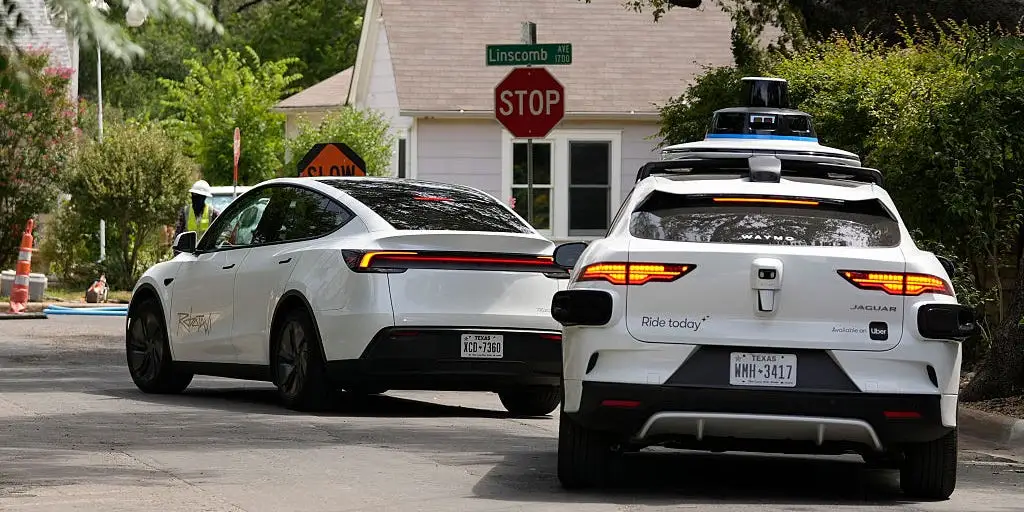
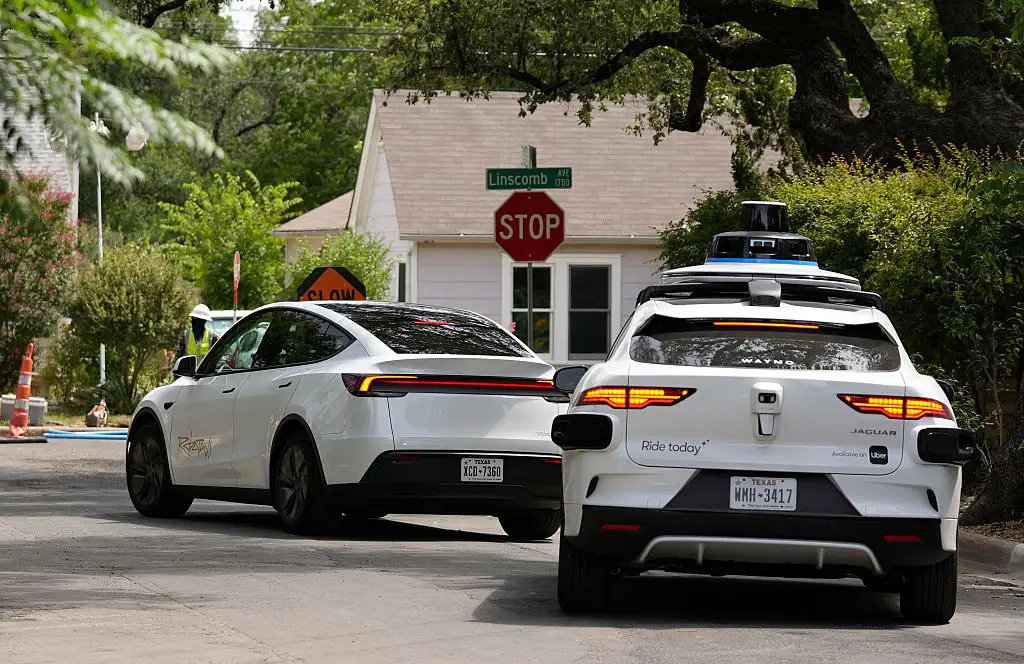
Waymo’s robotaxis are getting more competitive with Uber and Lyft as the autonomous vehicle service closes the gap on pricing and wait times in San Francisco, while Tesla undercuts everyone on price, a first-ever study comparing all four platforms showed.
Obi, a ride-hailing price aggregator, on Tuesday published a study that provides a snapshot into the state of the ride-hailing competition in the San Francisco Bay Area, a major hub for autonomous vehicles and traditional ride-hailing services.
Waymo’s robotaxi service is not only closing the price gap with Uber and Lyft but also competing better on wait times; both factors — price and long ETAs — were among the highest-cited issues consumers had with ride-hailing companies in general, according to a survey Obi conducted as part of the study.
Obi’s June 2025 study on Waymo found prices 30% to 40% higher than those of Uber and Lyft. This latest report, conducted between Thanksgiving and New Year’s Day, shows Waymo is now an “average of 12.7% more expensive than an Uber and 27.3% more expensive than a Lyft.”
Waymo also appears to be competing better on wait times with the two ride-hailing giants, according to the study. Over a 24-hour period, Obi’s data showed that Waymo’s ETAs better matched Uber’s and Lyft’s, except at peak demand times around 4 p.m. and 6 p.m., when Waymo’s wait times spiked.
Waymo’s average ETA was 5.74 minutes, whereas Lyft’s was 5.14 minutes, and Uber’s was 3.15 minutes.
“That’s the biggest change to me,” Ashwini Anburajan, CEO of Obi, told Business Insider. “It’s the convergence in price as well as the reduced wait times because now you can actually compare them. It’s a more honest comparison between the three platforms.”
Tesla’s cheap on price, not wait times
Obi’s report also looked at Tesla Robotaxi, the newest entrant in the Bay Area’s ride-hailing market, and found that it had the longest wait times by far, with an average ETA of 15.32 minutes. However, the study found that it beat every competitor on pricing.
“Obi’s data shows that the price for a Tesla robotaxi ride in San Francisco rarely exceeds $10, averaging $8.17 vs. the next cheapest option, Lyft, which averages $15.47,” the report said. “That’s a staggering $7.30 average price variance.”
Anburajan told Business Insider that Tesla’s pricing is reminiscent of Uber and Lyft in the early days.
“They’re using the playbook that Uber and Lyft used when they first came into the market — dramatically lower pricing, undercutting what’s existing in the market, and really just driving adoption, driving downloads, driving people to use the app,” Anburajan said. “And we know that playbook works.”
For the Obi CEO, Tesla’s wait times are the difference between a nascent service and a serious ride-hailing competitor.
“I don’t think people realize how critical wait times are in selecting a robotaxi or a regular rideshare,” Anburajan said. “They’re a huge factor in how people decide.”
An Uber spokesperson declined to comment. Spokespeople for Lyft, Waymo, and Tesla did not immediately respond to a request for comment.
Views on robotaxi changes
Obi’s findings are a snapshot from a limited window, as prices and wait times can swing with seasonality. Still, the study captures how the Bay Area market is shifting: Tesla is buying demand with lower fares, while Waymo is increasingly looking less like a premium service and more like a viable substitute for Uber and Lyft.
The data on Waymo tracks with the company’s recent expansion in November, when the company increased its robotaxi fleet from 800 cars to more than 1,000.
Obi’s survey suggests consumer attitudes on autonomous vehicles are changing, too. Nearly half, or 48.3%, of respondents said they expect autonomous vehicles to be their main rideshare — up from 24% in June.
“I think that the novelty of riding a robotaxi or an autonomous vehicle has started to wear off in the San Francisco market, and I think that’s a good thing,” Anburjan said. “More people trust the cars now.”
Read the original article on Business Insider
The post Robotaxi report card: Waymo is getting more competitive with Uber and Lyft, while Tesla undercuts everyone on price appeared first on Business Insider.