An album opener can make or break the rest of the project, depending on its themes or concept. Sometimes it doesn’t matter, but usually the first song on a tracklist sets the stage for the rest of the album. Like theater, or perhaps the bread for an Italian grinder sub. What I mean is, the album opener is the first thing listeners hear, so it better be a good one. Here are four opening tracks from 90s-era rock that immediately set the tone for the rest of the album.
“To Bring You My Love” by PJ Harvey
Opening an album with its title track can be a risky move, but it paid off for PJ Harvey’s 1995 offering To Bring You My Love. With its slow, rhythmic build progressing into Harvey’s raw wailing, this track serves more to crack the album asunder than it does to merely open it. The role of an album opener is often to set the tone for the rest of the project.
Here, Harvey shows us power dynamics and internal struggle. She describes barren wastelands, fires and floods, the almost biblical fervor with which she brings her love. Opening an album like that can make or break the rest of the work, but here the two conjoin. “To Bring You My Love” creates the subsequent album experience. But it also digs its hands into its own wound and tears itself into raw, aching pieces as an offering.
“Kitty” by The Presidents of the United States of America
As an album opener, “Kitty” by The Presidents of the United States of America does its job extremely well. Again, the opener’s job is to set the subsequent tone. This is the 1995 debut album that features tracks like “Lump”, “Peaches”, and “Back Porch”. So, opening with a song that itself opens with meowing and has a chorus made entirely of the phrase “Kitty at my foot and I wanna touch it” on repeat makes a lot of sense. Just, you know, stylistically.
“Head Like A Hole” by Nine Inch Nails
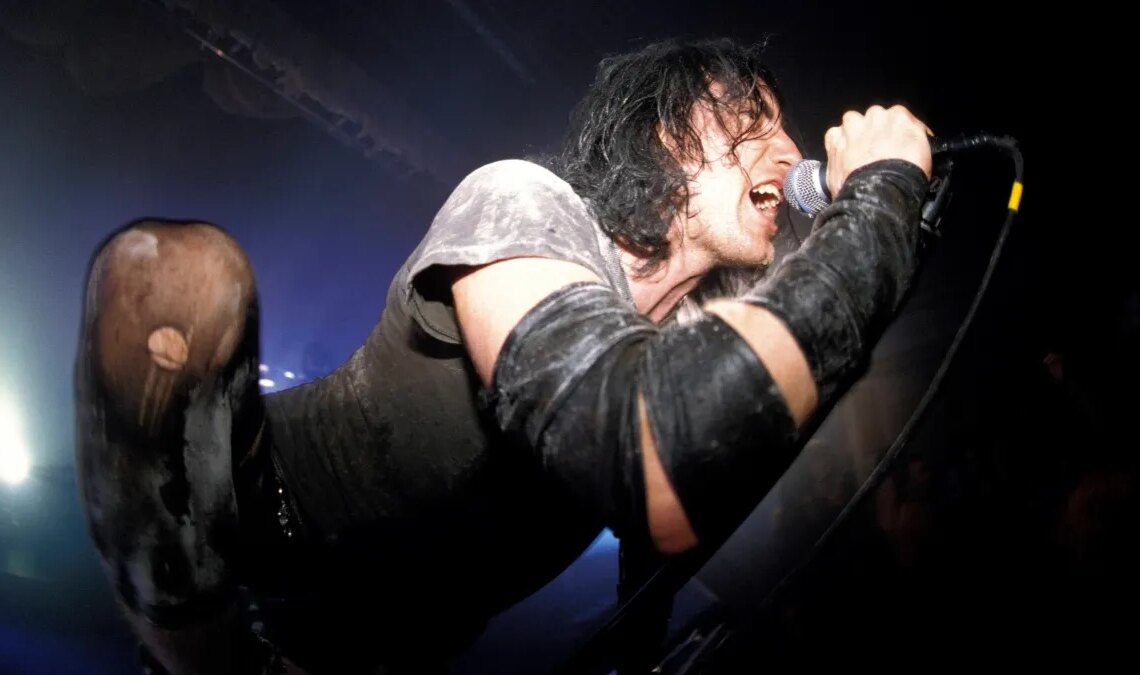
Pretty Hate Machine technically came out in 1989, but it was right at the end of 1989, so I think it should count towards the 90s. And “Head Like A Hole” as an album opener is too good to let slide. The album as a whole was basically a project Trent Reznor did in his spare time, released on a label that mostly dealt with television jingles.
The production leaves much to be desired in comparison to later Nine Inch Nails. But this was clearly a labor of industrial love. “Head Like A Hole” serves as the metaphorical parting of the theater curtain, preparing listeners for the ensuing performance. Have you ever been in the middle of a situation and thought, “This is an experience that’s going to fundamentally change me for the rest of my life”? I imagine listening to Pretty Hate Machine for the first time is a lot like that.
“Violet” by Hole
Hole’s second album, Live Through This, was recorded in 1993. However, it was released barely a week after Kurt Cobain’s death in April 1994. Besides the unfounded accusations that Courtney Love had a role in her husband’s death, there were also rumors that Cobain ghost-wrote Live Through This. But the point of the album was to prove that there was more to Hole than an angry woman writing angry songs. There was a sensitive side as well; it had just been buried for a long time.
With “Violet” as the album opener, there’s barely any time to get your bearings before being thrown into Courtney Love’s messy and convoluted world. Just a few strummed notes before the opening verse, beginning with the word “And.” As a lyrical choice, it feels like “Violet” is picking up in the middle of a conversation instead of serving as the first song on a tracklist. It’s almost jarring to start a song that way, not to mention an entire album. Therefore, Live Through This becomes an ouroboros of sorts, stuck in a continuous conversation with itself. The final track, “Rock Star (Olympia)”, ends its discordant evaluation of the homogeneous riot grrrl movement with a sing-songy “Bye bye, goodbye.” But when the record starts over, “Violet” bursts through the door as if to say, “And another thing!”
Photo by Mick Hutson/Redferns
The post 4 of the Strongest Album Openers From the 1990s Rock Scene appeared first on VICE.