The third week of a strike involving nearly 15,000 New York City nurses began Monday with little evidence that the two sides in the labor dispute were close to reaching a resolution.
The nurses’ union and representatives of the three hospital systems affected by the strike met late last week for negotiating sessions, but the talks had stalled by Friday night.
The strike began on Jan. 12, with nurses walking out of some of the city’s top hospitals, including NewYork-Presbyterian/Columbia, Montefiore and the main campus of Mount Sinai Hospital, along with two other hospitals in the Mount Sinai system. It is the largest labor action by nurses in the city in decades. Nurses have endured bitter cold on the picket line as temperatures dropped in recent days.
A smaller nurses strike in 2023 lasted only three days before the workers returned to work, having secured significant gains. But this time the hospitals say they have no intention of agreeing to the nurses’ demands.
Here’s what to know about the strike:
What are the latest developments?
Responding to pleas from Mayor Zohran Mamdani and Gov. Kathy Hochul to head back to the bargaining table, the two sides in the New York City nurses’ strike resumed negotiations on Thursday in hopes of returning 15,000 workers to their patients’ bedside.
But by Friday night, the talks had stalled and the two sides did not meet over the weekend.
On Saturday, the chief executive of Mount Sinai, Dr. Brendan G. Carr, released a statement saying that the two sides “remain far apart on a deal.”
Why are the nurses striking?
The nurses have a range of complaints. For years, they have said that many hospital units are chronically understaffed, leaving nurses with too many patients to care for all of them properly. But in recent years, the situation has improved, partly because of the smaller strike in 2023. More nurses were hired, and new nurse-patient ratios were introduced, with penalties imposed on hospitals if they violated the staffing rules.
But hospitals have sought to challenge those gains, in court and at the bargaining table, according to the nurses’ union.
The nurses are also demanding that hospitals increase security at hospital entrances to reduce workplace violence and the risk of mass shootings. Many also want security personnel to take a more active role when patients threaten nurses or attack them.
The nurses also want job security guarantees as hospitals expand the use of artificial intelligence in medical settings.
They are also seeking pay raises. The starting pay for nurses at the affected hospitals ranges from $117,000 to more than $120,000. But the hospitals say that the average nurse is paid about $160,000.
By Thursday, the nurses’ latest bargaining proposal involved pay raises of between 5 and 7 percent each year for the three years of the contract, according to a statement provided by Mount Sinai. That was less than the nurses had previously sought.
“Nurses have said from Day 1 and have demonstrated at the bargaining table that we are willing to negotiate on salaries, but we are not willing to cut corners on patient and nurse safety,” Nancy Hagans, the president of the nurses’ union, the New York State Nurses Association, said on Friday night.
Hospital officials said the hospitals affected by the strike were open and running smoothly and that they were continuing to accept new patients.
How long might the strike last?
The last time nurses in New York City went on strike, in January 2023, the walkout lasted three days. The hospitals may have been surprised at the time: Nurses at a city hospital hadn’t gone on strike in 25 years, according to union officials.
And that strike came against the backdrop of the coronavirus pandemic, when health care workers were hailed as heroes.
But the memory of the pandemic has receded for many.
The hospitals seem more prepared and resolved this time to fight the nurses’ demands. They are spending tens of millions of dollars, at least, on short-term travel nurses. The hospitals, anticipating lean years ahead because of Trump administration policies that will leave New Yorkers uninsured and will reduce federal health care spending in New York State by billions of dollars, say they cannot afford to meet the union’s demands.
For their part, the nurses point to the huge salaries and payouts that senior leaders at top hospitals have received.
What are the hospitals offering the nurses?
Negotiators for the hospitals had offered to give each nurse an additional $4,500 a year for the next three years. The nurses can decide how much of that money goes to their salaries and how much toward their health care, pensions and other benefits, hospital officials said. In interviews, nurses have called that offer unrealistically low and insulting. In recent days, that offer increased slightly.
Who has offered support to the nurses?
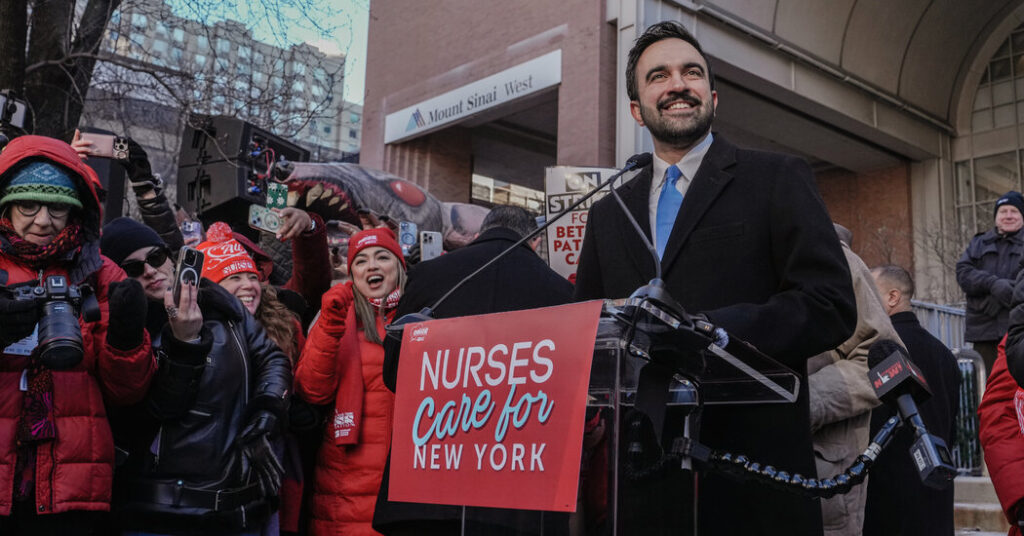
Mayor Zohran Mamdani and Senator Bernie Sanders of Vermont appeared Tuesday before thousands of striking nurses in Manhattan who were wearing red and waving noisemakers.
“What this is in fact about is recognizing the worth of each and every nurse in this city,” Mr. Mamdani said. “So I am here to say the same thing that I said on the first day of this strike, which is that we are encouraging everyone to return to that bargaining table.”
Samantha Latson and Jeffery C. Mays contributed reporting.
Joseph Goldstein covers health care in New York for The Times, following years of criminal justice and police reporting.
The post Here’s What to Know As the N.Y.C. Nurses’ Strike Enters Its 3rd Week appeared first on New York Times.