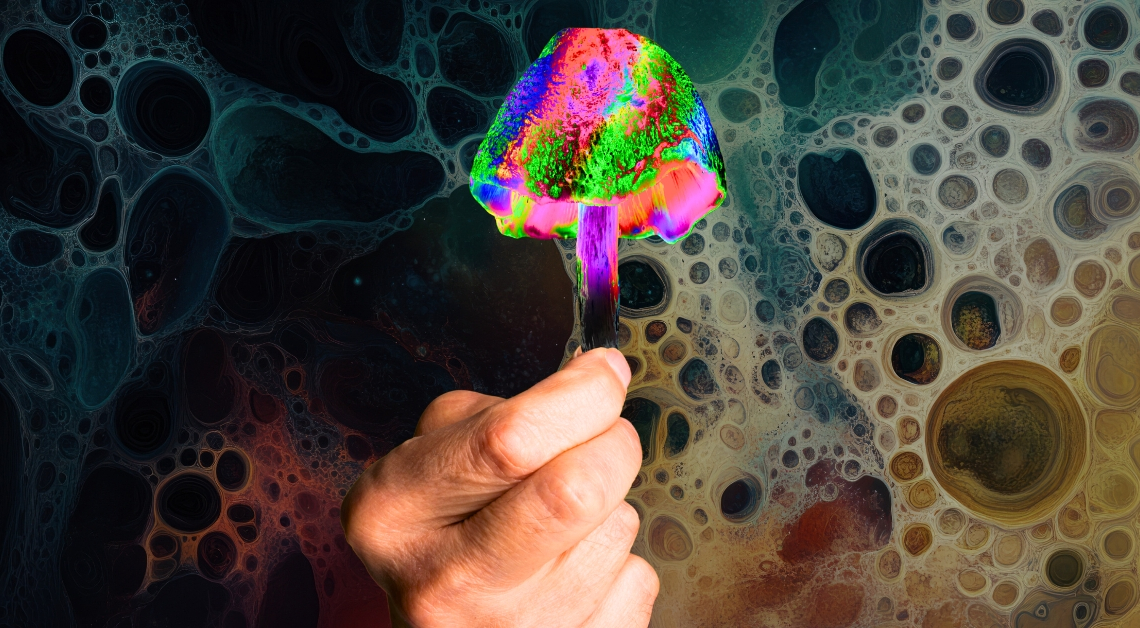
Biologist Colin Domnauer is reopening an old case that Chinese health officials seem to have stopped caring about. Every summer, residents of the Yunnan province check into hospitals with complaints that they’re hallucinating tiny elflike people. They would see the little dudes marching under their doors, scaling their walls, and clinging to their furniture.
Health officials used to care about it. They looked into it some years back and found that the cause was Lanmaoa asiatica, a mushroom that’s been eaten in Yunnan for years. It’s supposedly got a rich, umami flavor, and locals know that you have to cook it thoroughly, not to bring out that flavor, but to kill off the mushroom’s hallucinogenic properties.
Scientists call these “lilliputian hallucinations,” a rare phenomenon involving miniature human or fantasy figures. If you’ve seen the Adult Swim show Common Side Effects, you may be familiar with the surreal trippiness of this apparently very real form of mushroom-based hallucination. What makes this particular hallucinatory mushroom so unusual is that it causes the same kind of hallucinations in different people, across cultures.
It’s always the little elf dudes.
This Mushroom Causes People to Experience the Same Hallucination
The BBC reports that similar cases emerged in China in the early 1990s and even earlier in Papua New Guinea. That’s where researchers investigating “mushroom madness” ultimately dismissed the accounts as cultural myth after chemical tests turned up nothing. Makes sense since the species wasn’t formally described until 2015.
Domnauer visited Yunnan’s mushroom markets and asked vendors which of these mushrooms is the one that’s making people see little people? All the vendors said L. asiatica. Genetic testing confirmed its identity, and lab studies showed that extracts cause dramatic behavioral changes in mice. Domnauer later found the same species in the Philippines, despite its different appearance, meaning the mushroom and its effects are more widespread than anyone realized.
What’s fascinating is the active compound isn’t psilocybin, the hallucinatory chemical found in shrooms people take recreationally or therapeutically. The hallucinations take 12 to 24 hours. to begin and can last for a long time, sometimes long enough to require hospitalization and careful observation. The trip can last so long that it’s impractical as a recreational drug, which is why no culture seems to use the mushroom intentionally as a psychedelic. Not yet, at least.
Still a lot to understand how this fungus produces such reliable, consistent hallucinatory visions across the world, across cultures. Finding those answers might unlock new insights into brain disorders and human consciousness, while offering researchers a whole new realm of fungal chemicals to toy around with.
The post Meet The Mushroom That Makes People Have The Exact Same Hallucination appeared first on VICE.