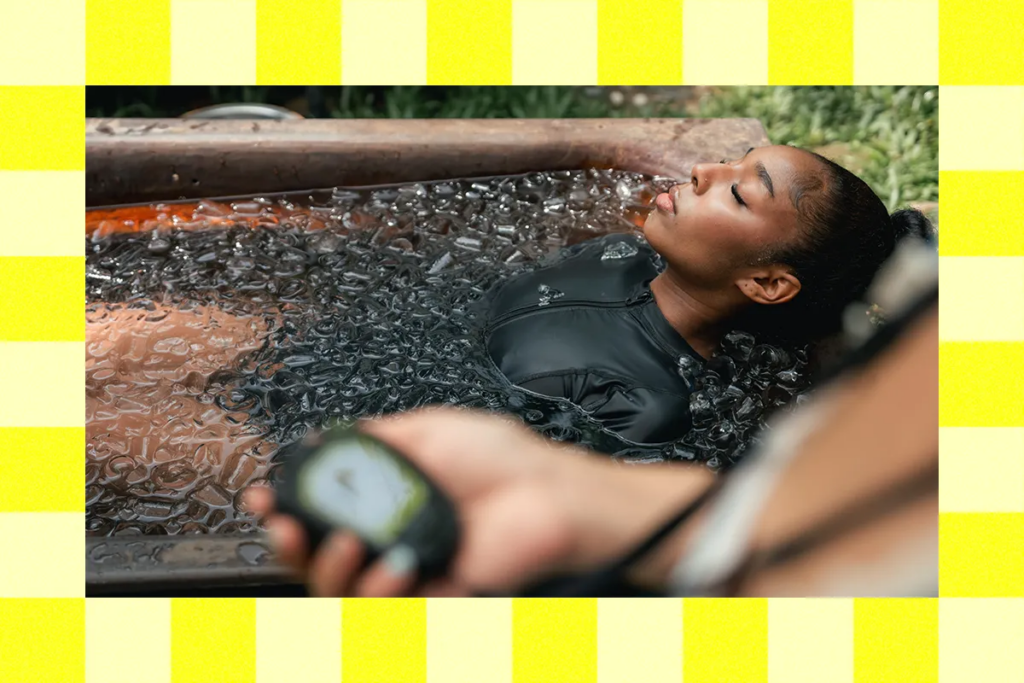
Depending on your disposition, a minute in an ice bath can feel like agony or ecstasy. Perhaps you wince at the thought of stepping foot in an ice bath, or maybe you’re an experienced cold plunger who can’t get enough of the endorphin-releasing sensation. Either way, sitting in an ice bath isn’t simply an endurance game. How long you cold plunge for matters.
There are many ways to access cold water therapy from having a cold shower, to submerging your body in a dedicated cold plunge pool. Perhaps you’re a seasoned pro and have invested in one of the latest cold plunge tubs with an automatic chiller, or maybe you prefer wild swimming on a cold winter day, or you’re simply keen to get the best from your gym’s cold therapy area. Either way, setting limits on how long you remain in the cold water is key to reaping the benefits.
Jump ToLargeChevron
- To Cold Plunge or Not?
- How Long Do You Cold Plunge?
- Personalize Your Plunge
- How Cold Should My Cold Plunge Be?
- What Should You Do After?
To Cold Plunge or Not?
Those who love a cold plunge will no doubt tell you they love it—for muscle relief, improved circulation, focus, energy—or perhaps even a better understanding of homogeneous algebra? Why stop there? But cold water is a stressor and comes with risk, so it’s important to know how long to cold plunge for and whether it’s right for you.
We tackle some of these questions in whether you should cold plunge before or after a workout, but if you’re unsure if cold plunging is right for you, always consult your doctor. Go into the water mindfully and with a clear plan of how long you plan to stay in. Be cautious about dunking your head, as the sudden chill sometimes makes people gasp—not a great thing to do while your head is underwater.
How Long Do You Cold Plunge?
The time limit and risk factor for cold plunging depends on numerous factors such as how experienced you are, your body fat percentage and body size, and how controlled your breathing is. I spent months testing cold plunge pools and have managed to build up tolerance over time. But everyone is different. After the first few attempts of only being able to endure about 10 seconds before dramatically exiting the water, my body has adapted.
I now tend to sit in my ice bath for one minute each time, but that’s enough for me and enough to clear my head ready for my working day.
For experienced ice bathing enthusiast Dan Bosomworth, founder of Brass Monkeys, it’s a different story. “Personally, I ice bath for two or three minutes at 37.4°F to 41°F (3-5°C) most mornings,” he says. “That’s my sweet spot where it’s cold enough to feel challenged and short enough to stay consistent.” Consistency beats intensity every time.
“It’s finding what challenges you enough to release those catecholamines—the stress chemicals that drive the benefits,” Bosomworth says. “Research recommends aiming for around 11 minutes in total per week for metabolic benefits as that’s where you start seeing meaningful brown fat activation. You can break that up into what works for you and your schedule–perhaps daily 90-second sessions or longer 3-5 minute dips a few times weekly. At colder temperatures below 41°F (5°C), even 1-2 minutes triggers a significant stress response.”
Personalize Your Plunge
When it comes to how long you cold plunge for, Bosomworth recommends going colder for shorter, or warmer for longer. For beginners, 30 second cold showers that build up to two minutes can help, although they’re not essential. “Once the cold water starts to feel manageable, move to a cold bath around 50°F (10°C) for a minute or two or what feels right,” he says. “Only then should you introduce ice.”
Also, think about why you’re cold plunging. If you’re just after a mood boost, 30 seconds of cold water is adequate. Exercise recovery can be accomplished in around two minutes. If you’re working on your mental resilience, you might want to try even longer.
If you’re working on your mental resilience, Bosomworth highlights a concept called “counting walls”, which was popularized by Dr. Andrew Huberman, the Stanford professor and popular podcaster.
Your mental walls are the waves of adrenaline that tell you that getting into a freezing bath is a really bad idea. Instead of watching the clock, you can count how many times you traverse a wall and stay in the tub. “Each surge of catecholamines is a wall and you might aim for three or four walls in a session,” says Bosomworth. “This personalizes the practice, as on some days you hit a wall immediately, other days it takes longer.”
How Cold Should My Cold Plunge Be?
Temperatures for cold plunging can range from 32°F to 68 °F (0°C to 20°C). What temperature you use depends on your goal, if you want a refreshing dip or more intense post-workout recovery.
Some of the latest premium ice baths come with dedicated filters that allow you to control the temperature. It can be hard to control the temperature of your ice bath if you just have an inflatable ice bath in your yard.
“Most of the benefits that cold water therapy can bring are achieved by setting the temperature to anything between 50–59°F (10 to 15°C),” says Ralph Montague, owner of The Longevity Clinic. “It doesn’t actually need to be ice or freezing. A lot of people think it needs to be lower than this, but I think this is the perfect temperature for beginners who need to build tolerance. It’s worth investing in a thermometer to check the temperature and add ice as you see fit.”
What Should You Do After?
If you’ve been enjoying the benefits of a sauna and then an ice bath, it’s important to start with heat and end on cold to minimize cardiovascular stress. It’s best to warm up naturally after an ice bath as cold plunges drop your core temperature.
“It’s tempting to jump straight into the shower or sauna, but by doing this you’re short-circuiting the metabolic benefit,” says Bosomworth. “Rushing back into your warm house or grabbing hot coffee can trigger severe shivering 10-15 minutes after, which is uncomfortable and potentially dangerous. Practice gentle movement for double the time you were in the water and dry off naturally. Let your body do the work [of warming you back up], as that’s how you train your metabolism to be more efficient next time.”
Power up with unlimited access to WIRED. Get best-in-class reporting and exclusive subscriber content that’s too important to ignore. Subscribe Today.
The post How Long Should You Cold Plunge? We Asked Experts (2026) appeared first on Wired.