From Boston to Atlanta, transit authorities in U.S. cities were hurrying over the weekend to salt waiting areas and adjust schedules for trains and buses as severe snow and sleet barrels across the country.
Officials in many cities asked passengers to avoid nonessential travel over the weekend as more than 140 million people remained under a winter storm warning early Sunday. Up to a foot and a half of snow could fall in some areas of New England through Monday, forecasters said.
In New York, the agency that manages the nation’s largest subway system told travelers that it would be safest to steer clear of travel on Sunday and Monday.
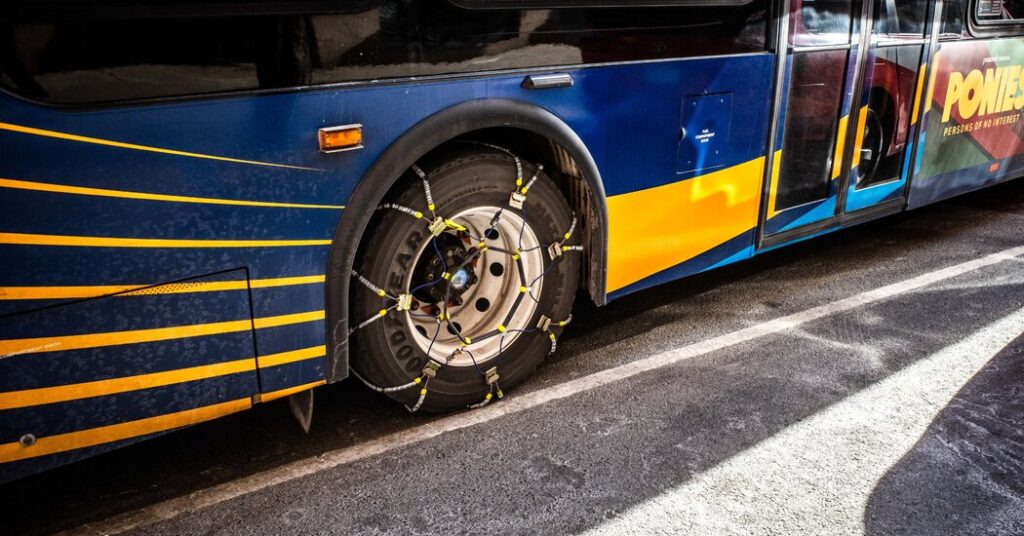
The Metropolitan Transportation Authority said that it planned to remove articulated buses — the extra-long vehicles with an accordionlike middle — from service, adding that riders should expect longer wait times on local routes. The authority plans to run shorter buses with snow chains to improve traction during the storm.
The Long Island Rail Road will run on a modified Sunday schedule, with no service between Ronkonkoma and Greenport, the authority said in a news release. There will also be reduced Babylon Branch service, including no direct trains to or from Grand Central.
In Philadelphia, the transit authority warned of significant detours and delays on Sunday. Some services could be suspended entirely as conditions deteriorate, the Southeastern Pennsylvania Transportation Authority, or SEPTA, said in a news release. The city’s trolley will operate on a detour, and bus service will be focused on “high-priority snow removal” streets and routes.
“Heavy, wet snow and ice can damage infrastructure, while strong winds increase the risk of service disruptions,” SEPTA said. “Road conditions — particularly on hills and narrow streets — can also limit bus operations.”
In Atlanta, the only operational bus routes on Sunday will be those that provide direct service to major medical facilities and hospitals, the area’s transit authority said. Trains will run every 20 minutes.
In Boston, emergency crews will remain on standby during the storm to respond to rail issues, switch problems and flooding. Buses will most likely operate on snow routes on Sunday, but riders can expect normal weekend service for trains, the Massachusetts Bay Transportation Authority said in a news release.
On Monday, commuter rail lines will operate on reduced storm schedules, which provide about one-third of regular weekday service on all lines, the agency said. The M.B.T.A. said that more than 1,000 snow blowers, salt trucks and plows could be deployed across its commuter rail network before the storm.
The Washington Metropolitan Area Transit Authority in the nation’s capital said on Friday that about 2,800 employees would be working to keep trains and buses operational during the storm.
“Our team has been in full prep mode for this storm by staging equipment, supplies, and personnel,” Randy Clarke, the chief executive of Metro, said in a news release. “We will provide as much service as safe conditions allow.”
While trains in the region can operate normally with some snow, “service may be delayed or suspended in extreme conditions,” the agency said.
If the region gets more than eight inches of snow, aboveground train service will most likely be suspended, the agency said on its website.
Hannah Ziegler is a general assignment reporter for The Times, covering topics such as crime, business, weather, pop culture and online trends.
The post Major U.S. Public Transit Systems Brace for Storm With Detours and Warnings appeared first on New York Times.