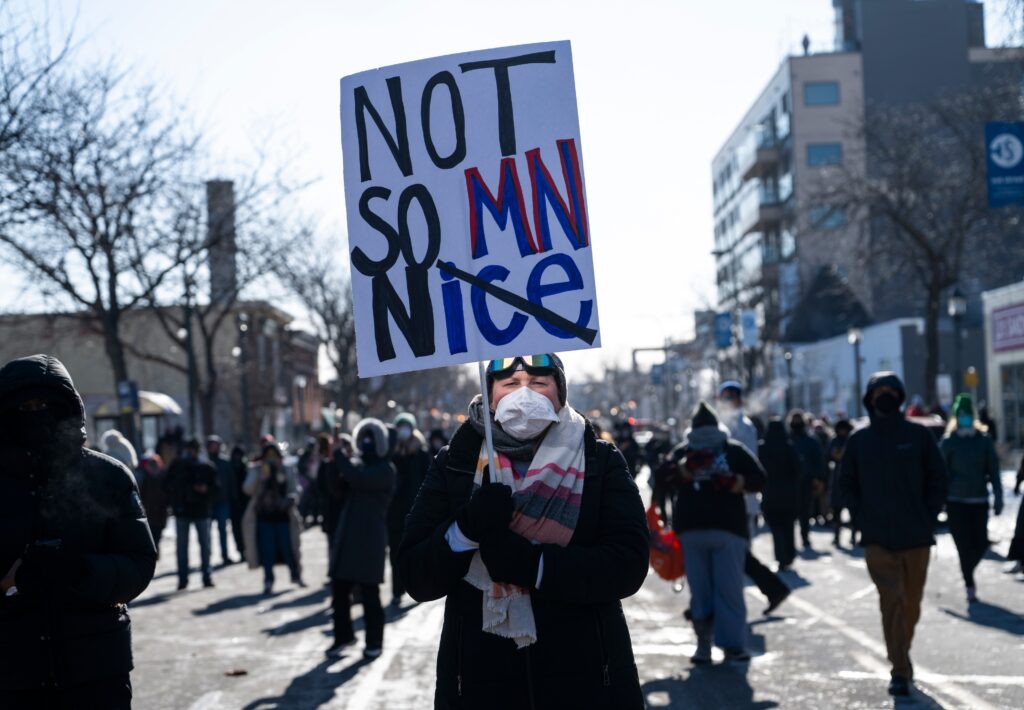
MINNEAPOLIS — A U.S. Border Patrol agent fatally shot a man in Minneapolis on Saturday, sharply escalating tensions in a city already on edge following weeks of protests over two other shootings by federal agents and a sweeping immigration crackdown by the Trump administration.
The killing of the Minneapolis man — captured on viral videos — deepened a growing rift between state and federal officials, who offered starkly different accounts of what happened.
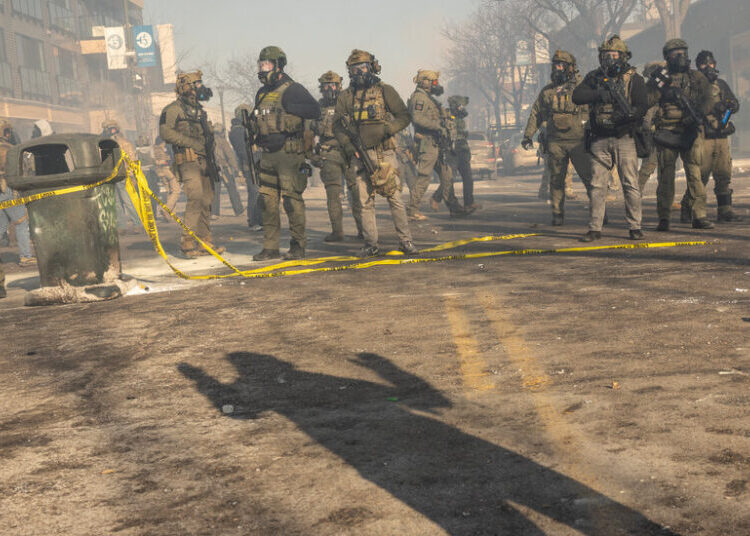
The shooting also heightened questions about the training and tactics being used as the Trump administration deploys growing numbers of federal agents onto city streets, where they are increasingly met by protesters.
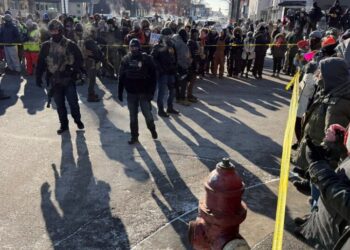
Democrats in Congress vowed to hold up funding for the Department of Homeland Security over the killing, possibly triggering a government shutdown. And Saturday’s shooting sparked yet another round of protests that grew violent.
Minneapolis officials requested the National Guard be deployed to help beleaguered police.
Gov. Tim Walz (D) forcefully reiterated calls for the Trump administration to pull back on its surge in immigration enforcement launched this month and called the killing “sickening.” He accused the roughly 3,000 immigration officers patrolling streets of “sowing chaos and violence.”
“I have a strong statement here for the federal government,” Walz said at a news conference. “Minnesota’s justice system will have the last word on this. It must have the last word. As I told the White House in no uncertain terms this morning, the federal government cannot be trusted to lead this investigation.”
President Donald Trump blamed state and local officials on Truth Social for the shooting, posting a photo of a gun that federal officials said the victim of the shooting had on him before he was killed. Other officials in the administration said the victim was intent on attacking law enforcement and labeled him a “domestic terrorist.”
“This is the gunman’s gun, loaded (with two additional full magazines!), and ready to go—What is that all about?” Trump wrote. “Where are the local Police? Why weren’t they allowed to protect ICE Officers?”
The victim was identified as 37-year-old Alexander “Alex” Jeffrey Pretti, an intensive care nurse, by Minnesota Attorney General Keith Ellison.
The shooting unfolded shortly after 9 a.m. on Saturday on the south side of the city, state and federal officials said. It occurred during protests of the immigration crackdown.
One video taken by an onlooker showed Border Patrol officers swarming around Pretti, whom they wrestled to the street and punched. Shortly after, Pretti attempted to get up, and one or more officers opened fire and he collapsed. A bystander could be heard screaming, “They killed him!”
Secretary of Homeland Security Kristi L. Noem said at a news conference that border patrol agents were conducting a “targeted operation” to apprehend a person who was in the country illegally when a man with a 9mm handgun approached them.
Noem said the man with the gun resisted attempts to disarm him.
“The armed suspect reacted violently; fearing for his life and for the lives of his fellow officers around him, [the officer] fired defensive shots,” Noem said. “Medics were on the scene immediately and attempted to deliver medical aid to the subject.”
Noem did not identify the agent involved in the shooting, but federal officials said earlier he was an eight-year veteran of Border Patrol. It was unclear if any of the agents on the scene were wearing body cameras.
Video footage from bystanders raised questions about the Department of Homeland Security’s account of what happened moments before the fatal shooting.
It is not clear how Pretti’s interaction with federal agents began or what words were exchanged. One video shows Pretti speaking to officers and filming them with his phone. He is not holding a gun in either hand. An officer pushes him back toward the sidewalk. The person who filmed the video said it appeared that Pretti was observing immigration enforcement operations in the area and recording.
Another video, filmed at some point later, shows Pretti filming officers from down the street. He walks toward them, still filming. He is not holding a gun.
One of the officers pushes a person who appears to be a bystander or protester down onto the sidewalk. Pretti steps between them, and the officer pepper sprays him in the face.
Pretti begins to interact with the person who was pushed, but the exchange cannot be heard. An officer appears to try to pull him away, leading to the scuffle in which Pretti is fatally shot.
DHS’s policy on using force says that officers “may use deadly force only when necessary, that is when the [agent] has a reasonable belief that the subject of such force poses an imminent threat of death or serious bodily injury.”
Training and tactics of federal immigration agents has come under scrutiny in cities such as Chicago in recent months after a string of violent incidents. Border Patrol agents are accustomed to confronting cartels and illegal border crossings rather than protesters in urban areas.
“Generally you’ve seen the tactics in L.A., Chicago and Minneapolis where they’re not trained, they’re not well led, they are not focused on the way they should be handling a crowd,” said Gil Kerlikowske, former commissioner of U.S. Customs and Border Protection.
Agents are supposed to order crowds to disperse and then tell them they are subject to arrest if they fail to do so, he said.
Local officials said they have been frustrated in their attempts to probe the latest shooting.
Minnesota Bureau of Criminal Apprehension Superintendent Drew Evans said at a news conference Saturday that his investigative team secured a search warrant to examine the crime scene where Saturday morning’s fatal shooting occurred but was denied access by federal officials.
Evans said the warrant was “an unusual move in a public area like that. But we did that attempting to have judicial approval to enter the scene to gather evidence.”
Evans said the Department of Homeland Security has not provided state investigators with the names of the federal officers involved in Saturday’s shooting or the federal agents involved in other recent shootings in the state.
Minneapolis Police Chief Brian O’Hara said Pretti did not have a criminal record and appeared to lawfully own his gun. Minnesota allows the open carry of handguns for people with permits.
Dimitri Drekonja, an infectious diseases physician at the Minneapolis VA Health Care System, said he “loved working” with Pretti, who he said was an intensive care unit nurse.
“He took great care of his patients,” he said. “He was really friendly.”
Pretti’s shooting occurred one day after thousands gathered at a park in central Minneapolis to protest the deployment of immigration agents to Minneapolis. “Operation Metro Surge” is one of largest immigration enforcement actions in the nation’s history.
Hundreds of businesses also closed as part of a general strike organized by clergy and labor unions in the Twin Cities to protest the immigration crackdown. More than 100 clergy were arrested during a sit-in at the Minneapolis-Saint Paul International Airport.
The protests followed two other shootings involving immigration agents in the city. On Jan. 7, an Immigration and Customs Enforcement agent shotand killed Renée Good in her car, an incident that kicked off major protests. ICE agents also shot a man in the leg as he attempted to evade arrest on Jan. 14, federal officials said.
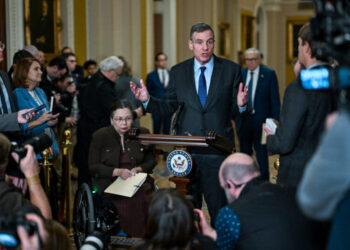
Saturday’s shooting drew sharp exchanges from local and federal officials and could prompt a government shutdown. Senate Minority Leader Charles E. Schumer (D-New York) said Saturday evening that Democrats will block a sweeping government funding package next week due to concerns over funding ICE.
“What’s happening in Minnesota is appalling — and unacceptable in any American city,” he wrote on X. “Democrats sought common sense reforms in the Department of Homeland Security spending bill, but because of Republicans’ refusal to stand up to President Trump, the DHS bill is woefully inadequate to rein in the abuses of ICE.”
The government will partially shut down at the end of the day Friday if Congress doesn’t pass a funding package or extension. A $1.2 trillion appropriations package that includes funding for Homeland Security passed the House on Thursday.
Riley Beggin, Marianne LeVine, Gaya Gupta, Marianna Sotomayor, Caroline O’Donovan, Molly Hennessy-Fiske and Aaron Schaffer contributed to this report.
The post State, federal officials offer starkly different accounts of Minneapolis shooting appeared first on Washington Post.