It’s been a strange week for Greenland.
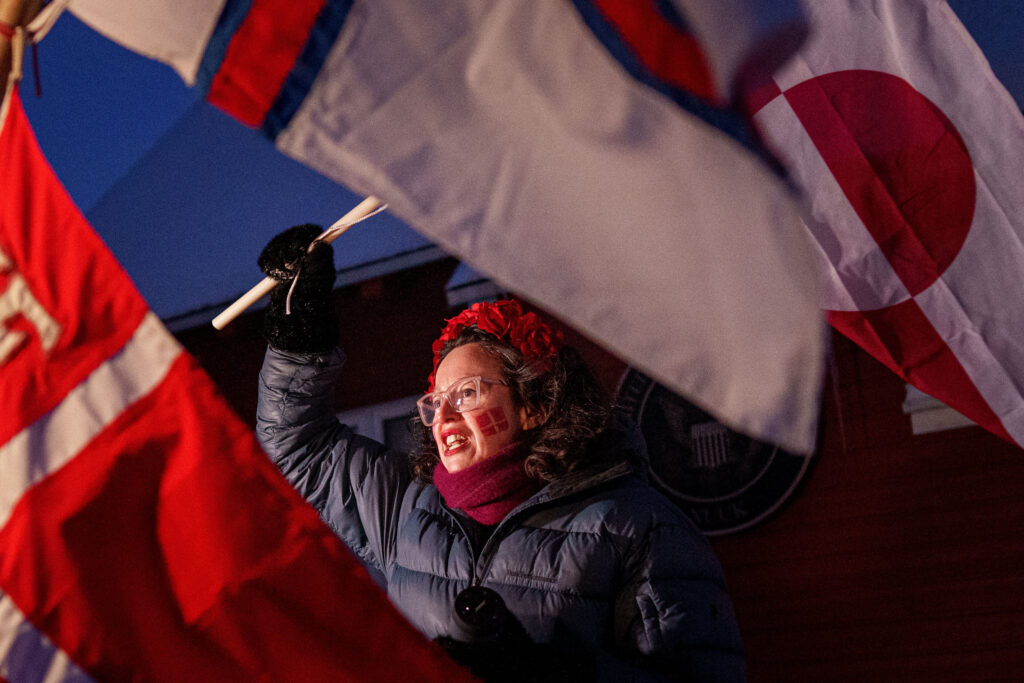
Last weekend, thousands of people marched in Nuuk, the territory’s capital — a massive demonstration for a population of some 57,000 — proclaiming, “Greenland is not for sale.”
After years of interest by President Donald Trump in acquiring the island, a matter he began floating to aides in 2019 during his first term, the issue gained additional momentum this week, culminating when Trump again demanded Greenland’s acquisition in a speech to the World Economic Forum in Davos, Switzerland, on Wednesday. Mere hours later, he walked that back in favor of a deal framework, the particulars of which remain unclear.
Increased U.S. access to Greenland, an autonomous territory of Denmark, for military bases and minerals extraction, along with moves to keep China and Russia from investing, remain under negotiation, European officials told The Washington Post. After days of geopolitical chaos, residents of Greenland have been left reeling, unsure of what to expect.
Some people in Greenland said they were afraid of increased levels of U.S. troops on the island and worried about retaining or increasing their independence. Some said they were bewildered by the contradictory messages they have heard from world leaders, especially Trump, over the past year. Others voiced optimism, saying they believed an influx of U.S. troops and bases would not impact life in Greenland because U.S. troops have already been there for decades.
“It will be horrible to see an increased presence of foreign troops in our towns and cities,” said Arnaq Broberg Hansen, 23, a student in Aasiaat, a town in western Greenland. “We won’t know if we can trust them, they could turn on us or overpower us whenever they want.”
Hansen said the news from Davos made her “somewhat relieved,” but that she believes that Trump has an “unhealthy obsession” with Greenland — and that he might pivot back to wanting to own her homeland.
“I was very upset and angry when he kept saying he wanted to buy us,” said Hansen. “Greenland is not for sale.”
The majority of Greenland’s population lives in Nuuk, the capital, in the southwest, with limited towns and hamlets scattered along the vast coastline.
Kasper Broberg, 47, who runs boat tours in the Qeqertarsuaq region, on the western coast of Greenland, said he would not be worried by an increased U.S. military presence.
“If the U.S. soldiers come through a deal that is part of an alliance with Europe, no worries from my side,” he said. “If NATO has agreed to the deal, then the soldiers could make Greenland safer than before.”
Broberg said that he did not want the U.S. to take over. His fear was being treated “the way Native Americans and Alaskans are treated,” he said.
The U.S. has had permission to have troops in Greenland since well before the 1951 Greenland Defense Agreement, and Danish troops have maintained a presence for even longer, said Casper Overballe, 28, a retail worker in Sismiut, located on the western coast, north of Nuuk.
“I have no clue why Trump is making a deal for what is already in effect,” he said. “I think in my opinion is that he just wants to stroke his ego.”
Increased troops and bases are not an issue, Overballe said, unless the increased U.S. military presence “triggers a snowball effect and it’s just a first step to a full-on takeover.”
Tuperna Davidsen, 41, a nurse in Nuuk, said additional military bases in Greenland are an environmental concern.
“After World War II, American bases were left behind as open wounds in the landscape, filled with waste and pollution, abandoned without responsibility or proper cleanup,” said Davidsen. “This was deeply disrespectful to the fragile Arctic environment and to the people who live there and have done so for generations.”
A number of Greenlanders said they were fed up with the constant conversations around whether the U.S. would invade, what deal it would strike with NATO and how their lives would be impacted.
Davidsen said so far her family has not been affected by Trump’s on-again off-again threats, except that they discuss global news and Trump much more than before.
“In our family, we do not have a positive view of Trump,” she said. “I feel that he behaves in a childish and stubborn way and has a strong need to get his own way.”
Allan Nuka Siegstand, a 30-year-old currently looking for work in Nuuk, also said he is tired of the “constant conversations” about Trump.
“I don’t take Trump’s words with a heavy heart because I see it as attention seeking,” he said. “I do bear some resentment about what he says and how he says it, but I think we shouldn’t give it so much attention.”
A common thread between the reactions of some Greenlanders is a desire for eventual independence, from Denmark and the U.S.
Siegstand said Greenlandic independence is long overdue, but “it’s a rocky road to climb and if it comes too quickly, it might bite us.” Overballe said Greenlanders need to gain independence at their own pace and be make big strides with their infrastructure development, tourism industry and develop more sources of national income apart from fishing.
Davidsen said Greenland should have the right to decide our own future.
“At the same time, I recognize that the road to full independence is still long,” she said. “We are a small country with a limited population, and we still lack many trained professionals.”
Many Greenlanders said they felt angry and upset by the way Trump has spoken about them in the last year.
“The U.S. was never the enemy and I don’t like to consider them as the enemy,” said Overballe. “That is what is so heartbreaking.”
Overballe said the Trump administration’s treatment of Greenland has been a betrayal.
“It’s like hearing a friend threatening to rob you,” he said. “It’s like being slapped on the face by your friend and then being told we were never really friends.”
Ellen Francis contributed to this report.
The post Greenlanders left reeling after week of Trump-induced whiplash appeared first on Washington Post.