In 1992, the Beastie Boys returned from a three-year album break with Check Your Head, and they initially weren’t sure it would go over well. Following Paul’s Boutique from 1989, which had a hard time standing up against their explosive 1986 debut Licensed to Ill, this new foray into instrumental noodling and experimental Hail Marys seemed like it could go either way for the Beasties.
“That was the record above all other records we’ve done, where we were sure we’d give it to the record company, and they’d just think we’d completely lost it. Here’s your meal ticket, buddy,” said Mike D in a 1994 print edition of NME. “We didn’t even think they’d put it out. And frankly, we didn’t care because that was the only record we could make then.”
However, the Beastie Boys would be catapulted to the stratosphere with Check Your Head. Or, at least, they would in the U.S. After the poor showing of Paul’s Boutique, which relied heavily on samples, the Beasties returned to their roots. They came out from behind the mixing board and picked up instruments instead.
In the early 80s, the Beastie Boys, who weren’t yet the Beastie Boys, mostly ran in hardcore punk circles. Adam Yauch and Michael Diamond met at a Bad Brains concert, and the two formed their first punk outfit with original members John Berry and Kate Schellenbach. After the departure of Berry and Schellenbach, Adam Horovitz filled out the trio. They broke through with a new name and sound, while retaining their punk roots.
How the Beastie Boys Got Back On The Horse
Check Your Head had the Beastie Boys hauling themselves up on the back of Paul Revere and getting down to what they used to do. All three members contributed instrumentals for the first time since their early EPs, like Polly Wog Stew. Additionally, they toured with Rollins Band and Cypress Hill once the album came out. This was a total recall of their early interests, but it wasn’t a style regression. Still, the U.K. crowd wasn’t so enamored with them.
They’d been met with opposition in the U.K. Check Your Head didn’t sell nearly as well as it did in the U.S. Prior to that, they’d had several unsavory experiences across the pond in the late 80s. It seemed that the British people didn’t really get the Beastie Boys.
“Either people are sick of us over there, or it’s a little hard for them to grasp what we’re doing,” said Mike D in 1994, when NME asked why Check Your Head didn’t do as well. “It seems very important to have defined personalities over there that are based around defined types of music, almost to the exclusion of other musics: ‘I only listen to hardcore techno,’ ‘Well, I only listen to tribal techno.’”
Mike D Speculated On the U.K. Possibly Warming to the Beasties’ New Album
He continued, “Maybe the fact that we were f***ing around with whatever interests us is a little troubling. That’s just speculation, of course.”
However, this was now 1994. The Beasties had a new album out, and things seemed to have changed. Mike D added, “Now I understand that people are opening up a lot more there.”
The Beasties released their fourth album, Ill Communications, in May 1994. Like Check Your Head, this was another dice roll of experimentation. But unlike the limbo they felt they’d been thrown in after Paul’s Boutique, this album took everything from Check Your Head and polished it to a gleaming shine.
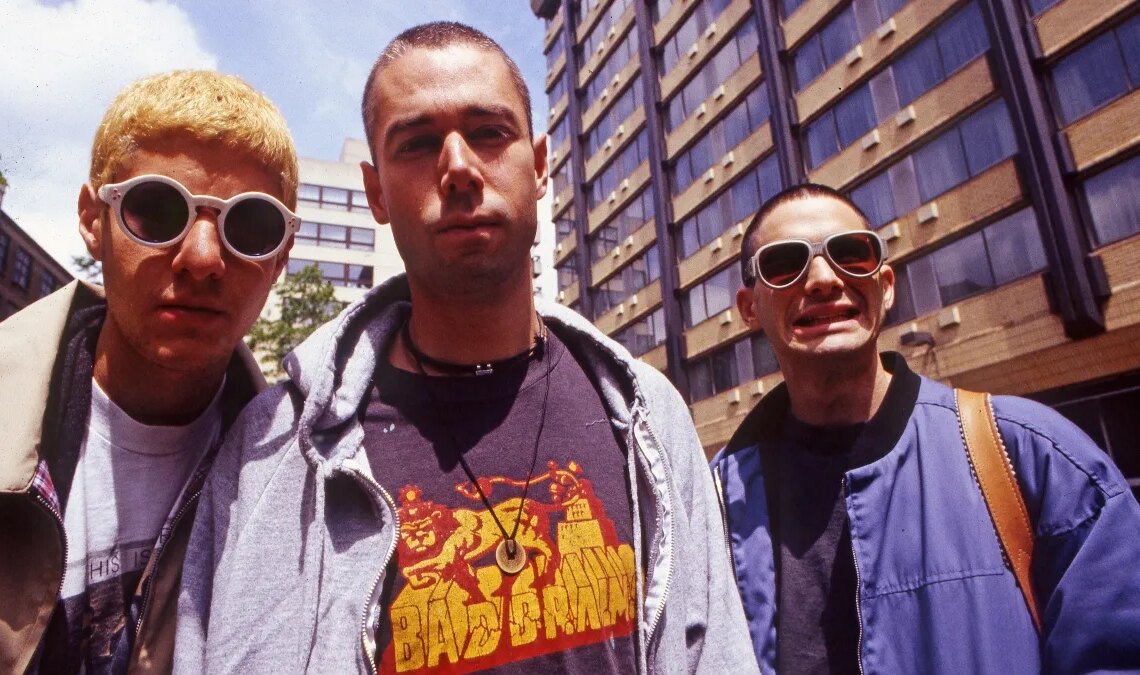
Photo by Martyn Goodacre/Getty Images
The post The Album Beastie Boys Were Sure Would Get Them Booted From Their Label: ‘Here’s Your Meal Ticket, Buddy’ appeared first on VICE.