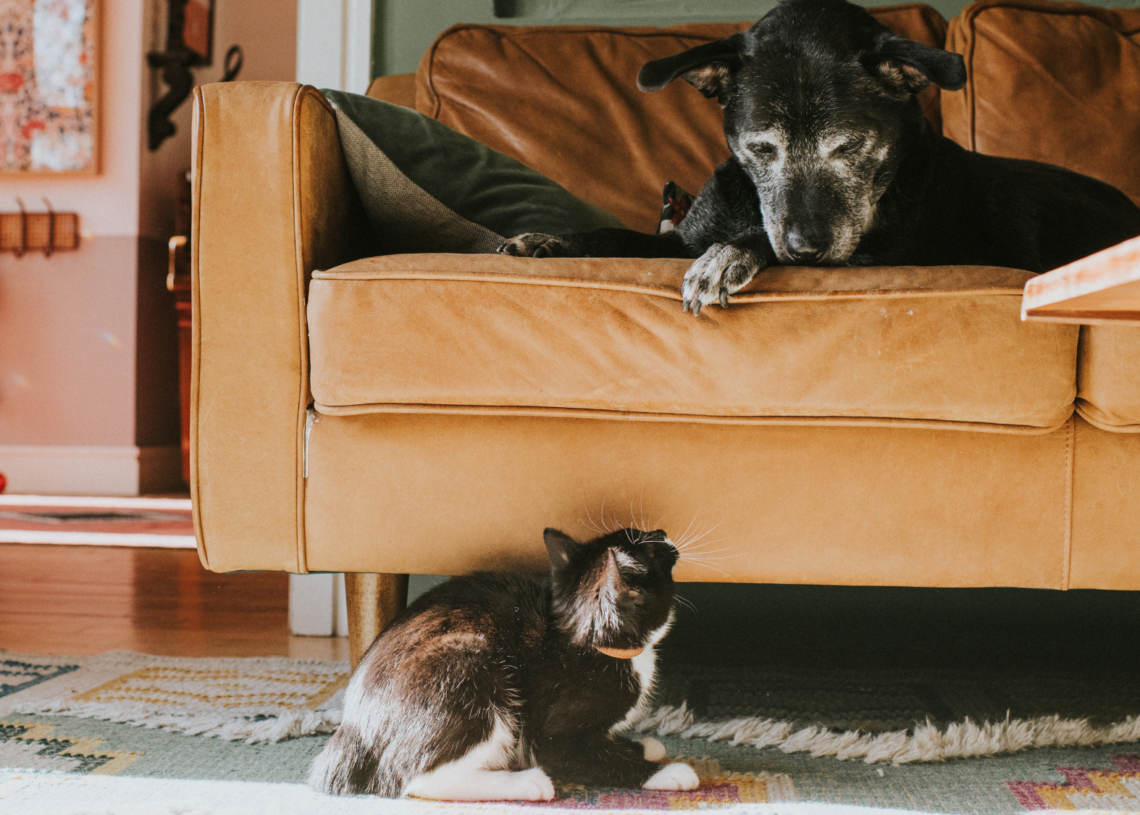
Pets don’t spiral the way humans do. They don’t vent. They don’t journal. They can’t use words to tell you when they’re feeling maxxed out or scared. When dogs and cats feel stressed, they hint at it through their bodies, their habits, and weird little behaviors that are easy to brush off as “quirks.”
Veterinarians say stress in pets is easy to miss because it affects the body before it changes behavior. It starts internally, affecting hormones, digestion, immune response, and sleep, well before owners label it stress.
Professor Audra Jones of the Texas A&M College of Veterinary Medicine & Biomedical Sciences told Newsweek that stress signals in pets are often misread as behavior problems. In reality, they reflect internal strain.
Here’s what vets pay attention to when a pet is overloaded and what actually helps afterward.
1. The ‘nothing’s wrong’ body language
Yawning when they’re not tired. Repeated lip licking. Nose flicks that come out of nowhere. These behaviors help animals calm themselves when they’re uneasy. When they keep happening repeatedly, the nervous system is already working overtime.
2. Trying to take up less space
Freezing, shaking, lowering the body, or pulling the tail in tight are stress signals. Jones explains that cats and dogs do this when they feel threatened, instinctively trying to reduce attention and ride it out.
3. Sudden disinterest in food or treats
Stressed pets can get weird about food, even things they normally lose their minds over. Appetite will usually come back only once the environment feels safe again.
4. Stress that looks different depending on species
Dogs broadcast their stress through panting or jaw movement. Cats deal with it by disappearing into small, enclosed spaces. Same signal, different expression.
5. Accidents that come out of nowhere
In extreme situations, pets might lose bladder or bowel control. That’s a sign the stress response has tipped from manageable to overwhelming.
How to Help Your Stressed Out Pet
The fix isn’t complicated. Jones says it’s important that you stay calm, and removing whatever’s causing the stress helps when possible. Big reactions, frantic soothing, or forcing contact tend to make things worse.
Gradual exposure works better. For example, “happy visits” to the vet, where pets show up just to sniff around and get treats, help rebuild trust. For cats, leaving carriers out well before travel and using synthetic pheromone sprays can reduce fear by marking spaces as safe.
When stress becomes a regular part of their behavior, veterinarians could recommend anti-anxiety medication. Jones notes these treatments are tailored, commonly prescribed, and can make unavoidable situations tolerable instead of traumatic.
Stress doesn’t mean a pet is difficult or broken. It means they’re communicating the only way they know how. The earlier someone listens, the easier it is to bring them back to a calm baseline.
The post 5 Signs Your Pet Is More Stressed Than You Think, According to a Vet appeared first on VICE.