
Physics and reality are taking their revenge.
And New Yorkers are paying the price.
On Thursday, the Public Service Commission approved Con Ed’s request for a rate hike that will result in an additional $615 per year in gas and electricity costs for the average New York City resident by 2028.
While bureaucrats are insisting that “law, not politics” is driving the cost increases, the truth is that over the past few years, New York’s Democratic politicians have made a series of disastrous energy decisions.
Indeed, despite numerous warnings about the staggering costs that would result from closing the Indian Point nuclear power plant and attempting to force New York’s grid to run solely on weather-dependent sources of generation, they pushed forward with climate policies that are now showing up on consumers’ monthly bills.
High utility costs are already mugging New Yorkers.
Last month, the Institute for Energy Research and Always On Energy Research reported that electricity prices in New York are 58% higher than the US average, and 62% higher than Florida’s.
Furthermore, residential rates in New York jumped by 36% between 2019 and 2024, nearly three times faster than the national average and the second-fastest increase in the US, behind only California.
Of all the bad moves made by New York’s leaders, the worst one — a decision that deserves its own wing in the Energy Foolishness Hall of Fame — is the premature closure of Indian Point in 2021.
That move stripped New York City of its single most important energy asset.
From a footprint of just one square kilometer on the Hudson River, the two reactors at Indian Point were generating about a quarter of Gotham’s electricity.
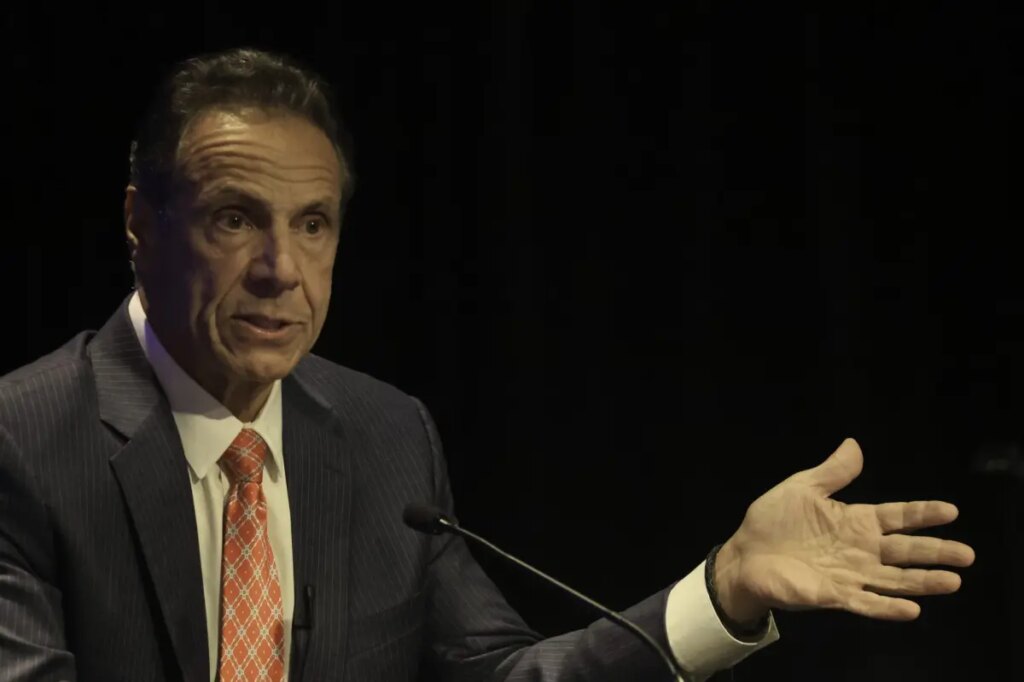
Nine years ago, then-governor Andrew Cuomo claimed that Indian Point was a “ticking time bomb.” Hogwash.
Nuclear energy is the safest form of producing power; it’s super reliable, good for grid stability, and, of course, it’s polar bear-friendly.
Indian Point was good for ratepayers: In a 2011 report for the New York City Department of Environmental Protection, Charles River Associates concluded that the premature closure of Indian Point would “increase the cost to New York’s consumers under every feasible scenario,” and that power costs would increase by $1.5 billion to $2.2 billion by 2030 due to the closure.
The Climate Leadership and Community Protection Act is also causing rate shock.
Passed by the Assembly and signed into law by Cuomo in 2019, the law requires 70% of the state’s juice to come from renewable sources by 2030 and a zero-emissions power sector by 2040.
In 2022, the Independent Power Producers of New York warned the law would “severely jeopardize reliability, public safety, and cost affordability.”
It also estimated that complying with the law would require spending $15 billion annually.
That figure is far too low: In 2024, ace energy analyst Ken Girardin, who is now at the Manhattan Institute, used state data to estimate that “New Yorkers will incur $4.9 trillion in Climate Act expenses by mid-century.”
Even leftist groups are admitting the obvious.
In a recent report, the Progressive Policy Institute said closing Indian Point was a mistake.
It also said New York’s climate mandates “seek to fundamentally re-engineer” the grid “at a potentially enormous cost to citizens.”
It continued, noting those costs are “compounded by the immense capital investment required to transform the grid and specific policy choices that increase the cost of energy production.”
The punchline here is obvious: New York’s renewable energy targets won’t be met because they can’t be met.
Nevertheless, ratepayers are getting stuck with the bill.
Robert Bryce is a Texas-based author, reporter and film producer. Follow him at Robertbryce.substack.com
The post Electricity bills are out of control because of Andrew Cuomo and ‘green’ madness appeared first on New York Post.