This thing should not exist, and that’s exactly the problem.
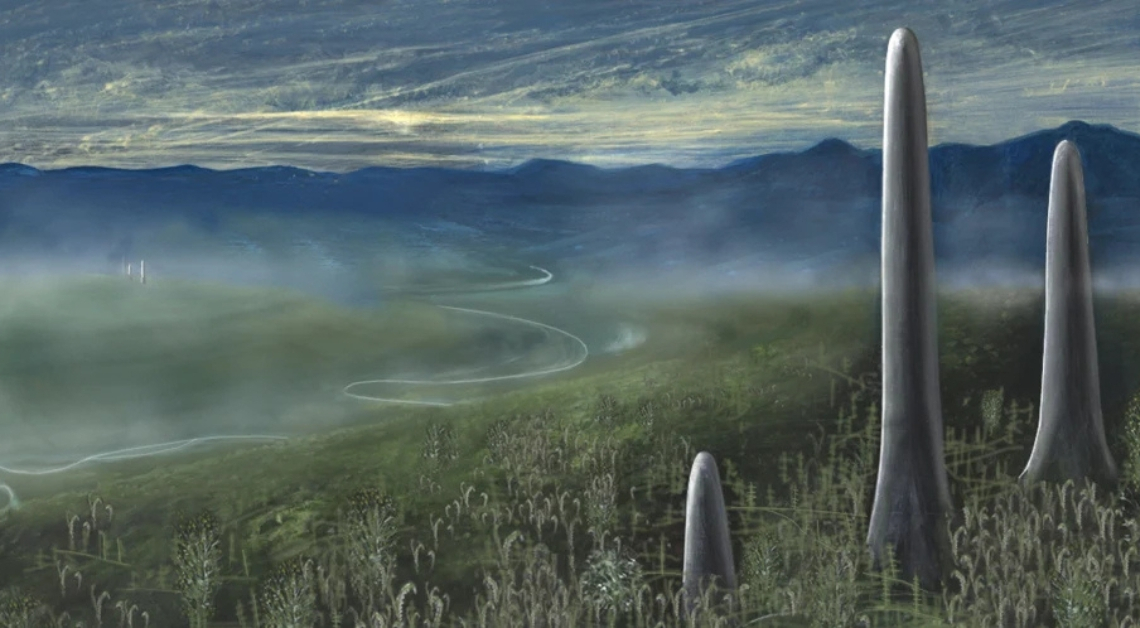
Rising out of early Earth like an alien monument, Prototaxites looked like a tree trunk but also…not at all. No branches. No leaves. No roots anyone can agree on. Some species stretched up to 26 feet tall, dominating landscapes that otherwise hugged the ground. Paleontologists have spent generations trying to explain what it was, mostly by shoving it into categories that made it more palatable.
A new study published in Science Advances suggests the discomfort is the point. Prototaxites doesn’t slot neatly into plants, fungi, animals, or protists because it likely never belonged there in the first place. The research argues that this organism represents an entirely extinct branch of complex life, a biological experiment that ran its course and left absolutely zero descendants behind.
“They are life, but not as we now know it,” said Sandy Hetherington, a research associate at National Museums Scotland and senior lecturer at University of Edinburgh, in a statement. She described Prototaxites as having anatomical and chemical traits that don’t line up with either fungal or plant life.
What Are Prototaxites Exactly?
The new analysis zoomed in on Prototaxites taiti, a smaller species preserved in Scotland’s Rhynie chert, one of the most detailed fossil snapshots of early land ecosystems ever found. While some Prototaxites species towered like ancient pylons, this one grew only a few inches tall, which made its internal structure easier to examine without so much guesswork.
At first glance, its interior looks vaguely fungal, made up of tube-like structures. That similarity falls apart under closer inspection, though. The tubes branch and reconnect in ways never seen in any known fungi. Chemical testing delivered an even bigger problem. True fungi from the same fossil deposit contain chitin, a defining ingredient of fungal cell walls. Prototaxites does not. Instead, its chemical signature more closely resembles lignin, the stuff that gives plants their woody strength.
That contradiction stands out because actual fungi from the same period were preserved right alongside it, offering a rare apples-to-apples comparison. According to the researchers, Prototaxites is chemically distinct from contemporaneous fungi and structurally unlike anything alive today, leaving no obvious place to park it on the evolutionary tree.
Kevin Boyce, a professor at Stanford University who led a 2007 study proposing Prototaxites was a giant fungus, wasn’t involved in the new research but agrees with its conclusions. Speaking to New Scientist, he said there is “no good place to put Prototaxites in the fungal phylogeny,” calling it a “novel attempt at complex multicellularity that ended in extinction.”
The Rhynie chert keeps doing this to scientists, forcing them to confront how strange early life on land really was. As study author Corentin Loron of the U.K. Centre for Astrobiology noted, museum collections still hold untouched material that could push this story even further off-script.
Prototaxites existed, dominated its environment, and disappeared without leaving descendants or a clear place in modern biology.
The post Everything We Know About Prototaxites, the Giant Organism That Came Before Trees appeared first on VICE.