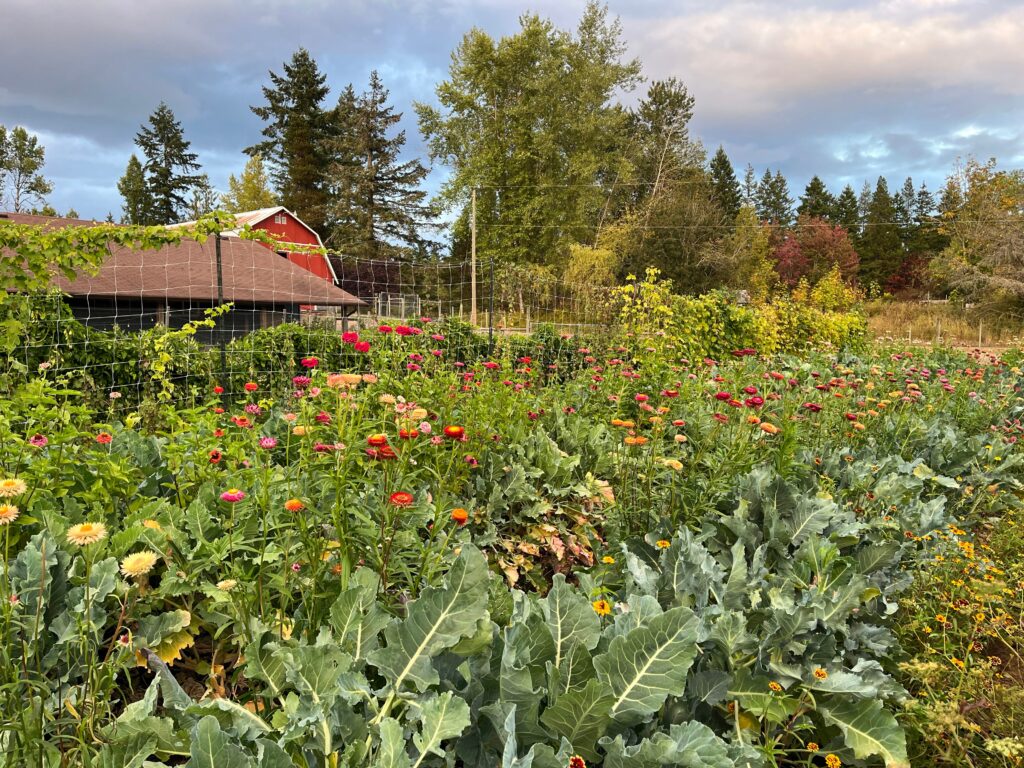
For many growers, vegetable gardens are ephemeral. Tomatoes, peppers, cucumbers, zucchini and many other common garden plants are annuals: seeded in spring and finished by the fall.
But the all-annual garden is a modern invention, says Michalina Hunter, the owner of Cicada Seeds in Vancouver Island, Canada. Historically, she says, gardens across cultures were loaded with perennials — plants that come back year after year.
“The general reason so many of these varieties have kind of been forgotten is that our food system transitioned towards industrialized agriculture,” Hunter says. Most edible perennials are harvested a little at a time, leaving roots or parts of the plant behind to continue growing. That’s difficult or impossible to do with machines, “so a lot of these perennials can’t be grown industrially,” she says. “But they’re great for backyard gardeners.”
Hunter started her seed company in 2021 after struggling to source perennial vegetable seeds for her own garden. She’s seen a surge in sales, she says, as interest grows in heirloom varieties and lower-maintenance backyard crops.
One reason to embrace perennials: They are eco-friendly. Plants that grow over many years increase soil health and biodiversity and sequester carbon. “Just not basically nuking your garden every year is a way to get a little closer to a natural ecosystem,” says Ashley Adamant, founder of the gardening and DIY site Practical Self Reliance.
And if that’s not enough motivation, consider the fact that a perennial vegetable garden, once it’s established, requires a whole lot less work. “They take care of themselves, and they grow without replanting, and they dominate the beds, winning out over weeds,” Adamant says.
Most gardeners, Hunter included, can appreciate a garden that doesn’t necessarily need a ton of tending. “It really takes the pressure off,” she says. “If, you know, life comes up, you can leave your garden alone for months — probably a year or even longer — and when you come back it’ll still be there.”
Many perennials, including vegetables, won’t sprout without cold stratification — exposure to frost, damp weather and fluctuating temperatures — which makes late winter the ideal time to plant.
“I seed them outside in a protected area, like an unheated greenhouse, in February or March,” Hunter says. “Then when it warms up, they’ll sprout when they’re ready.”
The first step is determining what will survive through the year in your hardiness zone. The U.S. Agriculture Department maintains a map that assigns the zones based on average temperatures and frost dates.
Once you know what should thrive in your location, Adamant suggests beginning with one or two varieties.
“Start with one raised bed somewhere,” she says. “Because if you plant 30 things you’ve never heard of in the first year, it’s a good way to get burned out.”
Here are some options to get you started.
Skirret. One of Hunter’s best-selling seeds is this root vegetable that was popular in medieval Europe “before potatoes came over from the Americas,” she says. “I tell people it’s like a stand-in for carrots or parsnips, but it could also be a substitute for potatoes because it’s a starchy root vegetable.” Once the seeds are established, “they’re really easy to grow,” she adds. “They make masses of white roots that are long and skinnier than a carrot. You can eat them raw or cooked. My favorite way to eat them is just to roast them in the oven with olive oil and salt. The leaves can be eaten, too. They kind of taste a little bit like celery leaf or parsley leaf.”
Potato onion. “Regular onions are biennial; the plants live for two years,” Hunter says. Potato onion varieties, on the other hand, reproduce indefinitely if some of the crop is left in the ground to seed the next year’s growth. The name comes from the onion’s long period of freshness once it’s harvested. “They have amazing storage,” she says. “They’ll keep in the fridge for, like, a year.”
Sunchokes. Adamant recommends these, which grow aboveground as a tall, sunflower-like yellow bloom and produce many palm-sized tubers at the root. “Those things cannot be killed,” Adamant says. “You have to be careful about where you plant them because they spread underground and can take over. But they also produce something like a slightly sweet potato and make nice flowers for pollinators.”
Caucasian spinach. This climbing plant, also called spinach vine, can grow well even in total shade. “The leaves are really mild and good raw or cooked,” Hunter says. “And it’s a plant you can start harvesting super early in the season. You can dig under the snow and find little shoots coming up in the mid- or late winter and eat them like mini asparagus.”
Delft Perpetual leek. This is one of Hunter’s best-selling seeds. “Instead of pulling out the leek to harvest it and taking all the roots with it, you cut it just below the soil line,” she says. “In a few weeks, baby leeks pop out from the root to replace the one you harvested. I’ve been growing them for years, and they’re still going strong.”
Garlic, scallions and potatoes. Depending on your hardiness zone, Adamant says, these common vegetables can be grown as perennials. The key is to leave part of the plants in the ground when harvesting. “I’ve got potato beds that are six years old, and they come back every year,” she says.
Fiddlehead ferns. The easiest perennials to cultivate are native varieties that can sometimes be overlooked. “You can grow really exotic things, but there’s a lot that is already growing in your yard, and you can just encourage it,” Adamant says. Fiddlehead ferns, for instance, are widespread across North America. “They’re delicious,” she adds, “and hard to kill once you get them established.”
Dandelions. “People pay a lot of money for dandelion greens in the grocery store,” Adamant says. “They grow these huge, carrot-like tap roots that get even bigger if they’re in a garden bed rather than a lawn.”
Milkweed. “Every part of it is edible and delicious as its own unique vegetable,” Adamant says. “The early-spring shoots taste like asparagus, only better. The buds, before the flowers open, taste like cauliflower. The flowers themselves taste like super tropical orchids and make really good jelly, and are good in salads. The seed pods when they’re young taste like okra, and later they have this paneer cheese-like thing.” Milkweed is also important for native species, most notably the monarch butterflies that lay their eggs on the plant. Harvesting some to eat, Adamant says, is a great way to encourage more growth. “People are like, ‘Save it for the butterflies!’ Well, actually, you are,” she says. “You cut it, it comes up again. And when you cut it, it sends out runners, and it multiplies, so you’re creating more milkweed.”
Kate Morgan is a freelance writer in Richland, Pennsylvania.
The post Why you should plant perennial veggies — even this medieval one appeared first on Washington Post.