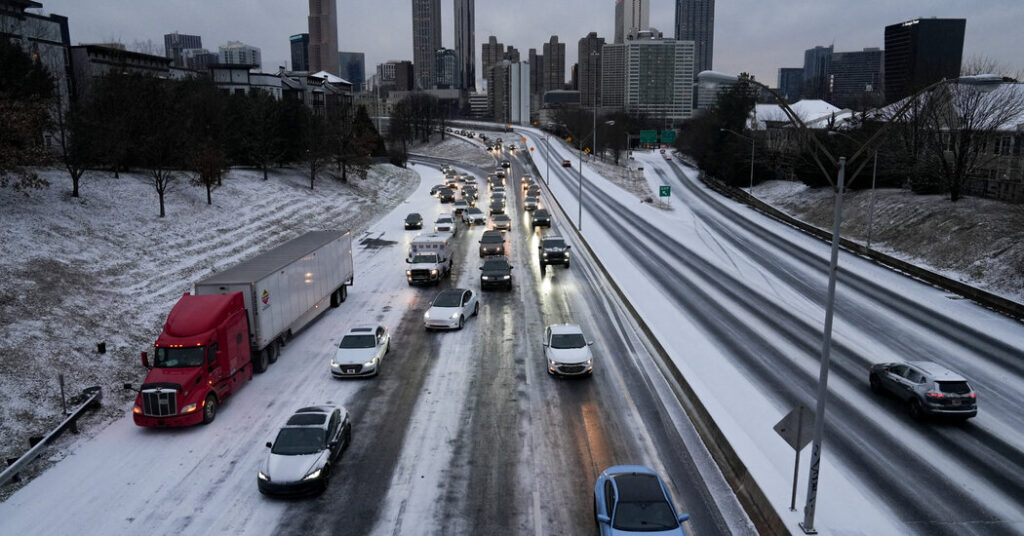
A major winter storm is set to bring heavy snow to much of the Eastern and central United States this weekend, and dangerous amounts of ice, sleet and freezing rain are possible farther south.
With that comes the potential for treacherous conditions on streets and highways. Snow and ice can lead to difficult and unsafe driving conditions, particularly in areas where people are not used to such severe weather.
Experts and public officials urged people to avoid unnecessary travel. “Staying home whenever possible helps reduce crashes, protects first responders and keeps routes clear for road crews,” the Arkansas State Police said in a news release.
Those who must travel should drive slowly, experts said, and delay their trips if possible. Here are a few tips on how to drive safely in winter weather.
Heed Warnings
State agencies routinely publish forecasts of potentially hazardous weather that may affect travel. They can also advise people to avoid driving unless necessary. State transportation departments, the National Weather Service and 511-type social media accounts provide live updates.
Winter is in full force. A number of states are bracing for severely cold weather this weekend, especially in the Upper Midwest, where wind chills may fall to around minus 50 degrees.
The Weather Service advises drivers to “change your plans if travel is hazardous.”
Prepare Yourself and Your Car
Staying safe starts before you leave, said William Van Tassel, manager of driver training programs at AAA. For drivers, that means making sure you’re well rested and have a clear head. “Nothing less than your top game,” Mr. Van Tassel said. Plan your drive according to the weather, and take plenty of breaks on longer trips.
It’s essential to make sure your car has a full tank of gas and that your tires have good tread and are properly inflated, experts say. The Weather Service suggests confirming that your car’s battery, wipers, coolant, tires and other systems that can be adversely affected by the cold are in working order. Make sure to completely clear your car and its sensors and cameras of any snow or ice before traveling, Mr. Van Tassel said.
Experts also urge drivers to make sure they pack supplies including water, blankets, cellphone and charger, flashlights, warning lights and any necessary medicines. The National Highway Traffic Safety Administration recommends keeping a snow shovel, a broom, an ice scraper, sand (or a similar material, such as cat litter) in your car in case it gets stuck in the snow.
Drive Slowly and With Vigilance
Road conditions can change quickly, so drivers must remain vigilant, experts say. The most important thing to do is drive slowly, Mr. Van Tassel said. It’s also important to maintain open space on at least one side of your car.
Reducing speed allows drivers more time to respond to situations they might encounter while on the road, such as a car spinning out or some kind of pileup. Snow and, particularly, ice can greatly limit tire traction. Mr. Van Tassel advises drivers to slow down to about two-thirds of their regular speed on wintry roads.
“Don’t drive faster than conditions allow,” Mr. Van Tassel said. That advice can be especially important when driving over hilly terrain, experts warn, which can be challenging even in the best conditions for drivers who are not completely alert, because whatever is happening on the other side of a hill appears without warning.
Driving with your lights on also makes you twice as visible to others, Mr. Van Tassel added.
If drivers spot trouble ahead, Mr. Van Tassel advises gently and smoothly pressing on the brakes and safely maneuvering into open space. Be mindful of any vulnerable pedestrians, such as emergency responders, who might be on the roadways.
If it does not appear possible to avoid a pileup, experts also advise drivers to “take the ditch,” as roadside ditches are designed to prevent cars from flipping over.
Be Picky About Roadways, When Possible
In wintry conditions, drivers should avoid roadways that do not give them an out, said Will Miller, an executive vice president of accident reconstruction with Aperture, a forensic engineering firm. Mr. Miller, who studies crashes, said that meant avoiding highways that have barrier walls on both sides and avoiding elevated structures such as bridges and overpasses when possible, as they freeze more quickly and stay frozen longer than roadways on the ground.
Mr. Miller said he also advises drivers to reduce speed and increase following distances.
Wintry conditions can be especially hazardous in southern states like Texas, where Mr. Miller lives, which lack the infrastructure for preventive treatments and snow removal that is common in northern states. Much of what is available is used on interstate highways and other busy thoroughfares, so drivers should exercise extreme caution on local streets, Mr. Miller said.
Steer Clear of Cruise Control
Some features of passenger vehicles can be tricky in winter weather. The National Highway Traffic Safety Administration advises drivers to double-check that they understand how features such as anti-lock brakes and electronic stability control will perform in wintry conditions. Drivers should also slow down, it says.
Drivers should be especially mindful of places where vehicles stop and start, such as at stop signs and traffic signals. Those areas can be more slippery than other surfaces, experts said.
Experts also advise against slamming on the brakes in ice, snow or rain because it can lead to skidding or hydroplaning. And some experts advise against using cruise control when ice or snow patches could crop up.
Mr. Van Tassel said it was crucial to maintain a safe distance from the car ahead of you, adding that there is “no better friend than space when you’re on the road.” You should be able to count to five or six from when the car ahead of you passes a landmark to when your car passes the same point. Ten seconds is even better, he said.
Christine Hauser is a Times reporter who writes breaking news stories, features and explainers.
The post Driving in Winter? Follow These Expert Tips to Arrive Safely. appeared first on New York Times.