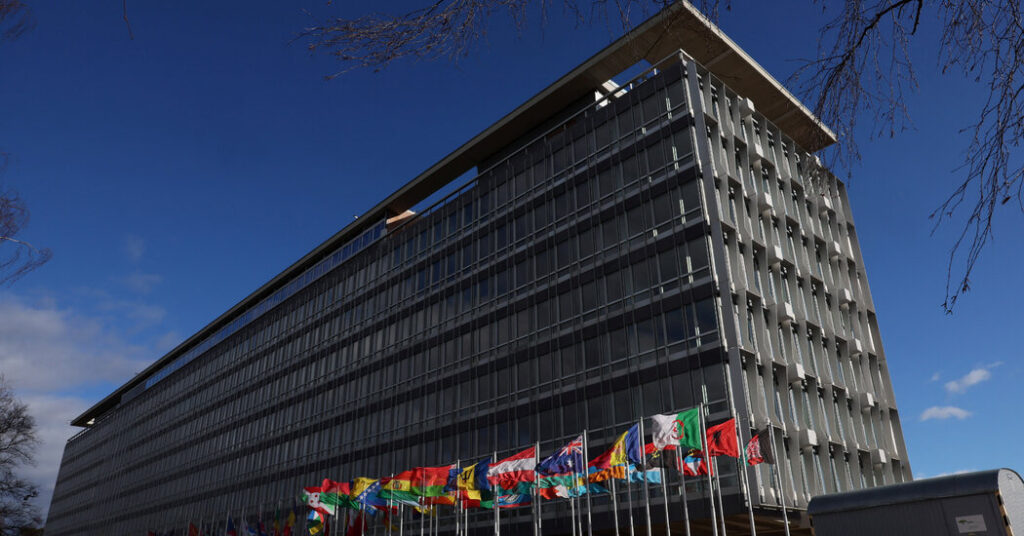
The United States formally withdrew from the World Health Organization on Thursday, making good on an executive order that President Trump issued on his first day in office pledging to leave the international organization that coordinates global responses to public health threats.
While the United States is walking away from the organization, a senior official with the Department of Health and Human Services told reporters on Thursday that the Trump administration was considering some type of narrow, limited engagement with W.H.O. global networks that track infectious diseases, including influenza.
As a W.H.O. member, the United States long sent scientists from the Centers for Disease Control and Prevention to participate in international decision-making about which strains to include in the flu vaccine. A W.H.O. meeting on next year’s vaccine is scheduled for February. The official said the Trump administration would soon disclose how or whether it will participate.
On Thursday, the administration said that all U.S. government funding to the organization had been terminated, and that all assigned federal employees and contractors had been recalled from its Geneva headquarters and its offices worldwide.
The up-in-the-air status of the flu vaccine is just one of countless global health matters that are left hanging in the balance by the United States’ withdrawal. Global health experts are deeply concerned that if a novel bug similar to the coronavirus emerges, a lack of international coordination will lead to death and disaster.
Dr. Thomas R. Frieden, a former director of the Centers for Disease Control and Prevention, called the move “a grave error” on social media, adding, “Health threats do not respect borders, and weakening global cooperation makes Americans less safe.”
Last year, Mr. Trump cited what he called the organization’s “mishandling of the Covid-19 pandemic” as one of the main reasons the United States was pulling out.
The senior official said the United States had negotiated data-sharing agreements with countries that belong to the W.H.O., and would work with faith-based groups and other nongovernmental organizations to track novel viruses. But he offered scant details, adding that the administration would have more to say in the future.
Sheryl Gay Stolberg covers health policy for The Times from Washington. A former congressional and White House correspondent, she focuses on the intersection of health policy and politics.
The post U.S. Formally Withdraws from World Health Organization appeared first on New York Times.