The West African nation of Guinea-Bissau has suspended a controversial U.S.-funded study of the hepatitis B vaccine in infants there after an outcry from public health researchers over the ethics of the work.
The Centers for Disease Control and Prevention approved a $1.6 million grant for the study last month, days after the health secretary, Robert F. Kennedy Jr., lifted the agency’s longstanding recommendation to give the vaccine to all infants at birth. Although the World Health Organization also recommends giving the shot at birth, Mr. Kennedy said more research was needed about the effects of a birth dose.
The study, which was to be carried out by Danish researchers, swiftly became the subject of furor in the public health world, with researchers in Africa and the United States saying that it violated key tenets of ethical science. A Trump administration health official said the study had been paused.
International agreements on medical research in humans require researchers to offer the globally accepted standard of care (in this case, vaccination at birth) to any participant in a clinical trial.
But in this study, half of the 14,000 infants studied were not going to be given the vaccine until they were six weeks old. Researchers were not going to screen pregnant women for hepatitis B — a basic step that would protect the babies of infected women, who could be vaccinated at birth.
Emily Hilliard, a spokeswoman for the Department of Health and Human Services, which oversees the C.D.C., said the goal of the research had been to answer questions about the effects of the hepatitis B vaccine. The study design was “based on the highest scientific and ethical standards,” she added.
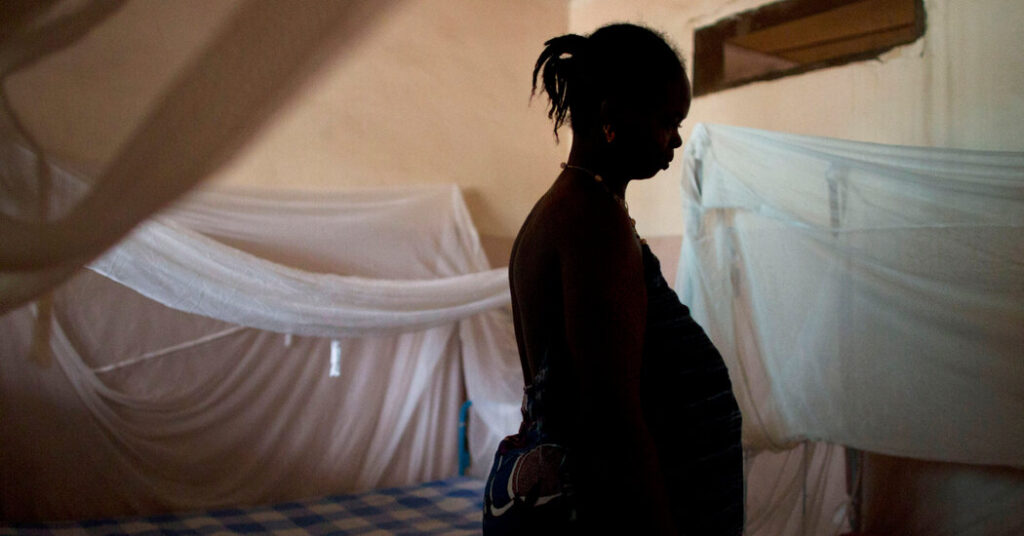
One in five people in Guinea-Bissau lives with hepatitis B, a virus that can cause severe liver damage and cancer, and each year thousands of infants there are exposed to the virus at birth.
The country currently vaccinates infants against hepatitis B at six weeks of age, as part of routine immunization. The government plans to introduce birth-dose vaccination, which is more expensive, in 2028.
In the meantime, the Danish researchers intended to take advantage of the fact that Guinea-Bissau, one of the world’s least developed countries, is not yet able to follow the global standard. They planned to vaccinate some children at birth, and assess them over time compared with children who got the six-week dose.
“This takes us back to bad research practices with the argument being that the standard of care is not available in that particular environment,” said Dr. Boghuma Titanji, an infectious diseases physician at Emory University. “Researchers are exploiting a scarcity situation to basically ram through this unethical study.”
Birth-dose vaccination for hepatitis B prevents mother-to-child transmission of the virus. Infants infected at birth have a significantly higher risk of developing chronic liver disease as adults, and many die in their 30s or 40s.
On Thursday, Quinhin Nantote, Guinea-Bissau’s minister of public health, said the study had not received proper ethical approval, and his office has suspended it. He said the government would consider if and how the study could proceed in the future.
“There has not been sufficient review to take a final decision on this study,” he said. “We don’t have the necessary input from the ethical committee.”
Many public health leaders say the study poses a question that has already been overwhelmingly answered by science: The birth dose of the vaccine prevents suffering and premature death. Given this evidence, this study, in its goal and its design, is problematic, said Dr. Jeanne Marrazzo, chief executive officer of the Infectious Diseases Society of America and the former top vaccine official for the National Institutes of Health.
“Essentially, you’re saying that lives of people in those settings don’t deserve the best interventions that we have available in countries with a different standard of care,” she said.
Other vaccine experts have raised different concerns with the study, which has additional private funding. It is designed to look for effects from the hepatitis B vaccine that include changes in neurological development and atopic dermatitis, a skin condition, but not at whether African children whose vaccines were delayed were more likely to carry hepatitis B.
The study grant was awarded to a team from the University of Southern Denmark whose work has been widely criticized by other researchers. Mr. Kennedy cited their work when he decided to cut off vaccine aid for the developing world, although the team has found a mix of benefits and harms that they attribute to vaccines.
Dr. Christine Stabell Benn, the principal investigator on the Danish team, said the study had been approved by the relevant authorities in Guinea-Bissau and had met her university’s requirements for research ethics oversight.
Last week, an official with the Guinea-Bissau National Health Research Ethics Committee, who did not want to be named, citing the lack of authority to give interviews, told The New York Times that the study had been reviewed and approved in the fourth quarter of 2025, before the coup and change in government.
But Commodore Nanote, the health minister, told reporters in a press briefing on Thursday that he was not certain whether the ethics committee had in fact reviewed the study. “We have no evidence of any meeting they held, we don’t even have minutes of a negotiated approval,” he said. “We believe that they did not hold a meeting, did not gather and did not address the issue.”
Guinea-Bissau consistently ranks among the 10 least-developed nations in the world, with a minimal health system — the country does not have a single oncologist or M.R.I. machine, for example. A military coup in November has further weakened fragile state institutions.
Gavi, the international organization that helps low-income countries purchase vaccines, began to assist countries in introducing birth-dose hepatitis B vaccination last year. (Mr. Kennedy ended U.S. funding to Gavi, significantly constraining its finances. Congress has proposed restoring funding in the spending bill now under consideration.)
Birth-dose vaccines are more expensive because they can be harder to deliver (roughly half of women in the country give birth at home), and refrigeration and other infrastructure has to be set up in labor wards to preserve them.
“The reason that children in Guinea-Bissau are not getting the birth dose presently is not because there is uncertainty about the vaccine. It’s because they’re unable to implement their policy for resource-related reasons,” said Dr. Keymanthri Moodley, an emeritus professor of bioethics at Stellenbosch University in South Africa.
She said the study was reminiscent of controversy in the 1990s about a C.D.C.-funded clinical trial in East and Southern Africa that tested a drug that blocked pregnant women with H.I.V. from transmitting the virus to their babies. Women in one part of the trial received a placebo — and as a result, many babies were infected with the then-fatal illness. The researchers defended the trial by saying that since the drug was not available in the countries where they tested the intervention, no one was worse off than they would have been without the research.
After that controversy, changes were made to the Declaration of Helsinki, an international agreement that sets out the terms of ethical medical research, to require that research participants in the control group receive the “best proven” intervention. In the case of the Guinea-Bissau trial, that would be the birth-dose vaccine.
Health officials in Guinea-Bissau expressed frustration with the study as an example of foreign-funded research that is not well communicated to the population who will be studied.
“There is a huge lack of information regarding this health testing, or any health experiments,” Cadija Mané, a former senior official in the Health Ministry, said. “There needs to be a better flow of information.”
Ricci Shryock contributed reporting.
Stephanie Nolen is a global health reporter for The Times.
The post Kennedy Plan to Test a Vaccine in West African Babies Is Blocked appeared first on New York Times.