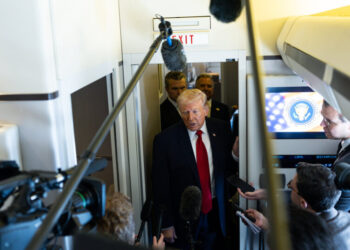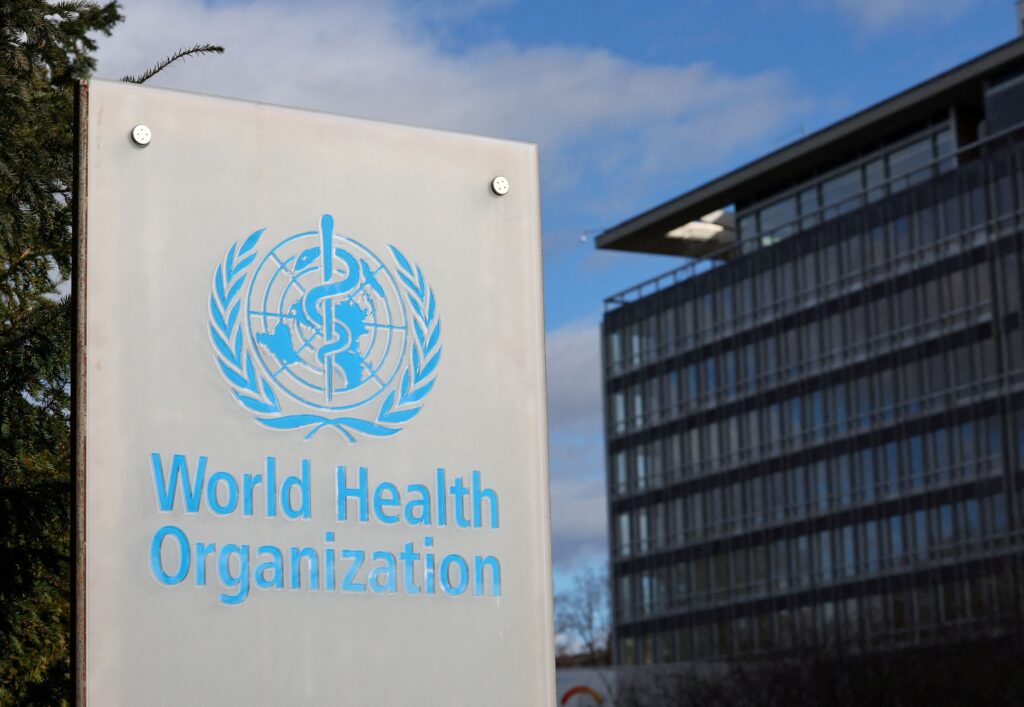
The United States formally withdrew from the World Health Organization on Thursday, one year after President Donald Trump announced plans to pull out of the preeminent global health alliance.
Trump justified the move based on what he viewed as the “mishandling” of the coronavirus pandemic, a failure to adopt changes and inappropriate political influence from some members.
The departure stunned global health experts and international authorities because the U.S. had been the most influential member of the 194-member organization and played a key role in its establishment in 1948. It had also historically been the organization’s largest financial contributor.
“Withdrawing from the World Health Organization is scientifically reckless,” Ronald G. Nahass, president of the Infectious Diseases Society of America, said in a statement. “It fails to acknowledge the fundamental natural history of infectious diseases. Global cooperation is not a luxury; it is a biological necessity.”
In announcing the withdrawal, the Department of Health and Human Services said the U.S. will remain a global leader in health, but through “existing and new engagements directly with other countries, the private sector, nongovernmental organizations, and faith-based entities.”
During a briefing with reporters, a senior HHS official said U.S.-led global health efforts going forward will rely on the presence that federal health agencies, such as the Centers for Disease Control and Prevention, the National Institutes of Health and the Food and Drug Administration, already have in 63 countries and bilateral agreements with “hundreds of countries.”
“I just want to stress the point that we are not withdrawing from being a leader on global health,” the official said, speaking on the condition of anonymity under ground rules for the briefing.
All U.S. personnel and contractors assigned to or embedded with WHO offices have been recalled. All U.S. government funding to the WHO has been terminated, nearly $280 million, according to a person familiar with the government funding who spoke on the condition of anonymity because they were not authorized to discuss the matter on the record. The State Department and HHS did not respond to questions about the funding.
According to the WHO, the U.S. must meet its financial obligations before withdrawing and the organization’s executive board is set to consider the matter at its February meeting.
Public health experts have questioned how the U.S. can continue to be a global public health leader.
Health Secretary Robert F. Kennedy Jr. said in June that the U.S. would no longer contribute to Gavi, an independent public-private financing group that buys vaccines and distributes them in low- and middle-income countries. As part of sweeping HHS staffing cuts last year, the CDC’s Global Health Center lost its director and some other employees.
“It’s almost laughable that the Trump administration thinks they can lead in global health,” said Lawrence Gostin, a law professor at Georgetown University and director of a WHO Collaborating Center for National and Global Health Law. “They’ve decimated the global health capacities of the CDC. They’ve slashed global health funding around the world.”
It’s unclear how the formal withdrawal will affect some key meetings where U.S. officials have historically played a major role. Next month, the WHO is scheduled to convene a global meeting of influenza experts to decide which virus strains should be included in next season’s flu vaccine, a process that guides vaccine production months in advance.
Scientists from WHO collaborating centers, including the CDC, other countries’ public health agencies and academic laboratories, review global surveillance data, genetic sequencing and laboratory analyses to assess which influenza strains are spreading and how they are changing.
In February 2025, CDC scientists were allowed to participate in the WHO meeting. Asked whether CDC scientists would be able to take part next month, the senior HHS official told reporters that there are ongoing conversations and that an announcement will come “in the near future.”
The post Formal U.S. withdrawal from WHO is decried as ‘scientifically reckless’ appeared first on Washington Post.