President Trump filed a lawsuit against JPMorgan Chase on Thursday, contending that the nation’s biggest bank stopped doing business with him for political reasons after the Jan. 6, 2021, attack on the Capitol.
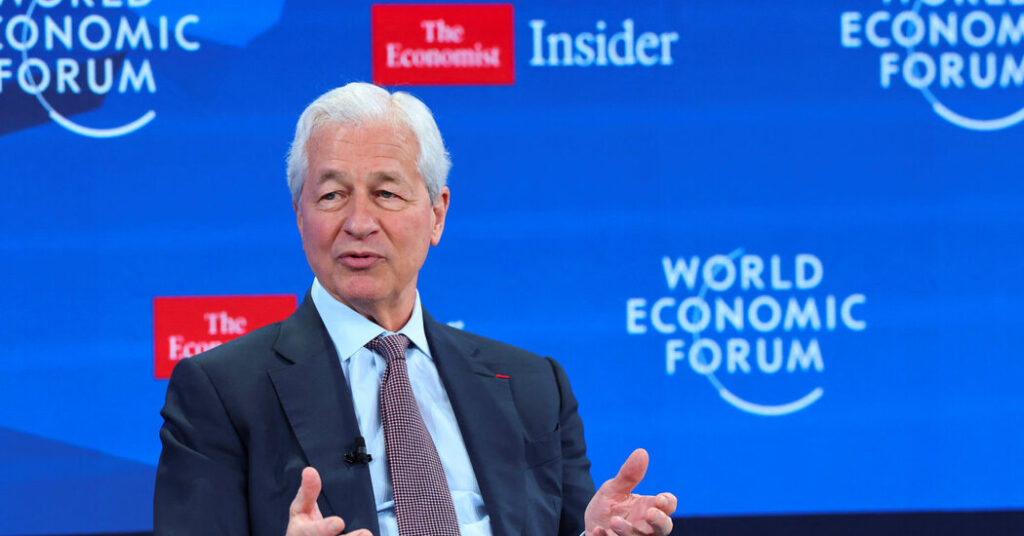
The lawsuit, which seeks $5 billion in damages, was filed in state court in Florida and also named Jamie Dimon, the bank’s chief executive, as a defendant.
In the complaint, Mr. Trump said JPMorgan notified him in February 2021 that it was planning to close his accounts and those of some of his family’s businesses. According to a copy of the lawsuit, which was posted on the CNBC website, the bank’s decision was the result of “political discrimination” against Mr. Trump, his family and their related businesses.
In March, Mr. Trump’s family business filed a similar lawsuit against Capital One.
JPMorgan, which confirmed it had received a copy of the lawsuit, said in a statement that its decision to close Mr. Trump’s account was not prompted by politics, and it believed the suit “had no merit.”
In the aftermath of the Jan. 6 attack on the Capitol, staged by some of Mr. Trump’s most rabid supporters, a number of companies shunned doing business with the president. But in the wake of his election victory in November, most businesses rushed to welcome him back.
Over the past year, Mr. Trump has sought to settle old grievances by either filing lawsuits or threatening to file them against companies and individuals that he says have wronged him. Some companies have opted to resolve the disputes by reaching monetary settlements with Mr. Trump.
Patricia Wexler, a JPMorgan spokeswoman, said in the statement: “We do close accounts because they create legal or regulatory risk for the company. We regret having to do so, but often rules and regulatory expectations lead us to do so.”
The issue of closing accounts, a process sometimes called “debanking,” has become a potent topic for conservatives, who have claimed banks have routinely closed the accounts of people who have expressed right-wing views. Some in the crypto industry have also complained about being debanked.
The issue is a sensitive one for JPMorgan given the criticism it has endured for its long banking relationship with Jeffrey Epstein, the disgraced financier and notorious registered sexual offender. The bank did not stop doing business with Mr. Epstein until 2013, some five years after he pleaded guilty in Florida to a charge of soliciting prostitution from a minor girl.
Mr. Trump said in the lawsuit that JPMorgan had closed the accounts because it “needed to distance itself from President Trump and his conservative political views.” The lawsuit also said that the bank, at the direction of Mr. Dimon, had put Mr. Trump’s name and the names of some of his businesses on a “blacklist” that banks use to identify “individuals and entities that have a history of malfeasant acts.”
It is unclear what “blacklist” the lawsuit is referring to.
Matthew Goldstein is a Times reporter who covers Wall Street and white-collar crime and housing issues.
The post Trump Sues JPMorgan for Closing His Bank Accounts for Political Reasons appeared first on New York Times.