Maryland Gov. Wes Moore on Wednesday proposed closing a projected $1.4 billion budget shortfall by reducing spending across the state government and moving money around from certain specialty funds, a strategy meant to spare residents from new cost increases in a struggling economy.
In presenting his budget to state lawmakers, who convened for their 90-day legislative session last week, the governor framed his fiscal strategy as “targeted” and “data-driven.”
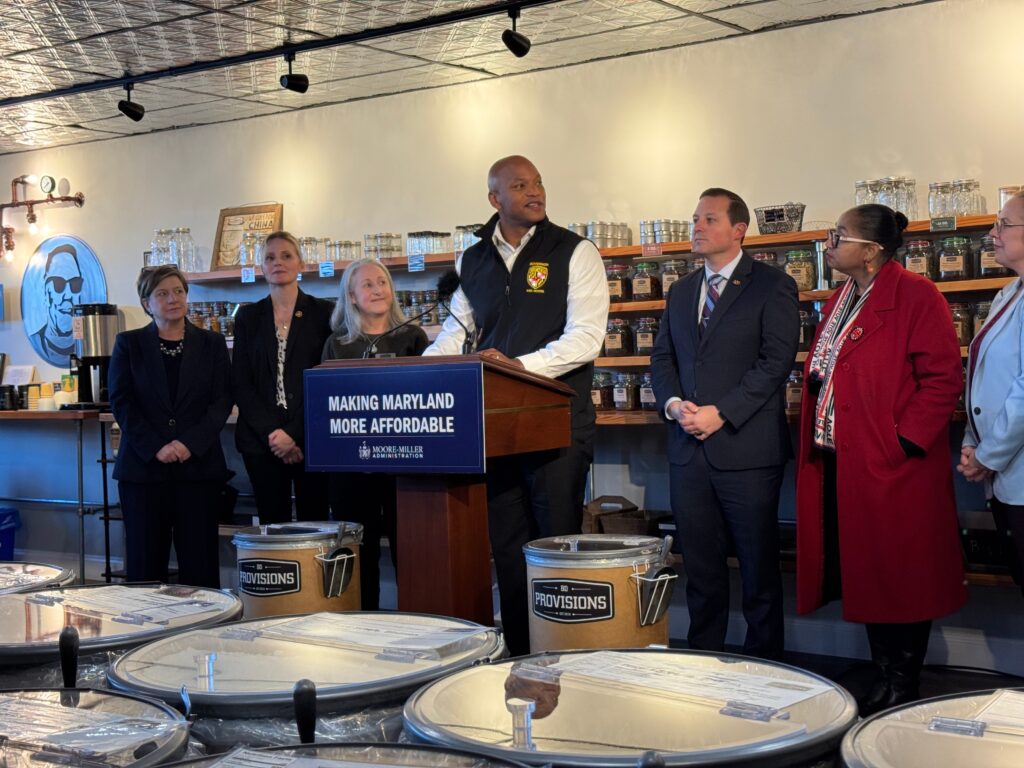
“This budget shows that we can spend wisely while still protecting our values,” Moore said during a news conference in Annapolis on Wednesday.
Both the governor and Department of Budget and Management acting secretary Jake Weissmann blamed the shortfall on the actions of congressional Republicans and the White House since President Donald Trump was sworn in last year.
“What happened?” Weissmann said at the news conference. “Simply put, Donald Trump happened.”
Maryland was hit hard by the Trump administration’s sweeping cuts to the federal workforce, losing an estimated 24,900 federal government jobs in 2025 — more than any other state — while also enduring funding rollbacks to programs such as SNAP and Medicaid. Economic challenges overall have left Maryland residents struggling to afford basic necessities such as groceries, housing and utilities, state leaders have said.
“This comes at a moment of profound economic and social and political transformation. We know this is coming at a time when many Marylanders are not just scared, not just worried about the present, but they’re worried about what they’re seeing in terms of the language and the discourse,” Moore said Wednesday during his presentation. “Marylanders are counting on us to hold the wall and tackle everyday problems with discipline, with persistence, with bold and tangible solutions. Not just today, but for our tomorrow.”
Moore’s proposed budget is about 0.8 percent larger than the current fiscal year’s, which Weissmann said was the smallest growth in modern history and focuses on “only funding services essential to Maryland.”
Spending reductions would come from true cuts made to government agencies, including $150 million to the Developmental Disabilities Administration and a slowing of planned increases to certain programs. On top of that, money from specialty funds, such as the state’s rainy day fund, would be transferred into the general fund to help close the shortfall.
The governor’s budget includes a 1.5 percent cost-of-living increase for all state employees — lower than expected. The governor and AFSCME Maryland, the largest union for state employees in Maryland, were supposed to come to an agreement on wages by the end of 2025, but they did not. That figure could be subject for debate among lawmakers, and AFSCME members have signaled that they intend to lobby for greater investment in a workforce that they argue is underpaid and understaffed.
Republican state lawmakers said in statements Wednesday that they were disappointed that the governor’s proposed budget does not more aggressively reduce state spending, instead relying on what Senate Minority Leader Stephen S. Hershey Jr. (R-Queen Anne’s) said was a strategy of “moving and raiding funds to support ongoing spending.”
Democratic leaders in both chambers have signaled that they are largely aligned with the governor this year regarding how best to balance the budget. Senate President Bill Ferguson (D-Baltimore City) and Speaker Joseline A. Peña-Melnyk (D-Prince George’s) have both said that they are committed to finding a solution without instituting new taxes.
The Senate will work on the budget first this year, taking the governor’s initial proposal and making any changes before sending its version to the House of Delegates. Ferguson and Peña-Melnyk said on the first day of the legislative session that they had agreed to meet regularly throughout the process to ensure collaboration and communication from the start.
House Appropriations Committee Chairman Ben Barnes (D-Prince George’s) said he has already spoken to Senate Budget and Taxation Committee Chairman Guy Guzzone (D-Howard) three times in the past 24 hours about their shared mandate to pass a balanced budget.
Barnes called the governor’s budget proposal “a good first step” and said the House’s mandate this year is to pass a budget that prioritizes making the state more affordable for residents and protecting vulnerable communities — while keeping an eye on policy decisions in Washington that could further affect Maryland’s pocketbook.
Guzzone said his committee will spend its “unpacking” the governor’s cost-reduction proposals and ensure that the one-time money transfers from the specialty funds won’t create long-term challenges.
“I think they’ve done a really good job of being thoughtful and creative,” Guzzone said of the governor’s proposal. “That doesn’t mean we won’t make changes of course, but it’s still a great framework.”
Last year, after the Maryland Board of Revenue Estimates made dire projections in the early months of the Trump administration, the state made about $2 billion in cuts to the budget, including some adjustments to the state’s education reform plan known as the Blueprint for Maryland’s Future.
Ferguson and Peña-Melnyk both said they do not expect to make major changes this year to the Blueprint, which increases education funding by about $3.8 billion annually and will soon become one of the biggest drivers of state spending when the program’s designated funding source runs out.
Ferguson has said his focus will be on “cost containment,” particularly for state-funded programs that have been growing more expensive than anticipated each year.
Some of the biggest drivers of state spending in recent years have been Medicaid, substance abuse treatment programs, and programs administered by the Developmental Disabilities Administration. The Senate president said all of those areas may be targets for reining in spending.
“We’re going to try to protect those who are the most vulnerable as we are making these adjustments and cuts,” Ferguson said last week. “We’re also going to try to make sure that we’re still investing in ways that we can grow, so we don’t want to cut everything to the detriment of our long-term future.”
Though her chamber will not begin working on the budget in earnest until the Senate passes its proposal, Peña-Melnyk said in a pre-session interview that she has already instructed committee chairs to look at a number of audits produced by the Office of Legislative Audits to “pinpoint where the problems are and what we can do to fix it.”
“We’re good at a lot of things,” she said. “But there’s always room for improvement as well.”
The post Maryland Gov. Wes Moore proposes plan to close $1.4 billion budget shortfall appeared first on Washington Post.