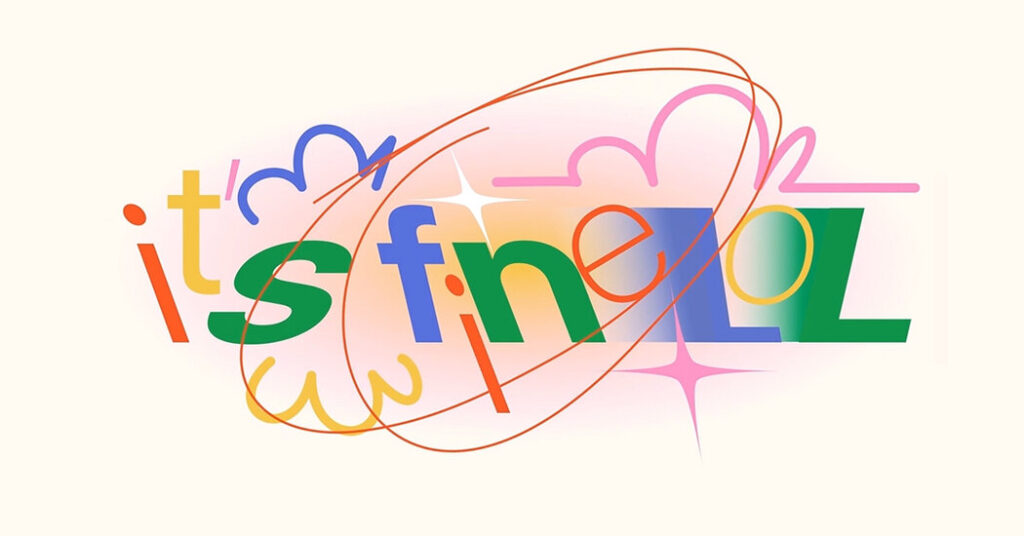
You get a text from a friend and you notice that the sentences all end with periods. How do you react?
Do you recoil in horror, wondering why your friend is being so cold or passive-aggressive? Or do you simply appreciate the message for its clarity and good grammar?
In the essay “Why Are We Still So Afraid of Using the Grumpy Old Period?,” published in The New York Times Magazine, Nitsuh Abebe writes about the challenges of communicating in the age of the smartphone:
“How Many Exclamation Points Are Too Many in an Email? A Psychologist Weighs In.” A psychologist! This article appeared in Parade last summer, but you could find the same question being asked, at varying levels of desperation, in any season over the past decade. It is widely understood that exclamation points must be inserted into the modern professional email at precise intervals — just enough to create a tone of eagerness and warmth without tipping over into sounding fake, sycophantic or batty. So people appeal to the internet, terrified they’re hindering their careers by striking the wrong balance; they seek advice from job coaches; they joke about their obsessive budgeting of exclamations. They fear seeming overexcited, yes — but they also know the risks of the plain old period. Too brusque. Too cold. Too testy.
It has been this way since soon after the smartphone arrived, when older Americans started getting the unwelcome news that ending their messages with periods was a grave faux pas. This must have been a baffling experience, like being called gross for drinking water or flossing. But a new tonal consensus really had emerged: The period seemed pointed, stern, passive-aggressive. By 2013, this shift was ingrained enough that The New Republic ran an article celebrating the period’s newfound role as a jerk.
Since then, our anxieties about tone seem to have skipped right over the content of our messages to the characters that end them. There has been a long parade of replacements for the period. The writer of that New Republic piece thought ellipses were nice. (They’re not; younger people find them not only Boomerish but also horror-movie ominous.) For a while, young people preferred the nervous chuckling of a “lol” or “haha.” (“Why Do Millennials Feel Compelled to Write ‘Lol’ After Everything?” asked Huffpost last fall — to which one answered that it was “like a tension-breaking mechanism,” while another pointed out that texting “I think I love you, lol” allows you to pretend you were kidding if you don’t get a favorable response.) Emoji, too, had their turn as sentence-enders — all except that subset, like the thumbs-up and the “OK” hand signal, that came to be associated with the same passive-aggressive terseness as the period, the equivalent of a clipped verbal “fine.”
Some of these habits are still considered informal or even immature, but they have also aged their way up into typical workplace communication, and some people would love to impose a new consensus around them, too. “It’s impossible to convey emotions through text, and this helps the reader understand your intent,” someone posted on Reddit years ago, regarding lols and hahas. “I have coworkers who sound dead inside when we IM, because they believe any kind of informal slang is reserved for childish teens.”
The essay continues:
To monitor one’s tone is human, but why are we this scared of sounding brusque in routine emails? The usual explanations revolve around the difficulties of conveying tone in writing. It’s a bit much to say that it’s “impossible to convey emotions through text” — I mean, literature exists — but the lack of access to vocal inflections, facial expressions and listener feedback does create challenges.
If the issue were just writing, though, you’d expect the rise of short-form video to solve it. Making a TikTok or YouTube video restores all of the inflection and expression people claim to be lost without. And yet the people on these platforms are not exactly bringing back deadpan or disdain. For the most part, they evince a manic desire to be ingratiating, with everything from lulling hand movements to singsong speech designed to be immediately liked.
Students, read the entire article and then tell us:
-
Is ending a text message with a period too cold or passive-aggressive? Why or why not?
-
How do you typically end your messages? With a period, an exclamation point or a “lol”? How about a “haha”? What do your choices about punctuation and acronyms say about you or who you are texting?
-
Mr. Abebe’s essay explores the challenges of communication in the age of the smartphone. Do any of the examples he cites — like the “horror-movie ominous” ellipses (…) or, as he puts it later in the article, the “wheedling” question mark (?) — resonate with you?
-
Do you ever find yourself overanalyzing a message you’ve received, struggling to decode its tone or meaning? Do you ever experience anxiety before hitting send, worrying about how your words will be interpreted? In what ways does digital communication leave you feeling nervous, confused or dissatisfied?
-
The essay suggests that we should be less concerned about punctuation and tone in our texts, and more concerned with spending time talking face to face. Do you agree? How else do you think we can improve how we communicate?
-
If you were to create a guide to digital communication for a parent or teacher, what are some dos and don’ts that you would recommend to help them avoid sounding cold or passive-aggressive?
Students 13 and older in the United States and Britain, and 16 and older elsewhere, are invited to comment. All comments are moderated by the Learning Network staff, but please keep in mind that once your comment is accepted, it will be made public and may appear in print.
Find more Student Opinion questions here. Teachers, check out this guide to learn how you can incorporate these prompts into your classroom.
Jeremy Engle is an editor of The Learning Network who worked in teaching for more than 20 years before joining The Times.
The post Is Ending a Text Message With a Period Too Harsh? appeared first on New York Times.