THE TYPEWRITER AND THE GUILLOTINE: An American Journalist, a German Serial Killer, and Paris on the Eve of WWII, by Mark Braude
A Midwestern writer looking for inspiration and acclaim relocates to Paris’s Left Bank, where they spend days in cafes writing and evenings in nightclubs socializing with the expat set, penning delightful missives for American readers depicting life in France.
No, I’m not describing Ernest Hemingway. Nor am I invoking an “Emily in Paris” spinoff featuring an influencer carefully packaging the City of Light for Anglophone consumers.
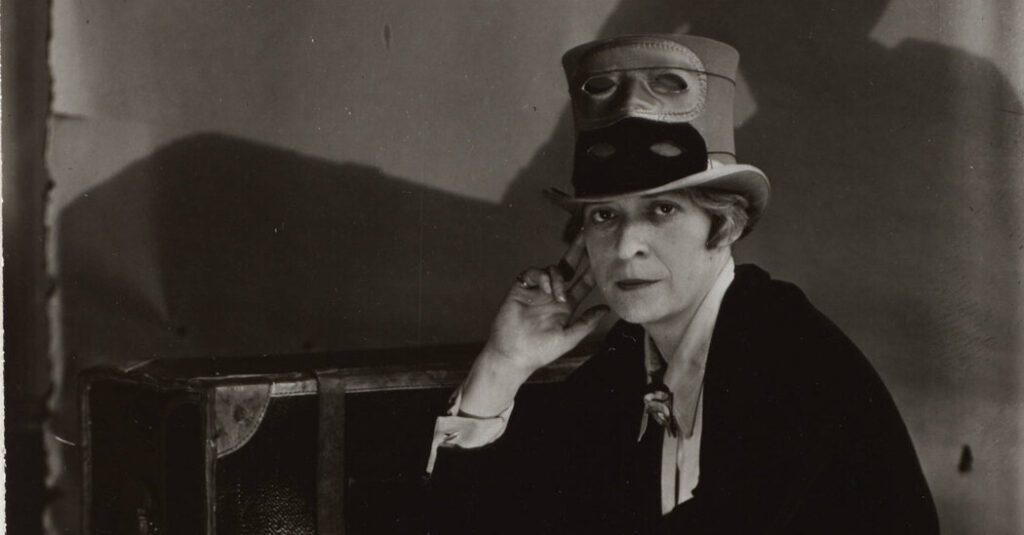
The person in question is Janet Flanner, The New Yorker magazine’s first foreign correspondent, and the endlessly compelling subject of Mark Braude’s timely, immersive, if at times puzzling new book, “The Typewriter and the Guillotine.” (We’ll get to the guillotine.)
Born in Indianapolis in 1892, Flanner relocated to New York after college with her then husband and quickly fell in with the Algonquin Roundtable and Greenwich Village social sets. It was here that she connected with Jane Grant and her husband, Harold Ross. (Flanner and Grant both belonged to a club that encouraged women not to change their names after marriage.) When Flanner left for Paris in 1922 with a new partner, Solita Solano — they were looking, Flanner said, for “Beauty with a capital B” — Grant was so taken with the letters Flanner sent back that she suggested to Ross that he include them as a feature in his newly conceived magazine, The New Yorker. He did and thus was born the “Letter From …” format that survives to this day.
Shelving dreams of becoming a successful novelist, Flanner began filing regular Letters From Paris, under the pen name Genêt, detailing the goings-on of Parisians (and the Americans among them) in the rollicking decade following the devastation of World War I.
Americans have always been fascinated by Paris, and Flanner’s lighthearted pieces were an immediate hit. Through a combination of timing and talent and a solid dose of knowing the right people, Flanner had landed a seat at the table Hemingway would later capture in “A Moveable Feast.” Edith Wharton, Colette, Gertrude Stein and Josephine Baker all make appearances in her dispatches. As does Hemingway, who flops on couches, dipping in and out of conversations.
What a relief, after so many years of having this era defined by his lost generation of men, to come upon a different viewpoint — from a queer woman no less — of this charged time. It’s eye-opening to realize how much of our collective idea of 1920s Paris comes from Flanner, the original newsletter writer.
All parties must end, though, and as the Roaring Twenties segued into the increasingly alarming 1930s, Flanner shifted to more serious terrain (despite Ross’s reluctance to engage in politics). And began to write under her own name.
Flanner persuaded The New Yorker to allow her to travel to Nuremberg and profile Adolf Hitler. It was the first significant profile of the German chancellor, whom, until then, the American press had declined to take seriously. The three-part feature made Flanner a national celebrity.
This instinct for story and cleareyed view of what was happening politically on the European continent — “democracy is not geared to meet crises” — would serve Flanner and The New Yorker well over the coming decade, as she established herself as one of the most consequential foreign correspondents of the time.
Less clear, however, is Braude’s decision to pair this portrait with that of Eugen Weidmann, a German serial killer who murdered six people in France — including an American dancer — before being captured and sentenced to death in 1939, the last person in France to die publicly by guillotine.
Flanner did cover the trial, which at the time consumed France, the German killer a handy target for the anger and fear that consumed a nation facing inevitable war. But her work on the case was hardly career-defining, or even genre-defining. And while Weidmann’s story — dropped in here in short, regular bursts — might merit its own book, his appearance seems out of place except in the context of another of Flanner’s subjects. The ticking time bomb of Europe in the 1930s, to which Flanner was highly attuned, provides more than enough heart-wrenching suspense.
Fortunately, Weidmann’s inclusion, perplexing though it might be at times, does not spoil what is otherwise a long overdue and highly enjoyable biography. Braude excels at capturing the small details — the radio in the bistro across the street from the square where Weidmann was executed was playing American music — and with Flanner as our guide, he is able to richly paint an era that strongly rhymes with our current moment
It can be jarring to step away from Flanner’s reportage only to find nearly identical language in today’s headlines. Braude has delivered the prescient Flanner to us, nearly five decades after her death, at exactly the right moment.
THE TYPEWRITER AND THE GUILLOTINE: An American Journalist, a German Serial Killer, and Paris on the Eve of WWII | By Mark Braude | Grand Central | 431 pp. | $32.50
The post The Writer Who Defined 1920s Paris? It Wasn’t Hemingway. appeared first on New York Times.