As the Ukraine-Russia drone arms race rages, hobbyists far from the war are pushing the limit for how quickly these small quadcopters can fly.
A father-son duo in South Africa set a new Guinness World Record by reaching a ground speed of 408 mph with their custom, battery-powered remote-controlled quadcopter, the Peregreen V4.
Luke and Mike Bell performed the record-breaking flight on December 11, 2025, the Guinness World Records organization said in a statement in January.
While drones built for war are constrained by additional factors, the Bells’ achievement expands the possibilities of how these devices might one day perform on the battlefield.
It also lays bare how accessible new war-relevant technology is becoming for civilians. The Bells documented their design and build process on YouTube, filming themselves using a 3D printer and off-the-shelf parts to create the Peregreen V4.
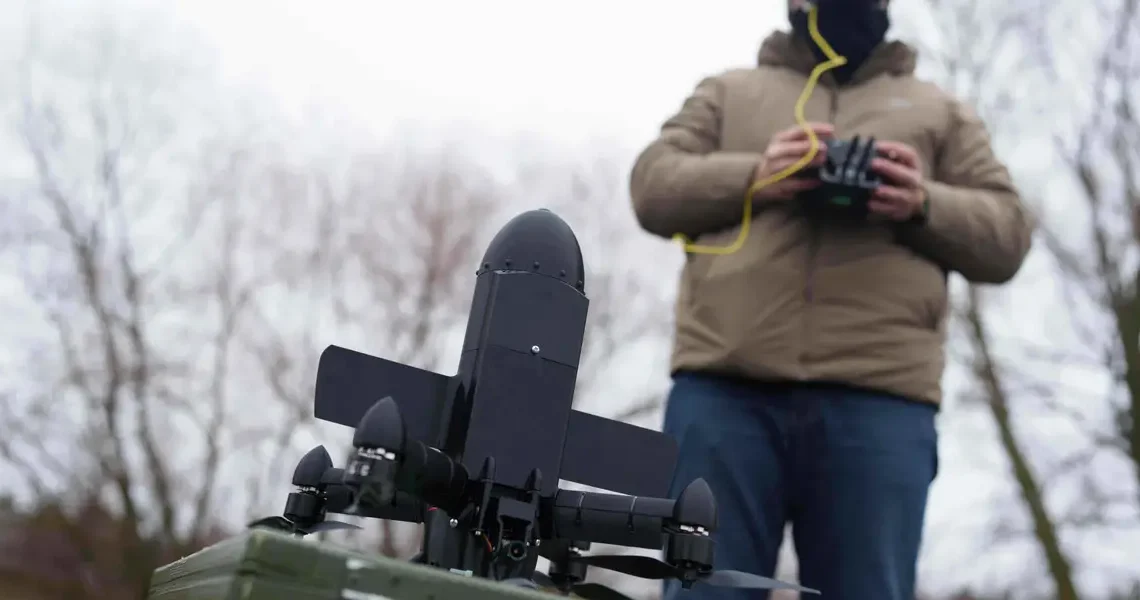
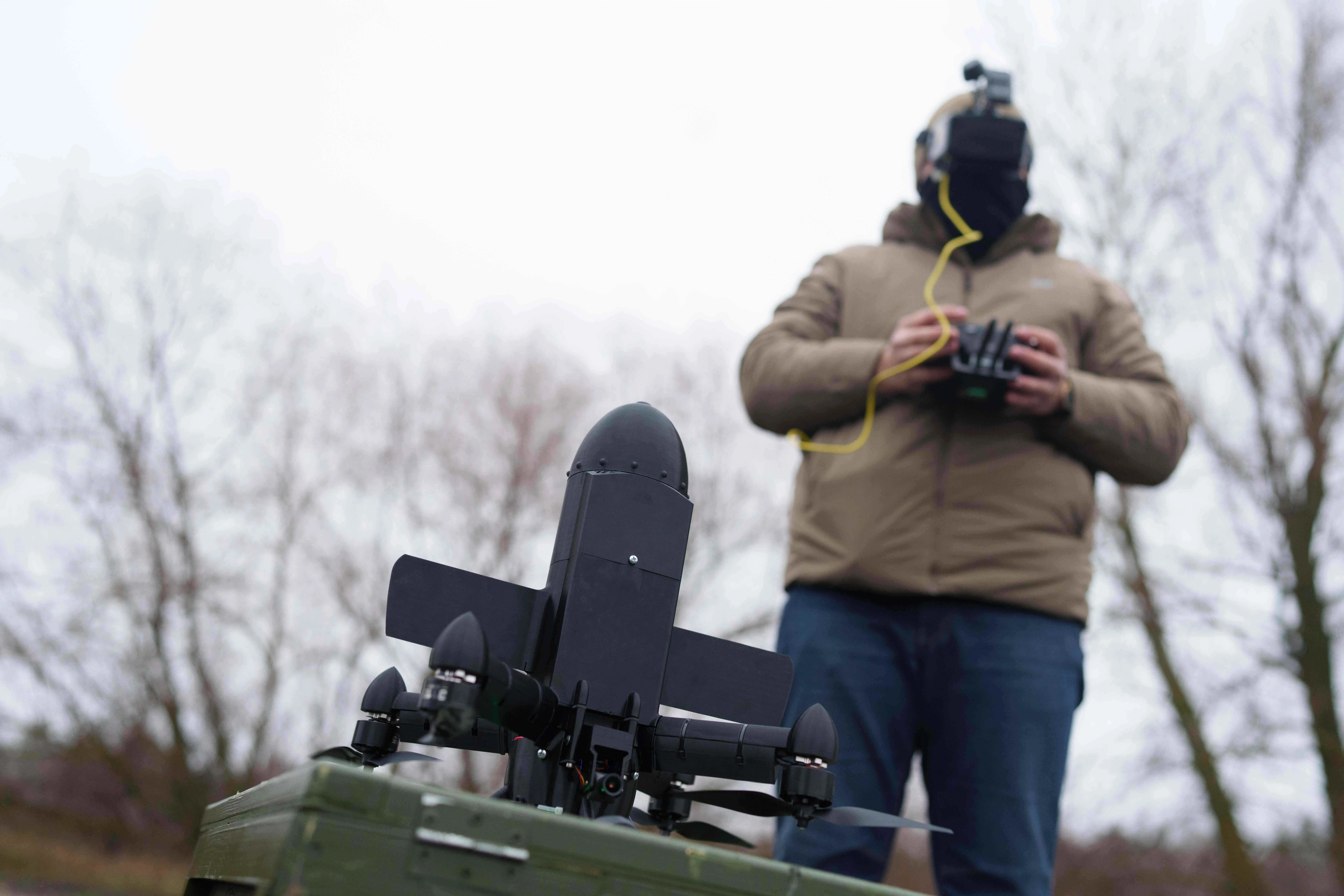
Their drone’s design features a dome-shaped head and four propellers extending from the lower body — much like many of the interceptor drones available on the Ukrainian market today.
These drones, developed primarily as a low-cost way of countering Russian Shahed-type loitering munitions, have become a pillar of Ukrainian air defense.
Some of the fastest interceptors available to Ukrainian forces can reach 200 mph, which is also the typical velocity of a bullet train.
Ukrainians are trying to push their quadcopters to fly even faster. Flight speed is key for these interceptors because they’re designed to chase and crash into Shaheds, and Russia has been continually ramping up the speeds of its attack drones.
The Geran-2, a Shahed-type drone that Russia launches more commonly, can carry an explosive warhead for hundreds of miles at top speeds of 115 mph. Newer, jet-powered versions of Shaheds are estimated to fly up to 230 mph in some conditions.
Building drones that fly faster than F1 cars
A major issue with faster drones is that their components tend to overheat when pushed to the limit — whether it’s the propeller motors, wiring, or batteries.
In their YouTube videos, the Bells repeatedly recorded their drone or its individual parts catching fire during tests.
Drone makers also have to juggle other design factors, such as the drone’s aerodynamics and propeller efficiency.
Ukrainian war manufacturers face additional constraints: Their drones need to carry an additional payload — often 200 grams to 1 kg of explosives. They must also be maneuverable enough to pivot and catch a flying enemy target, and be mass-produced.
Earlier this month, Ukrainian President Volodymyr Zelenskyy said his country was already producing 1,000 interceptor drones a day.
Meanwhile, the Bells’ flight record involved a single drone that flew largely in a straight line.
The duo’s latest certification is the third time they’ve attained the fastest-drone record. The previous holder of the achievement was Australian drone maker Ben Biggs, who built a drone that reached 389 mph late last year.
Before Biggs’ record, the Bells’ earlier quadcopter, the Peregreen V3, had flown at up to roughly 363 mph in the summer of 2025.
In 2024, the pair set a record of 298 mph with a similar drone design.
Guinness World Records requires aspiring drone record-breakers to fly their device in two opposing directions and then calculate the average speed to account for wind.
Read the original article on Business Insider
The post A new Guinness World Record shows how Ukraine’s anti-Shahed interceptor drones have room to fly even faster appeared first on Business Insider.