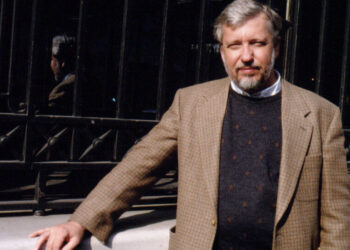
President Trump had barely returned to power last year when Hector F. Ruiz, a veteran civil rights lawyer for the Justice Department, shared a directive with his team that some found chilling.
He told the team that he had been instructed to open investigations into more than a dozen universities, according to two people with direct knowledge of the meeting. The orders were a sharp break from the department’s norm of collecting facts before proceeding with a formal inquiry, and some investigators viewed the demand as a politically motivated attack.
Within months, Mr. Ruiz and 17 of his team’s lawyers had quit.
Trump officials pressed forward despite the exodus, using the full force of the government to target at least 75 universities with investigations into subjects including antisemitism and student aid fraud. The schools have routinely denied wrongdoing, including those that reached settlements with the government, and federal district courts have ruled that some of the Trump administration’s methods broke the law.
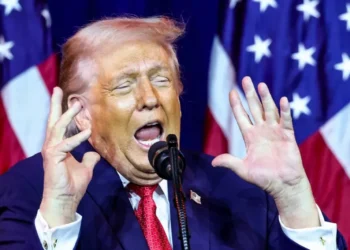
Yet the sweeping campaign has provided the country with an early glimpse of a broader crusade of retribution against political rivals and perceived enemies that has become a driving force of Mr. Trump’s second term. In the administration’s view, the approach has yielded enough successes to continue pressing to alter the cultures of universities, which Mr. Trump has derided as factories of “woke” ideology and hostile to his presidency.
The president managed to chisel away at the independence of the nation’s top universities by pairing investigations with pre-emptive strikes on federal funding for schools. The move has forced college leaders to choose between holding the line on their academic freedom or confronting the costs of resistance.
Fear of drawing the government’s ire has made professors reluctant to teach concepts that Mr. Trump’s allies contest. Researchers have grown wary that a single word or comment could prompt federal penalties against their universities. Campuses, which regarded themselves as incubators of critical thought and freedom of expression crucial to a healthy democracy, have been reined in, with administrators and students alike on edge.
Six elite universities have chosen to settle civil rights investigations, agreeing to adopt portions of Mr. Trump’s political agenda and collectively pay hundreds of millions of dollars to the U.S. Treasury or Trump-supported projects. Harvard, which has so far refused to settle, has faced an astounding 13 investigations by 10 federal agencies in the past year.
“There is no doubt that they have bent institutions, bent processes, bent the democratic infrastructure of this nation and infrastructures as they relate to higher ed to their will,” said Todd Wolfson, the president of the American Association of University Professors, a group based in Washington with more than 500 campus chapters. “They didn’t break them, at least not yet, and that’s important to note.”
The results have pleased Trump aides so much that they are readying a second attempt to persuade universities to sign on to a voluntary “compact” that follows a list of the administration’s principles, officials said. The first version got little traction. The White House is also examining how to enforce individual provisions, regardless of whether schools sign on, said May Mailman, the White House’s senior adviser for special projects.
Ms. Mailman said Mr. Trump’s pressure campaign on universities had been “far greater than anyone could have expected.”
“No one is asking universities to become MAGA rallies,” Ms. Mailman said, adding, “There have been some wide-scale changes.”
In a recent interview with The New York Times, Mr. Trump accused colleges of “reverse discrimination” against white people, alluding to diversity programs that have sought to increase minority enrollment and staffing. He has left much of the day-to-day task of taming universities to lieutenants, including Stephen Miller, the influential policy adviser who has lately been focusing on other aspects of the Trump agenda.
But in targeting universities, the Trump administration identified a sensitive issue in the collective American consciousness. Polls show a steady rise in public discontent with colleges, driven by perceptions that universities saddle students with debt while failing to prepare them for careers. Jewish advocacy groups have warned of rising antisemitism on college campuses, and conservatives have complained about an atmosphere intolerant of ideas.
Some university leaders acknowledged these problems and, concerned about losing their relevance, seemed ready to make some changes. But Mr. Trump’s punitive tactics alienated potential allies, current and former university officials said. Some university leaders and historians have increasingly compared his tactics to those of authoritarians, who have long sought to suppress and stifle academia.
“The administration is trying to shut down dissent,” said Corey Brettschneider, a political science professor at Brown University who has studied the role of free speech in democracies. “Universities, because they are a sanctuary for individual and free thought, they’ve become a target.”
‘Unprecedented federal actions’
The administration’s aggressive tactics have, at times, shaken veterans inside the government and led to unintended consequences.
After the meeting with Mr. Ruiz, who declined to comment for this article, the Justice Department assigned lawyers from across its civil rights division to a special group to investigate the University of California.
The department’s new leaders, including Michael Gates, then the deputy assistant attorney general for civil rights, gave lawyers one month to show that antisemitism was pervasive in the sprawling, 10-campus public university system and to bring charges of workplace discrimination, according to three former Justice Department lawyers.
“We were only told to investigate cases that were in blue states, and cases or investigations involving red states or that didn’t involve perceived political enemies of the administration never moved forward,” said Ejaz Baluch Jr., a former Justice Department lawyer who was investigating the University of California when he quit his post in May. “There was no interest in antisemitism unless it involved protests of Israel or the war in Gaza.”
Other former Justice Department lawyers interviewed by The Times echoed those sentiments.
Mr. Gates, who left the Justice Department in November, is running for attorney general in California. He said in a brief interview that administration leaders selected targets primarily based on news reports, not on Mr. Trump’s enemies.
“The entire world knew who the targets were for potential violations, and those are the targets that were investigated,” he said.
The Justice Department investigation took longer than a month, as lawyers ultimately settled on a finding that the University of California, Los Angeles, had harbored antisemitism. To resolve the inquiry, officials told the university system it could pay a $1 billion fine, an amount Mr. Trump had insisted on, according to three administration officials.
Gov. Gavin Newsom of California, one of Mr. Trump’s chief rivals, said in a statement with other state officials that the proposal was “a billion-dollar political shakedown” and a “disgusting political extortion.” James B. Milliken, the president of the U.C. system, said such a payment would imperil the university.
“The university’s vital work is currently threatened by unprecedented federal actions,” Mr. Milliken said last month. “We have committed to engaging in good-faith dialogue with the federal government, but we will not agree to an outcome that undermines the core values of this public, taxpayer-supported university, including its mission, governance and academic freedom.”
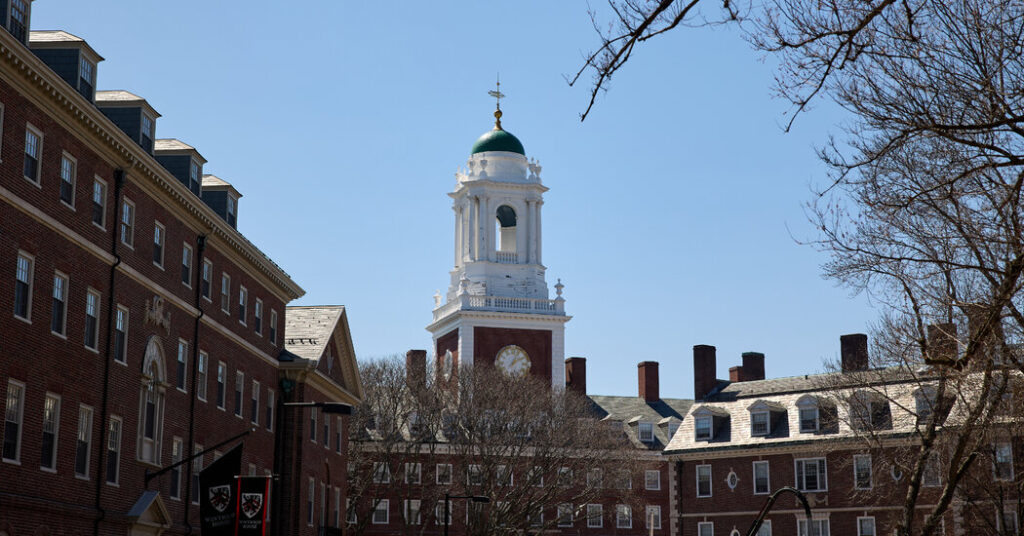
Mr. Trump and his team also took early aim at Harvard, the nation’s oldest and richest university. The school sued the administration in April, accusing the government of running roughshod over its constitutional and procedural rights.
Harvard’s lawsuit has infuriated the president and his team. Last spring, Mr. Miller, the White House deputy chief of staff for policy, pressured agency lawyers to halt grants and contracts with Harvard, according to two administration officials. While at Mr. Trump’s Mar-a-Lago club, Mr. Miller also took dictation from the president, helping draft a contentious three-page letter that vowed to disqualify the university from future funding. (A court later blocked that effort.)
Talks between the two sides are proceeding, but Mr. Trump has continued to view Harvard’s lawsuit in deeply personal terms. He has fumed that Harvard hired William A. Burck, a lawyer who had represented key Trump allies and advised the Trump Organization. Mr. Trump fired him after he sued the administration on behalf of Harvard.
When he complained about Mr. Burck during a negotiation session in October, Stephen A. Schwarzman, the billionaire investment executive who had taken a direct role in Harvard’s negotiations with the White House, offered to drop Mr. Burck, according to three people familiar with the meeting.
Mr. Trump responded by repeating his grievance about Mr. Burck. “It really wasn’t smart of him to sue me,” he said.
Shortly thereafter, Mr. Trump told Mr. Schwarzman that he liked Mr. Burck but that their relationship had not worked out. Mr. Burck has remained Harvard’s lead negotiator with the administration.
Mr. Trump has said publicly on several occasions that the university and the administration were close to striking a deal to end the feud, but no deal has materialized. On Tuesday, at a news conference on the anniversary of his inauguration, Mr. Trump said again that the two sides were close to an agreement.
“I hear we have a deal, but who the hell knows with them?” he told reporters. “They have a lawyer that wants to show how hot he is.”
Fear of retribution
Some of the Trump administration’s most striking successes have been universities’ proactive steps to avoid the government’s wrath.
Emory, Ohio State and St. Louis University were among the schools that shuttered or rebranded campus offices dedicated to diversity, equity and inclusion after the White House deemed such initiatives racist toward white people. The University of Chicago, Johns Hopkins and Michigan State have ceased enrolling new graduate students in some programs because of uncertainty about the administration’s threats to federal funding. Rules on discussing gender and race in college classrooms were tightened at Texas A&M and Texas Tech. The University of Alabama suspended publication of student-led magazines catering to Black and female audiences.
At the University of Virginia, the governing board’s fear of retribution from the Justice Department led to the ouster of the school’s president, James E. Ryan. When Mr. Ryan stepped down, Justice Department officials dropped pending investigations into the school.
Even at Harvard, school officials have scrambled to nip and tuck at campus policies while refusing White House settlement offers. Some faculty members said they had been urged to remove political items from their offices to avoid further provocations. Others were asked to refrain from posting “controversial” remarks on internal message boards.
“People are starting to finally recognize that our higher education system isn’t working,” said Nicholas Kent, the nation’s top federal official for higher education. “Maybe we disagree on what the solutions should be, but we’re starting to see a sea change where education associations, college presidents and boards of trustees are recognizing that there are problems.”
But professors say Mr. Trump’s methods are also seeping into classrooms and laboratories, compromising the independence that has long defined academia. Fear of retribution has changed how Amander Clark, a professor of molecular, cell and developmental biology at U.C.L.A., teaches her students, speaks about her research in the classroom and discusses her work in public.
Dr. Clark, a reproductive scientist, said she edited her grant requests to avoid raising red flags in Washington, fearing that the administration’s focus on transgender issues might jeopardize her work if she ran afoul of the White House.
“It’s a pretty stressful position to be in,” she said, adding that she worried the wrong word might result in funding cuts for “the whole university.”
Six elite universities targeted by the government over the past year have settled civil rights investigations. The deals have restored billions of dollars in research grants to the schools in exchange for agreements to carry out portions of Mr. Trump’s agenda. Four of those universities — Brown, Columbia, Cornell and Northwestern — also agreed to cash payments totaling more than $400 million, with the money going to the government or to priorities aligned with Mr. Trump’s desires.
The deals represent some of the administration’s proudest successes, both in policy changes and in the clear message — and precedent — for other schools.
“Campuses around the country are shuttering their D.E.I. offices, improving protections for Jewish students, basing sports participation on biological sex, and promoting viewpoint diversity and honest deliberation,” said Madi Biedermann, an Education Department spokeswoman.
But the agreements also suggest some weakness in the president’s tactics. None of the six schools acknowledged the White House’s allegations of discrimination, and some of the terms are relatively vague. At Brown, for example, the school agreed to end any “unlawful” D.E.I. efforts, but its office of diversity and inclusion remains open with a website that declares, “Diversity is a strength in any academic community.”
The administration’s approach has elevated antisemitism on campus as a significant issue, one that even college officials have publicly acknowledged as a problem.
During protests that followed the Oct. 7, 2023, Hamas attack on Israel and the subsequent invasion of Gaza by Israeli forces, antisemitic chants rang out during pro-Palestinian events at U.C.L.A., including “no peace until they’re dead.” Protesters blocked some Jewish students from campus buildings unless they renounced Zionism.
Those details, however, were reported by government investigators during the final months of President Joseph R. Biden Jr.’s term, when the Education Department reached an agreement to resolve federal civil rights complaints from students at the school.
The Trump administration effectively ignored that agreement and used some of the same student complaints to pursue its Justice Department inquiry.
Setbacks for the administration
The White House’s most significant setbacks have come from federal judges who issued stinging rebukes about the administration’s methods.
Harvard prevailed in Federal District Court in Boston, where Judge Allison D. Burroughs said the administration “used antisemitism as a smoke screen for a targeted, ideologically motivated assault on this country’s premier universities.” In San Francisco, Judge Rita F. Lin said funding freezes that targeted the University of California amounted to “unlawful coercion.”
The administration is appealing both rulings.
But Harvard’s victory empowered universities to resist the White House’s broadest attempt to overhaul academic culture. In October, administration officials approached a handful of colleges about a “compact” that would offer enhanced access to research funding in exchange for embracing Mr. Trump’s policies. Other provisions included adopting the administration’s strict definition of gender, a five-year tuition freeze and proposed caps on international student enrollment.
Not one of the schools that the administration asked for feedback formally signed on.
Trump officials are drafting a second version of the compact while also seeking other ways to achieve their goals. One line item that the administration has already revived is a 15 percent cap on international students enrolled in undergraduate classes proposed by the compact. After the original proposal failed, the State Department began quietly prioritizing visa requests for students at schools under that 15 percent rate, Ms. Mailman, the White House adviser, said in an interview.
For opponents of these changes, the derailing of the original compact was an essential marker for higher education to rally around the principles of academic freedom, which protect the university’s role in determining teaching, curriculum and research.
“There have to be certain kinds of red lines around academic freedom and about the autonomy of our institutions,” said Christopher L. Eisgruber, the president of Princeton University, who has compared Mr. Trump’s tactics to the ones used during the Red Scare of the 1950s. “And those principles are ones that we have to defend regardless of what the tactics are.”
Mr. Trump’s efforts have also been complicated by his own competing goals. While he has publicly castigated the university system as one run by “Marxist maniacs,” behind the scenes, he has been much more intent on securing deals that force colleges to pay eye-popping sums, even if that means folding on long-term policy changes.
That disconnect manifested within his administration when a split emerged between deal makers and ideologues.
Ms. Mailman, who operated as a kind of super staff member inside the White House, worked to strike deals with universities that imposed the exorbitant fines Mr. Trump wanted, while also getting as many policy concessions from the colleges as possible.
In the summer, Ms. Mailman, a Harvard-trained lawyer, had been facilitating what was Mr. Trump’s top priority at the time: extracting $500 million from Harvard to spend on work force programs.
But before the agreement was finalized, Ms. Mailman took on a part-time role, which she still maintains. Her absence created an opening for Harmeet Dhillon, a hard-liner who leads the Justice Department’s civil rights division and who argued behind the scenes that the proposed deal was not tough enough on Harvard.
Ms. Dhillon pushed for more policy concessions and for the inclusion of a fine of at least $200 million — a nonstarter for Harvard, according to government and university officials.
Mr. Miller has shown little interest in easing any tension with Harvard, according to two administration officials involved in the discussions.
Linda McMahon, the education secretary, has played a more public-facing role. She has recently focused on meetings to resurrect the compact, but it is unclear how productive those have been. At a meeting in November, she entered the room, sat down and read from a prepared statement, deviating from the remarks only once to apologize for accidentally reading the same line twice.
One major challenge for the administration’s education policymakers — and major outside forces like Marc Rowan, the billionaire financier who helped write the compact proposal — is competing for attention in the Oval Office.
Already this year, the Trump administration has mounted an incursion into Venezuela, threatened Greenland and Iran, pursued a criminal investigation of the Federal Reserve chair and weighed invoking the Insurrection Act in Minnesota after an Immigration and Customs Enforcement officer fatally shot a woman.
Some university leaders have said schools need to respond to the mounting public grievances, whether or not the White House is pushing them.
“We have been drifting off our core mission as universities,” said Daniel Diermeier, Vanderbilt University’s chancellor. “We need to go back on track, and as long as we are not doing that, we will continue to lose the trust of the American public, no matter who is in office.”
Mr. Eisgruber, the president of Princeton, said that predictions were impossible “about where all of this is going.”
“All I can say is what I believe from the bottom of my heart about where it should go,” he said. “This partnership that has existed between the American government and America’s universities has been very good for our country and its people. And we should find a way forward.”
Michael C. Bender is a Times correspondent in Washington.
The post Investigations and a Billion-Dollar ‘Shakedown’: How Trump Targeted Higher Education appeared first on New York Times.