When 14-year-old Elizabeth Smart was returned to her family nine months after she was kidnapped from her bedroom in June 2002, one local television station refers to her as “Utah’s miracle.” Smart was blond, blue-eyed, well-loved by her family and community in Salt Lake City. Her kidnapping set the stage for a national media circus.
The true-crime story recounted in “Kidnapped: Elizabeth Smart,” a new documentary directed by Benedict Sanderson, is distinctly connected to Utah. There’s the strong community feeling evinced by her family’s efforts to find her. And then there’s the depraved religious fanaticism of her abductors, Brian David Mitchell and Wanda Barzee, who terrorized her.
These intertwined components create a fascinating and disorienting narrative double helix. Sanderson punctuates the stories with breathtaking Utah landscapes. The point of these shots is to ultimately reunite Smart, now an advocate for survivors of kidnapping and sexual abuse, with the places she grew up in and still loves. At the film’s end we see her running up a mountaintop.
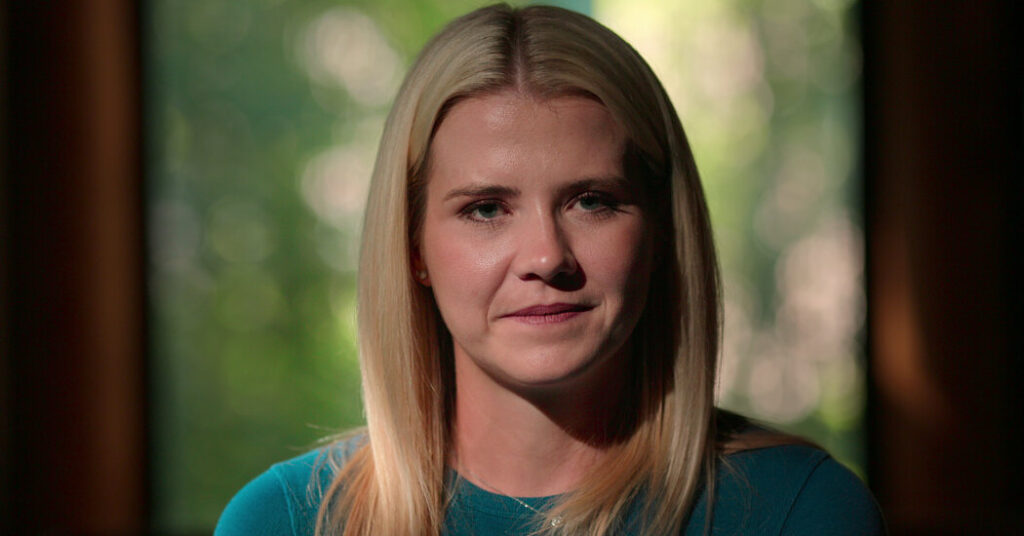
Less effective are arty re-enactments of Smart’s ordeal, which seek to build a sense of dread. Ultimately Smart herself, now 38, is the most compelling component of the movie. Her on-camera testimony is devastating. Recollecting her assaults by one of her kidnappers, she tells the viewer that she held onto the belief that, “If I can hold him off long enough, someone will rescue me.” That’s heartbreaking. But her resilience and frankly astonishing good humor come through as well. That her life since her ordeal has returned to normal — she’s now married, with children of her own — adds another dimension to her miracle.
Kidnapped: Elizabeth Smart Not rated. Running time: 1 hour 31 minutes. Watch on Netflix.
The post ‘Kidnapped: Elizabeth Smart’ Review: A Survivor Speaks Out appeared first on New York Times.