One year down, three more to go.
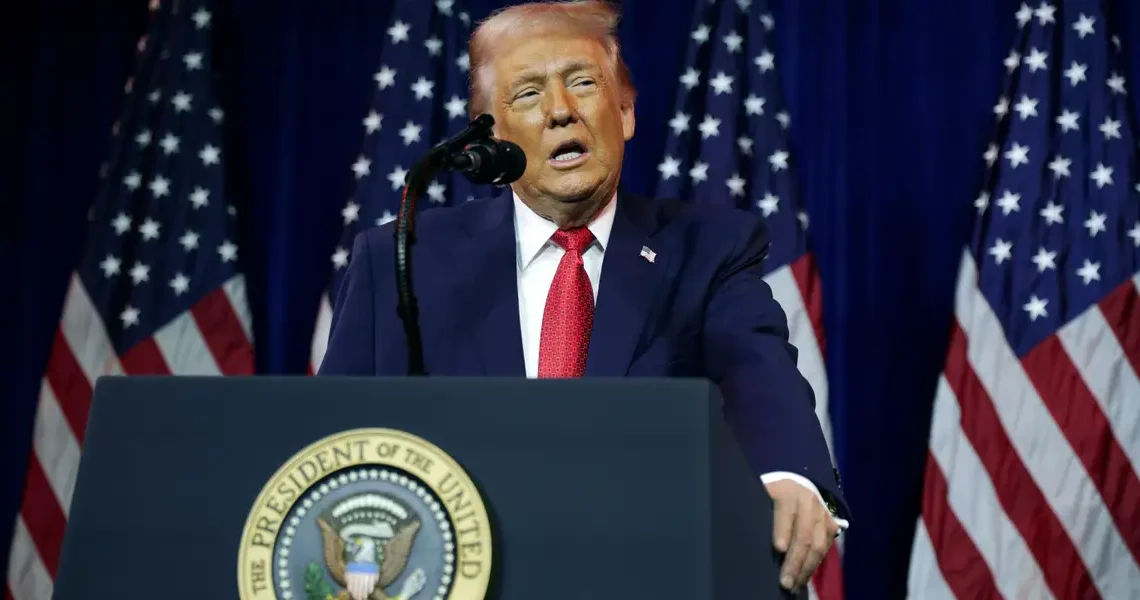
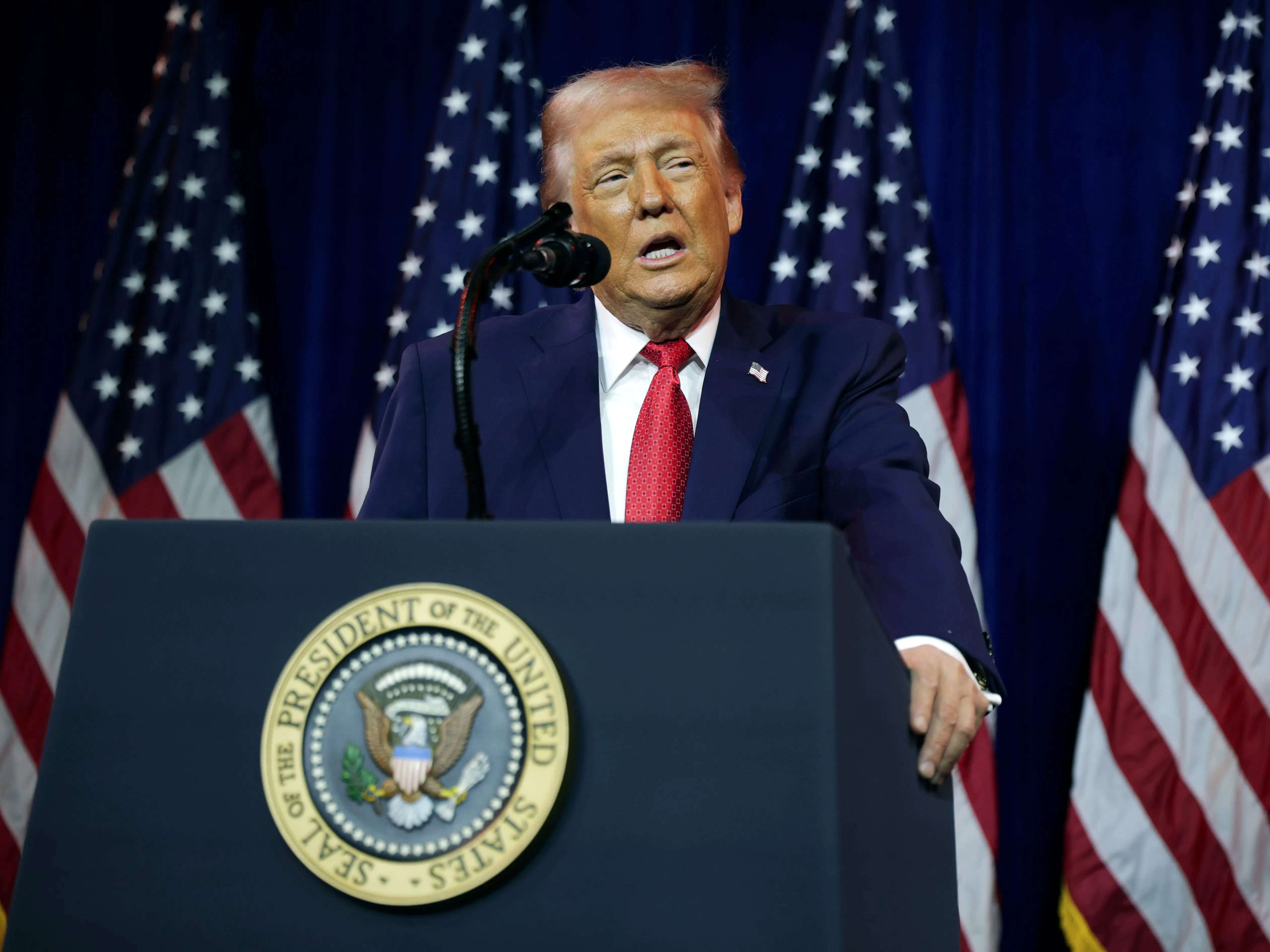
Donald Trump became president for the second time on this day in 2025. With that came a lot of new economic plans for trade, immigration, and the federal workforce.
Elizabeth Renter, a senior economist at NerdWallet, said uncertainty from actual or potential policy changes affected consumers, job seekers, and small to midsize businesses.
“There was a lot of guesswork happening in 2025, and then you add to that mix issues with economic statistics, and sort of reading the tea leaves to figure out where the economy is headed amidst all this change became increasingly difficult,” Renter said.
Business Insider looked back at the economy under Trump so far. The tariff rate surged, many federal workers left, people continued to spend, and hiring was low.
The pace of change could slow in the next year. Jason Draho, the head of asset allocation Americas for UBS Global Wealth Management, said the policies that could have the largest economic effects have already been implemented or announced in Trump’s first year, including changes to tariffs and the One Big Beautiful Bill’s tax cuts.
Draho said that announcements so far in 2026, such as a credit card interest rate cap and wanting Fannie Mae and Freddie Mac to purchase mortgage-backed securities, are tweaks “around the edge in terms of the overall macro impact.”
“President Trump pledged to turn the page on Joe Biden’s economic disaster of runaway inflation and anemic growth,” Kush Desai, a White House spokesperson, said. “Much work remains, but President Trump in one year has delivered accelerating GDP growth, private sector job creation, over a dozen new trade agreements, historic drug pricing deals, and cooled inflation.”
The charts below highlight how the economy evolved in Trump’s first year.
Job growth was the lowest in decades, aside from recessionswindow.addEventListener(“message”,function(a){if(void 0!==a.data[“datawrapper-height”]){var e=document.querySelectorAll(“iframe”);for(var t in a.data[“datawrapper-height”])for(var r,i=0;r=e[i];i++)if(r.contentWindow===a.source){var d=a.data[“datawrapper-height”][t]+”px”;r.style.height=d}}});
The US experienced the smallest job growth outside a recession since 2003 last year, adding just 584,000 jobs.
Draho said overall policy uncertainty, tariffs, immigration, and fears of a recession from months ago have been factors.
“It’s made companies a little more reluctant to invest, to hire, if you’re not sure how much of an overall economic drag that tariffs would have,” Draho said about overall uncertainty. “So even if your company may not be directly affected by tariffs, just the uncertainty of how this could play out would be a bit of a negative.”
Economists and job-market experts have said that the slower job market is unsustainable. Renter said it could affect consumer spending if it doesn’t reverse course.
“How we feel about our income plays a big role in how we spend, and I think the longer this uncertainty and the longer this labor market chill sort of sits over us, the more that a greater number of households are going to start tightening their purse strings,” Renter said.
The economy has still been growingwindow.addEventListener(“message”,function(a){if(void 0!==a.data[“datawrapper-height”]){var e=document.querySelectorAll(“iframe”);for(var t in a.data[“datawrapper-height”])for(var r,i=0;r=e[i];i++)if(r.contentWindow===a.source){var d=a.data[“datawrapper-height”][t]+”px”;r.style.height=d}}});
Gregory Daco, the chief economist at EY, said the economy is showing resilience despite a jobless expansion.
“That’s been really the key defining factor of the US economy in the face of a number of cross-currents, from significant shifts in trade policy and tariffs to industrial policy, to significant shifts in immigration dynamics, to now an AI-led technological revolution,” he said.
Real GDP grew in the second and third quarters of 2025 after falling in the first, as businesses prepared for new tariffs.
While economic growth has been strong, Daco thinks a jobless boom will continue because an aging population and a drop in net migration are affecting the supply of workers at the same time as less demand for new workers.
“Businesses are very cautious as to who they hire and at what rate they hire because they don’t necessarily need as much talent as they did a year or two years ago,” Daco said.
Federal employment was down 9% from a year ago in Decemberwindow.addEventListener(“message”,function(a){if(void 0!==a.data[“datawrapper-height”]){var e=document.querySelectorAll(“iframe”);for(var t in a.data[“datawrapper-height”])for(var r,i=0;r=e[i];i++)if(r.contentWindow===a.source){var d=a.data[“datawrapper-height”][t]+”px”;r.style.height=d}}});
One of the Trump administration’s goals was to increase efficiency within the federal government. That led to several actions to shrink the workforce, including reduction-in-force and buyouts led by the Department of Government Efficiency.
Bureau of Labor Statistics data showed a massive drop in federal employment in October because people who had taken deferred resignations officially came off the government payrolls.
Cameron Hilaker, an AFGE Local 1534 member, was an emergency manager for US Agency for International Development before being laid off last spring. He is still looking for work and has become a stay-at-home dad. Without his government paycheck, Hilaker and his wife can’t comfortably afford childcare for their new baby.
“We were fully unprepared for this,” Hilaker said. “All of a sudden, I am at home with my son because we’re not paying daycare. We can’t afford another $2,500 a month expense. Budgets are tight.”
Manufacturing employment was down 0.5% from a year ago in Decemberwindow.addEventListener(“message”,function(a){if(void 0!==a.data[“datawrapper-height”]){var e=document.querySelectorAll(“iframe”);for(var t in a.data[“datawrapper-height”])for(var r,i=0;r=e[i];i++)if(r.contentWindow===a.source){var d=a.data[“datawrapper-height”][t]+”px”;r.style.height=d}}});
The manufacturing sector continued its trend of job losses or weak job growth that had been underway before Trump took office.
“Part of the justification for tariffs was bringing manufacturing back to the US,” Renter said, adding it would be costly and could take years to do that, “if even possible.”
She added that tariffs have likely had a negative effect on the sector, with manufacturing firms that rely on imports taking a hit.
“The Fed’s industrial production measure is now at its highest level since 2019, clearly reversing its Biden era decline,” Desai said. “Meanwhile, core capital goods shipments have hit an all-time high under President Trump, signaling strong investment into future manufacturing production and jobs.”
The effective tariff rate is the highest in decadeswindow.addEventListener(“message”,function(a){if(void 0!==a.data[“datawrapper-height”]){var e=document.querySelectorAll(“iframe”);for(var t in a.data[“datawrapper-height”])for(var r,i=0;r=e[i];i++)if(r.contentWindow===a.source){var d=a.data[“datawrapper-height”][t]+”px”;r.style.height=d}}});
A blog post from the St. Louis Fed showed that the effective import tariff rate and tariff revenue as a share of gross domestic product have spiked.
“Both rates jumped noticeably in 2018 during the first trade war, more or less doubling by 2022,” the blog post said.
There has been a lot of back-and-forth on tariffs. The administration has announced tariffs on different goods, including some wines, cars, and furniture. Some tariffs are no longer in effect or pushed back — tariffs on coffee, spices, beef, and more were stopped in November. The Supreme Court is also expected to rule on the legality of many of the tariffs soon.
Inflation has bounced aroundwindow.addEventListener(“message”,function(a){if(void 0!==a.data[“datawrapper-height”]){var e=document.querySelectorAll(“iframe”);for(var t in a.data[“datawrapper-height”])for(var r,i=0;r=e[i];i++)if(r.contentWindow===a.source){var d=a.data[“datawrapper-height”][t]+”px”;r.style.height=d}}});
The inflation rate has cooled down a lot since it surged to about 9% in 2022, but it remains above the Federal Reserve’s 2% target. In 2025, it slowed in the first few months before speeding up and then holding steady in December.
Draho said the inflation rate climbed higher than expected, with tariffs having a small effect.
“I knew retailers and producers would be reluctant to pass along cost increases to consumers. I didn’t imagine that they would be able to hold the line for quite so long,” Renter said.
Renter believes tariffs will continue to affect inflation because they are affecting a variety of items, so their effect is trickling in instead of causing a one-time increase in prices. “It’s tough, really, to know how much of the spikes in price growth can be attributed to tariffs and how much might be attributed to other issues like supply chain issues, demand-driven issues, which makes monetary policy a little more difficult,” she said.
Consumers have continued to spendwindow.addEventListener(“message”,function(a){if(void 0!==a.data[“datawrapper-height”]){var e=document.querySelectorAll(“iframe”);for(var t in a.data[“datawrapper-height”])for(var r,i=0;r=e[i];i++)if(r.contentWindow===a.source){var d=a.data[“datawrapper-height”][t]+”px”;r.style.height=d}}});
Despite economic uncertainty, spending has been strong. However, like much else in the economy, consumer spending has taken on a “K-shape,” where wealthier people are spending big while lower-income Americans are cutting back. Draho said this is likely more of a structural pattern that existed before Trump’s term.
“Much of the robust spending that we’ve seen over the past year has been driven primarily by people with assets and people with high incomes,” Renter said. “If you’re invested in the stock market, you’re probably doing pretty well right now. If you own your home, and especially if you have owned your home for more than a handful of years, you’re probably feeling pretty secure right now. And I think the bulk of the spending has been coming from these groups of people.”
Read the original article on Business Insider
The post 7 charts show how the economy looked in Donald Trump’s first year of his second presidency appeared first on Business Insider.