For the past two years, astronomers staring into the early universe with the James Webb Space Telescope have been wondering exactly what they’re looking at when they see these small “little red dots” out in the vastness of space.
They looked like compact galaxies stuffed with stars. Except that didn’t really make sense given the timeline of the universe. Cosmically speaking, that would be like archaeologists discovering evidence of a Costco in the Bronze Age.
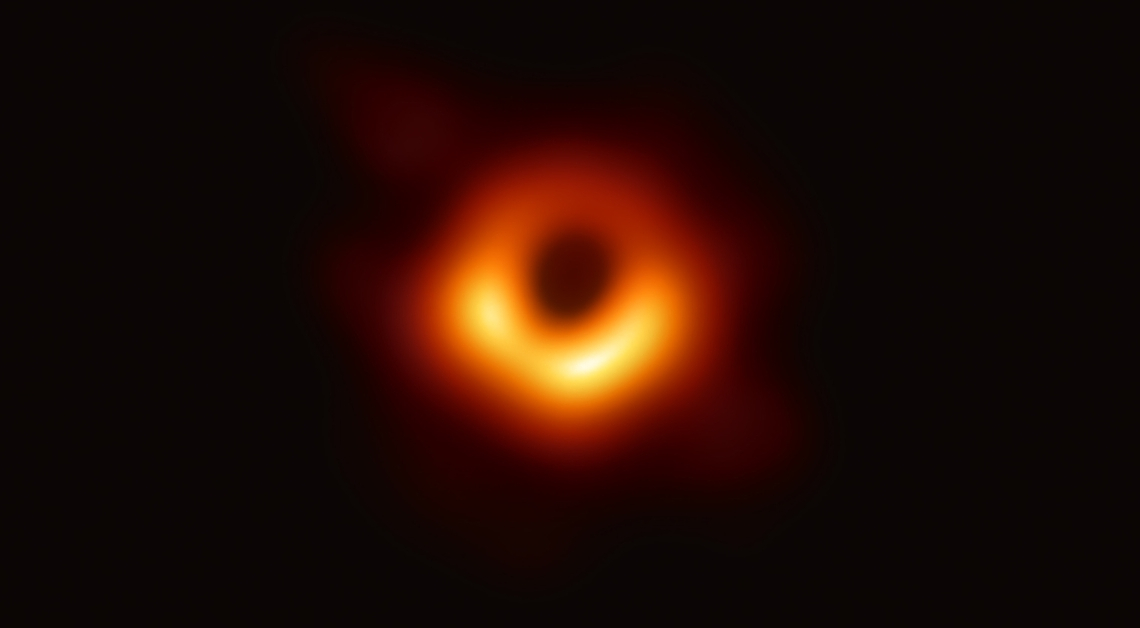
A new study published in Nature argues that the dots are not ancient, extremely active galaxies at all. Instead, they’re young supermassive black holes. According to the researchers, these black holes are buried inside thick cocoons of gas that hide most of the signals that astronomers typically use to identify them.
Those Red Dots in Space Could Be Baby Black Holes, Scientists Say
Light from energized hydrogen around the dots suggests gas swirling around at thousands of miles per second. That usually suggests an active galactic nucleus, and that suggests these growing black hole youngsters are aggressively feeding on space debris.
One big difference is that the “little red dots” weren’t blasting out X-rays or radio waves. They also appeared absurdly massive for how soon after the Big Bang they appeared. The researchers used their scientific know-how to untangle that contradiction by closely analyzing infrared spectra from 30 little red dots.
The light matched what scientists would expect from a black hole surrounded by dense gas. That gas is like a soundproof room that traps x-rays and radio emissions before they can escape, argue the researchers.
When they recalculated the objects’ masses, taking this cocooned black hole model into account, the dots shrank dramatically to about one hundredth of their original estimated masses. With that, these mysterious red dots started to make some sense: these were definitely baby black holes.
Well, maybe not definitely just yet. If confirmed by further observations, little red dots could represent a common early phase in black hole development. This wouldn’t necessarily rewrite everything we know about black holes as much as it would fill in some chapters we previously didn’t know were missing.
The post All Those Little Red Dots in Space Might Be Young Black Holes appeared first on VICE.