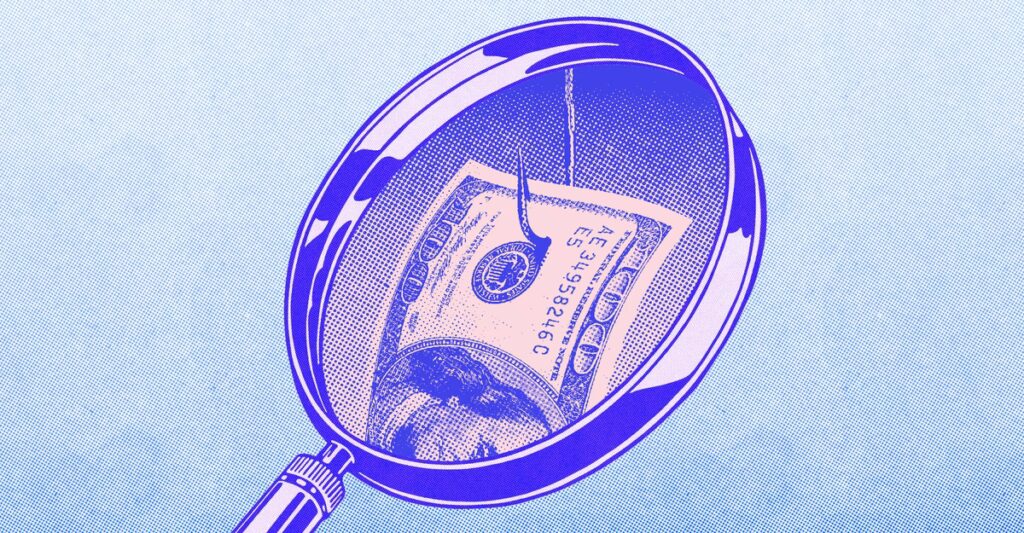
The massive scandal around welfare fraud in Minnesota became a big story the same way the character Mike Campbell in The Sun Also Rises describes going bankrupt: “gradually and then suddenly.” Federal prosecutors first filed criminal charges in 2022 against the fraudsters at a Minnesota nonprofit called Feeding Our Future, who stole hundreds of millions of dollars while supposedly serving meals to low-income children and adults. Nearly 80 people have already been convicted or pleaded guilty, and more are expected. But only in recent months has this case—which the lead prosecutor has described as “industrial-scale fraud”—become a national fixation.
President Trump is cannily exploiting this matter to push his anti-immigrant agenda, given that many of the convicted offenders are Somali Americans. Trump has also turned Minnesota’s failure, under Governor Tim Walz, to adequately supervise its social-benefit programs into a broader indictment of financial mismanagement in Democrat-led states. The White House announced earlier this month a plan to freeze billions of dollars in federal social-services funding to five blue states until they delivered reams of data on recipients, providers, and the measures they’re taking to combat fraud—a move that a judge has temporarily blocked. Some Republicans have joined the president in dismissing the entire welfare system as little more than institutionalized theft.
Given the politics involved, it might seem best for Democrats to simply downplay what happened in Minnesota as the product of a few proverbial bad apples. Accusations of welfare fraud have been a staple of right-wing discourse for decades, after all. Ronald Reagan famously rode into office in 1981 with speeches about the wasteful, slothful cunning of a “welfare queen.”
It would be a mistake, though, for Democrats to try to duck and dodge this case. What happened in Minnesota is a disgrace, and one that should prompt reforms to how states handle and monitor social-welfare benefits. The people leading the fight against fraud should not be those who want to dismantle the social safety net but those who want to keep it.
Problems of fraud and abuse are more likely in the United States than in other Western countries because the U.S. has chosen to outsource to private businesses and nonprofits social services such as health care, child care, food banks, and help for the disabled. This move, driven by a faith in the private sector to offer better services at lower costs, isn’t inherently problematic, but it creates incentives for people to game the system. Firms and organizations can juice their federal reimbursements either by falsifying client data to make more people eligible for benefits or by making fraudulent claims about how many clients are being served or what services they are receiving. Feeding Our Future, for example, received hundreds of millions of dollars from the government thanks to fake invoices and meal-count data.
[Kevin Carey: Scammers are coming for college students]
When Elon Musk’s DOGE sought to crack down on instances of government waste, fraud, and abuse last year, the narrative was that Uncle Sam was ripping off taxpayers, when many cases of fraud actually involve businesses and schemers ripping off the government.
In principle, both parties should be interested in fighting fraud. In practice, Republicans rarely want to spend more money on government programs that they’d prefer to shrink, and Democrats are reluctant to amplify concerns that fraud is a significant problem at all. Some also worry that ham-fisted attempts to counter fraud can end up denying worthy people necessary services. In 2013, Michigan used a fraud-detection algorithm to strip benefits from about 40,000 people, yet more than 90 percent of these recipients were, in fact, eligible.
Other hurdles include the fact that many data-technology systems at government agencies are outdated, unwieldy, and hard to change. Keeping track of every program and provider is also simply hard, considering the plethora of different welfare resources. A subtler challenge is that no one gets credit for spending defensively to keep fraud at bay. Given that the federal government loses between $230 billion and $520 billion annually to fraud, according to federal data, the benefits of prevention are real. But when a budget is in the red, it can be difficult to push for a significant investment to essentially maintain the status quo.
One way to solve this problem would be to let the government deliver services directly. State-run day-care centers and food banks would likely edge out most cases of fraud, as government employees would reap few benefits from saying that they were serving more people than they actually were. Because such sweeping changes are unlikely, it’s essential to invest in what’s called “program integrity”: robust mechanisms that deter fraud by detecting it quickly when it occurs.
This is already happening in some areas. The federal government has robust Medicaid and Medicare fraud divisions, and states annually audit about 50,000 cases of the Supplemental Nutrition Assistance Program, otherwise known as food stamps (the results of which suggest that less than 2 percent of recipients are ineligible). But the U.S. has a wide range of social-welfare programs, most of them managed by states, which have proved to be less rigorous in supervising how government funds are spent, or in solving problems when they arise.
In the case of Feeding Our Future, there were many red flags, and they did not go unnoticed by the Minnesota Department of Education, which was responsible for oversight. State officials found that the organization’s internal controls were “seriously deficient.” At one point, Feeding Our Future claimed to be serving an improbable 2.9 million meals and snacks a month to low-income children and adults. Yet the state still sent money the organization’s way, much of which went to commercial and residential real estate, fancy cars, electronics, and jewelry.
[Ezekiel J. Emanuel: The great big Medicare rip-off]
States can employ plenty of affordable measures to oversee social-service providers, including better data collection and more cameras at food banks and day-care centers. Minnesota recently announced new audits of social-service programs and launched a new fraud-fighting unit. But nothing will prove effective if regulators, state officials, and the courts aren’t willing to act. Minnesota certainly had more than enough evidence to cut off funding to Feeding Our Future before the scandal got out of control.
Democrats need to appreciate that welfare fraudsters aren’t just stealing money—they’re also eroding the case for a strong social safety net. The more invested policy makers are in keeping a healthy welfare state, the more they have at stake in keeping it honest.
The post Democrats Need to Take Welfare Fraud Seriously appeared first on The Atlantic.