Zachary Karabell is an author and investor and writes “The Edgy Optimist” on Substack.
The “affordability crisis” has become the economic touchstone of the day — widely touted, frequently debated and angrily refuted. It has been cited as among the reasons the Democrats lost the White House and Congress in 2024, and it is a prime reason President Donald Trump and the Republican Party are now watching their approval ratings sinking fast.
There is, however, no affordability crisis.
This is not to say, as Trump did last Tuesday during a speech in Detroit, that the economy is doing great; nor does it mean that the affordability crisis is a “hoax.” The issue is not whether tens of millions of Americans are struggling to meet basic needs. The issue is whether that has ever not been the case.
This is more than a question of semantics. If we misunderstand the underlying causes of the structural problems in the American economic system and their origin, that is like a doctor misdiagnosing a disease. The cure will be all wrong, perhaps not do much good and just as likely make matters worse.
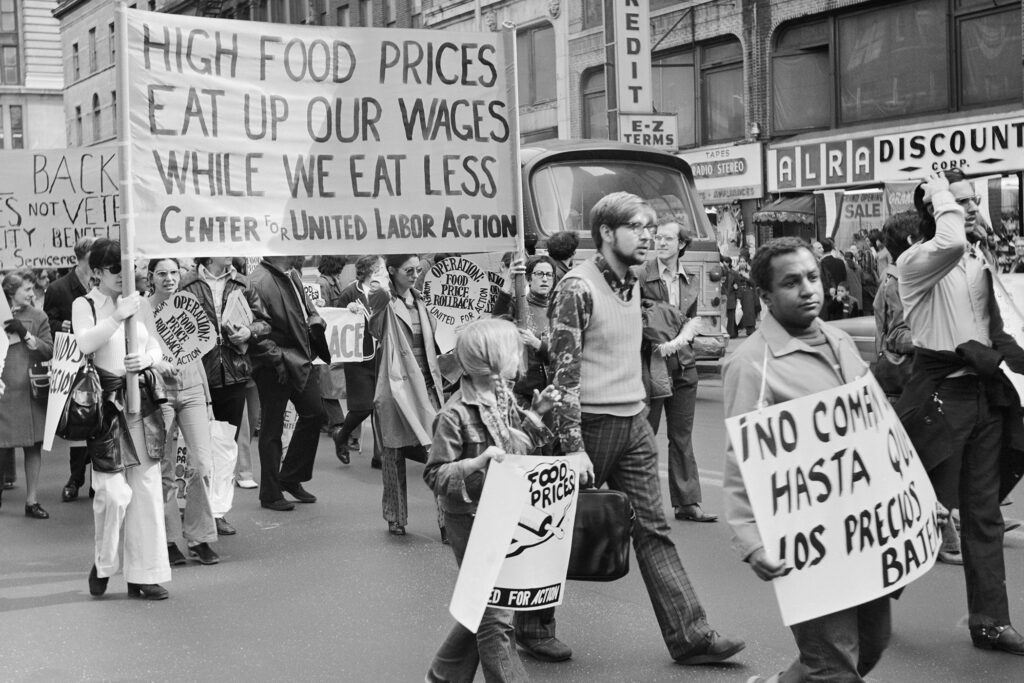
A “crisis” means a sharp new problem. It implies that there was a point in the past when things were “affordable” — and now, suddenly, they are not. That is a fictional, rose-tinted view, and it is leading many of us to treat today’s economic malaise as an acute problem caused by recent bad policies rather than a chronic problem caused by decades of good and bad policies along with technological and demographic changes that no administration, Democrat or Republican, is wholly responsible for.
The widespread sense that whatever constitutes a good life is out of reach, that economic security is a chimera and that basic necessities cost too much is not, as some contend, a product of the post-covid years. It is not a product of a Democrat in the White House, nor a Republican. It is a systemic issue that has been increasing in intensity since at least the 1990s, and arguably since the 1970s, with brief respites during the mid-1980s and mid-1990s.
According to Gallup surveys of economic sentiment, the only times in the past 30-plus years that a double-digit percentage of people have thought the economy was excellent while a single-digit percentage thought it was poor is between 1998 and 2000, and briefly in 2019 and at the start of 2020. Almost the only times a majority have thought the economy was good or excellent was 1998 to 2000 and again from mid-2018 to March 2020. The norm for the past decades, therefore, is for the majority to perceive the economy as poor or at best fair.
That is not an acute issue. It is a chronic one, attributable to multiple causes.
The economic malaise in the early to mid-1990s was the result of a brief recession followed by a pullback in military spending at the end of the Cold War. The malaise of the early 2000s was a combination of the bursting of the dot-com bubble in March 2000, the resulting recession, the attacks of 9/11 and then the housing bubble collapse of 2008 and 2009.
The next years saw hysteria over government spending, the “jobless recovery” and the belief that the American Dream was forever dead. In the two years before the covid pandemic, stock market gains and low interest rates improved sentiment. Since the pandemic, the effects of lockdowns, massive government spending, spiking inflation and deep partisan rancor have returned the public to its steady state of economic dyspepsia.
Added to that legacy is a new set of recent problems. Rents have been extremely volatile and in the past five years have gone up substantially in the most desirable metropolitan regions, such as New York and the Bay Area. With the expiration of Obamacare subsidies, health care premiums are rising on average by 26 percent and in some cases by more than 100 percent, and the bewildering reasons and range of prices, on top of the untenable costs relative to median household incomes, are creating deep insecurity.
Yet the crushing problem of health care costs is not a new issue. The reason for Obamacare in the first place was that in 2009 more than 30 million Americans lacked health care entirely, and hundreds of thousands a year were losing their insurance. Nor is housing affordability a sudden challenge. The 1990s saw a dual “crisis” over falling home ownership rates and the variability of government safety nets, in addition to the growing wealth gap as stock markets soared but not nearly as many Americans’ retirement plans included stocks as do today.
The rate of American homeownership, meanwhile, has been remarkably stable over the decades. In 1990, it was 64 percent; last year it was 65 percent. It peaked at 69 percent in 2004 and was at its lowest at 63 percent in 2016. It is true that interest and mortgage rates have been higher recently than at any point since 2000. That, combined with higher home prices and rents in urban areas, has squeezed residents, but on a national scale, homeownership hasn’t really changed much.
What is clear over the past 30 to 40 years is that more people are feeling less secure. It is also clear that the economic system has consistently failed to work for tens of millions of Americans. That is a failure of a vastly affluent society that generates mind-boggling wealth for the top tier of society. Over this same period, and notably emerging with the dot-com bubble of the 1990s and the rise in the compensation of corporate executives and Wall Street managers, the upper tier has benefited disproportionately.
A country as wealthy as the United States should be able to create a framework where almost no one lacks for a home, a doctor, a school or a meal. But the United States has never figured out how to do that consistently.
That is not a crisis. It is a system that has yet to work as well as it should.
That we seem to be collectively realizing that is a positive step toward solving the issue. But the solution does not lie in acting as if we are in a crisis of recent bad policies and politics.
The post Yes, there’s an affordability problem. What else is new? appeared first on Washington Post.