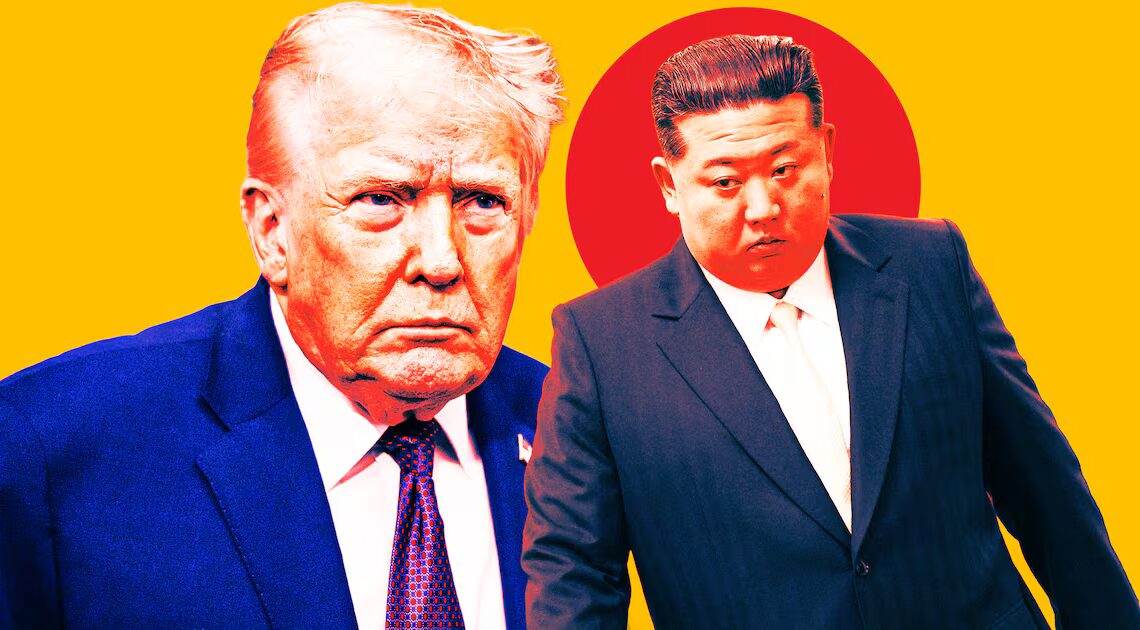
North Korean leader Kim Jong Un is getting the message: He’s vulnerable to the same quick hit that President Trump ordered to pluck Venezuelan leader Nicolas Maduro from power and toss him into custody in New York.
The brazen Jan. 3 raid on Caracas by U.S. forces almost certainly struck more fear into the potbellied dictator than any military drills or aerial shows of force ever could. In doing so, it’s also ramped up the risks of a potential nuclear showdown as Kim goes into panic mode, triggered by the same American president who has routinely boasted of the pair’s “very good relationship.”
“The operation to ‘rendition’ the president of Venezuela demonstrates the capabilities that have to be of concern to North Korea,” says Sydney Seiler, former national intelligence officer for North Korea at the National Intelligence Council. The word “rendition,” as used by Seiler, is CIA-speak for capturing an enemy operative and sending him elsewhere for prosecution, or even torture and killing.
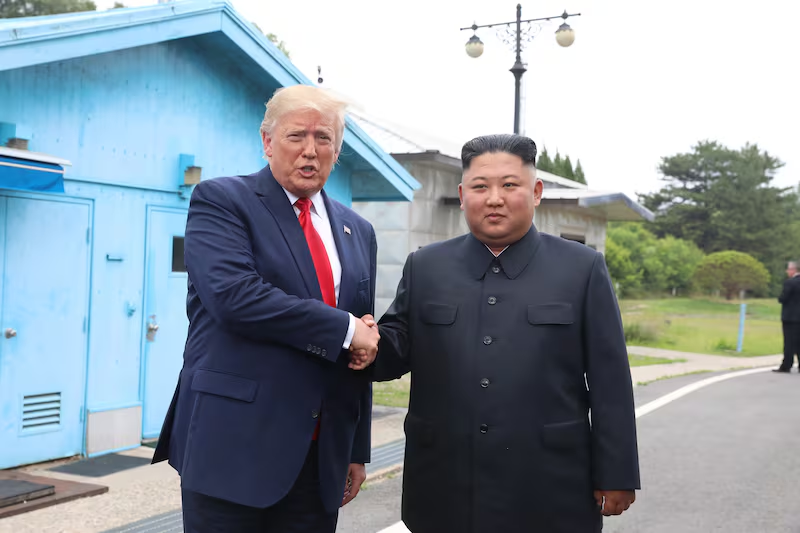
The other key word is “decapitation,” which Kim is well aware the Americans have been practicing in annual military exercises for years. “What’s appealing is that decapitation is the quickest way to terminate a conflict,” Seiler, who visited North Korea on negotiating teams before the North cut off all communications after the failure of Kim’s meetings with Trump in 2019, told the influential Center for Strategic and International Studies in Washington.
“Decapitation would be helpful in trying to deter North Korea,” Seiler believes. “Without Kim Jong Un,” he notes, North Korea would have no leader, no one who would know how to lead its outsized, underfed armed forces of 1.2 million troops, much less anyone in charge of its nuclear program.
Kim betrayed his deepest fears of a plot like the fracas in Caracas by authorizing release for North Korean audiences of a film all about the capture of Maduro. The film “Days and Nights of Confrontation,” could not have aired on North Korean state TV at a more propitious moment, days after elite U.S. troops seized Maduro and his wife. The message is clear: what’s to stop the Americans from repeating themselves in North Korea?
The film epitomizes “the trend of racy, Hollywood-style content aimed at appealing to young people,” says a South Korean website, NK News, that tracks North Korea. “Surely Mr. Kim and his family, including his fiery younger sister Yo-Jong, and his beloved teenage daughter, Ju-ae, would make great targets.” In one fell swoop the Americans could wipe out the dynasty that Kim’s grandfather, Kim Il-Sung, founded when the Soviet Union installed him as leader of the northern half of the divided Korean peninsula after the Japanese surrender in 1945.
Capturing Kim is not a new idea for American “rendition” experts.
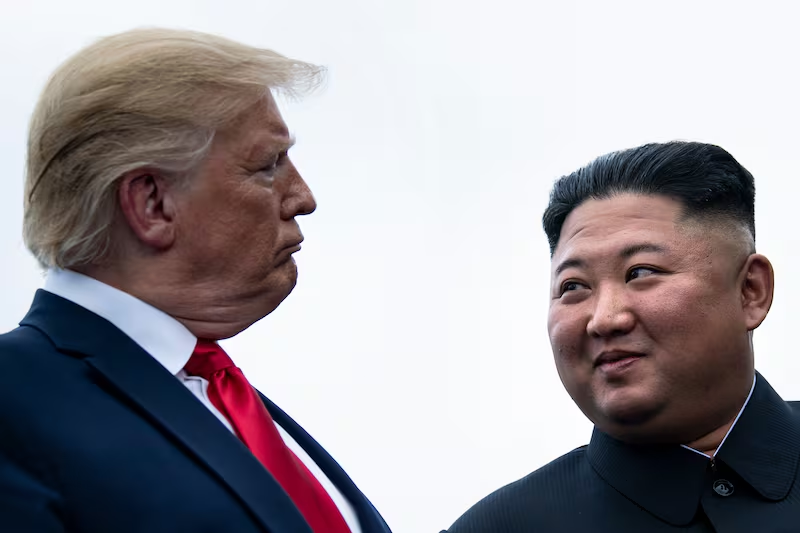
“Some White House aides believed his death would paralyze his country,” writes Joel Wit, who also joined negotiating teams to North Korea, inspecting the nuclear site at Yongbyon north of Pyongyang after North Korea signed an agreement in 1994 to stop producing nukes. “Go get Kim Jong Un, we were postured to do that,” says Wit in his tell-all book, Fallout: The Inside Story of America’s Failure to Disarm North Korea. One official is quoted as saying: “Everyone, including the North Koreans, knew killing him as part of the war plan.”
Maybe the U.S. would have to marshal more than the 150 or so aircraft, and a few hundred troops, including the U.S. Army’s elite Delta Force, that were needed to grab Maduro, but Kim is well aware his family and entourage could be hustled aboard a helicopter bound for an American warship long before the Russians and Chinese could respond in support of North Korea’s military establishment, ill-fed, ill-trained and not at all ready to leap to their leader’s instant defense.
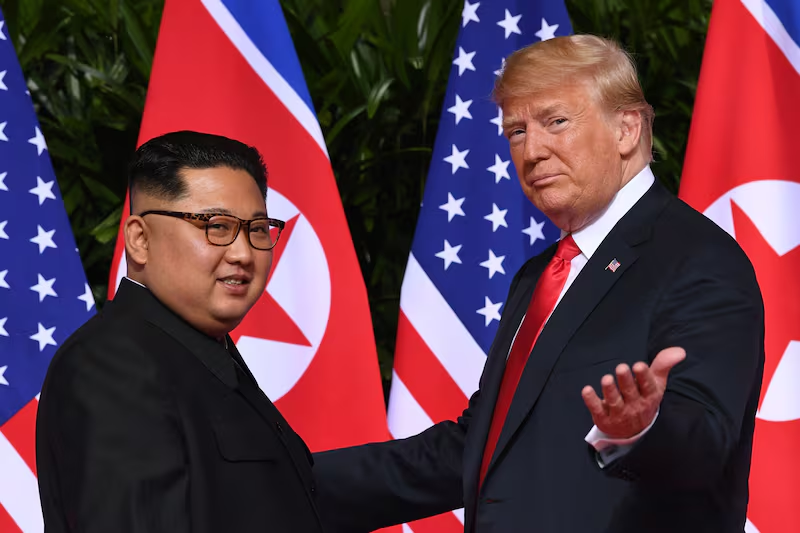
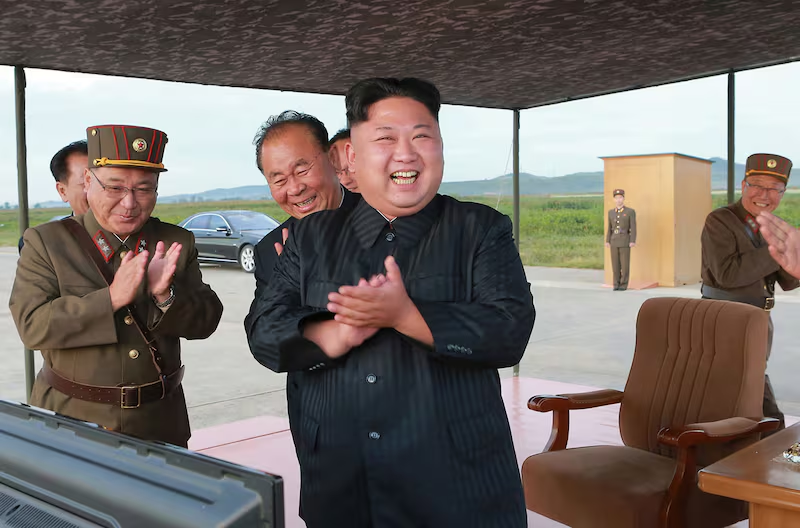
If capturing Kim sounds like mission impossible, consider his frequent appearances inspecting industrial and agricultural projects, reviewing troops, and presiding at ceremonies. He also shows up periodically at missile launches, perhaps the best time of all to catch him just as he’s making a show of pressing the button. The Americans, moreover, are steeped in the knowledge of what it will take to get him. U.S. forces have been training for years to go after him. Annual U.S.-South Korean exercises once routinely wound up with a mock “decapitation” of “the North Korean leader,” without explicitly naming Kim.
The U.S. command in Korea dropped the word “decapitation” from the war games in deference to their South Korean ally, who reminded them such language might not help in attempts at fruitless talks with the North Koreans, who now refuse to talk anyway. The word is gaining currency again with Maduro’s capture—while raising the question in Pyongyang of who might come next on the American hit list.
“North Korea’s Kim expected to cling to [his] nuclear security blanket after Venezuela,” blared one headline in the Hong Kong-based South China Morning Post. “The United States’ decapitation operation against Venezuela will reinforce North Korea’s nuclear ambitions,” read another. That warning should prompt Trump to act quickly to get rid of a nuisance who’s been plaguing the region for years with bombastic harangues, threatening his enemies with a nuclear holocaust while his own people suffer from hunger and disease.
Flights of heavy American bombers do little or nothing to remove the threats posed by America’s foes. Kim knows he can laugh off another aerial show of intimidation or a useless meeting with Trump. The threat of a Maduro-style capture is far more effective. Kim’s worst fear is that the Americans, after rehearsing “decapitation” for years, will decide it’s time to finally put their plan into effect, stifling Asia’s leading terrorist just as suddenly as they whisked Maduro and his wife off to jail in New York.
The post Opinion: Trump’s BFF Kim Jong Un Is Panicking After Decapitation Drama appeared first on The Daily Beast.