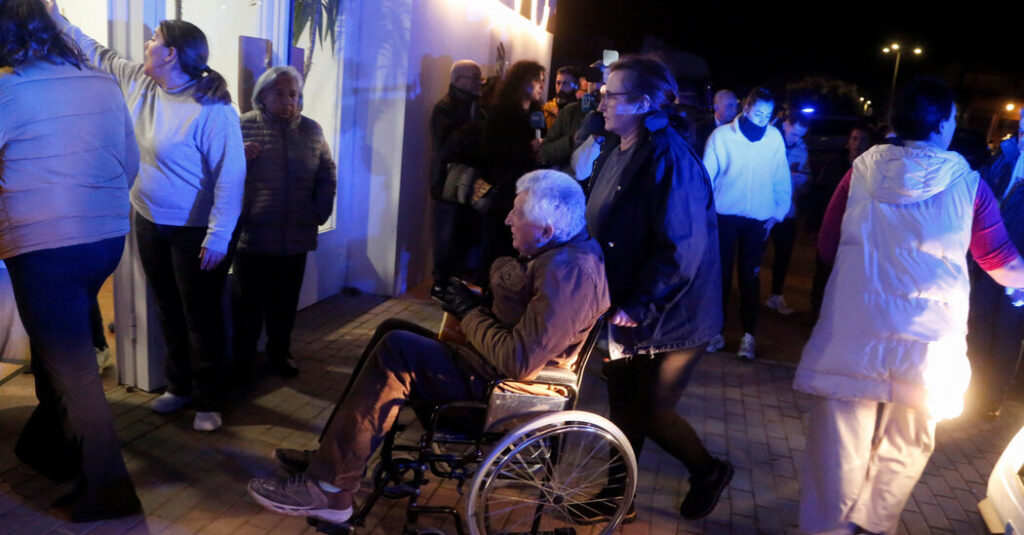
A high-speed train ran off its track and crashed into another high-speed train late Sunday in southern Spain, killing at least 21 people and injuring dozens of others, according to the local authorities.
The accident is the deadliest train accident in Spainsince 2013, when 80 people died after a train veered off a curved section of track in the country’s northwest. The country has the second-longest high-speed rail network in the world.
The collision on Sunday occurred at 7:45 p.m. in Adamuz, in the southern province of Córdoba. The train that derailed first was a privately-operated one that was traveling to Madrid from Málaga, on the country’s southern coast. The rear cars of that train fell into the opposite track, where it collided with an incoming train operated by Spain’s national rail company, which was bound for the southern city of Huelva, west of Seville.
Iryo, the operator of the first train, said that around 300 passengers were on board at the time of the crash. Renfe, the operator of the second train, has not said how many passengers it was carrying.
Spain’s state-owned rail infrastructure agency said in a statement that rail traffic between Madrid and several major cities in southern Andalucía — including Córdoba, Seville, Málaga and Huelva — will be suspended on Monday.
Emergency response crews continued to search through the wreckage of the crash early Monday, with officials warning that the death toll may rise.
What caused the derailment?
Unlike the 2013 disaster, the derailment on Sunday happened on a straight portion of the track. An independent commission has been launched to investigate what caused it.
Óscar Puente, Spain’s transport minister, told reporters that the first train to derail was only a few years old and that the section of the track where the accident occurred had been recently renovated.
“The accident is extremely strange,” he said. “It happened on a straightaway. All the experts we have consulted are extremely baffled.”
He added: “If there had not been an oncoming train, we would not be talking about casualties of any type.”
How are authorities responding?
Prime Minister Pedro Sánchez of Spain expressed sympathy for the victims’ families on social media, saying that “the entire country stands with them in this extremely difficult moment.”
“Tonight is a night of deep pain for our country,” he said.
The Andalucía government has set up a medical post at the crash site for victims, while the Córdoba city government has issued an urgent appeal for doctors to help treat the injured.
Paco Carmona, the director of Córdoba’s fire brigade, told public television that emergency crews were prioritizing assistance for victims still trapped in the two carriages most severely damaged in the crash.
The post What We Know About the Deadly High-Speed Train Crash in Spain appeared first on New York Times.