This as-told-to essay is based on a conversation with Troy Smothers, a US Marine veteran sergeant who now runs American Made Freedom, a nonprofit that assists Ukrainian troops with fiber-optic drones. Business Insider verified his military records and deployment to Ukraine with the Department of Defense.
The following has been edited for clarity and brevity.
I was a standard infantry corporal in the Marines when I was sent to Odesa, Ukraine, in 2005.
There were perhaps 100 of us, and our clear role was to teach infantry tactics, such as leap and bound alternating movements, sectors of fire, and calling for artillery fire.
This was NATO doctrine. Because 20 years ago, the Ukrainians were indoctrinated by Soviet tactics that just throw people at their enemy like human meat waves.
The roles are somewhat reversed now. Now the West is trying to learn how Ukrainians are fighting, and how they’ve turned what little they had into formidable weapons.
Even two decades ago, I noticed the same mindset among them that’s been the key to Ukraine’s strength today.
I was only in Ukraine for about three weeks in 2005, but my time training with the soldiers there left a similar impression on me.
We knew that Ukraine’s military budget was, let’s just say, underfunded. Everything they had was Soviet-era equipment comparable to the stuff that the US had decommissioned 20 years earlier.
We asked ourselves what we were doing sitting in their old Russian-made helicopters.
Helicopters commonly leak hydraulic fluid. However, when we boarded the helicopters in Ukraine, there were puddles of fluid in the cracks on the floor of the aircraft.
Definitely, nobody smoked near those things.
Most of the Ukrainians’ equipment was old, but it was a testimony to how they worked with what they had.
‘We’ll make it work’
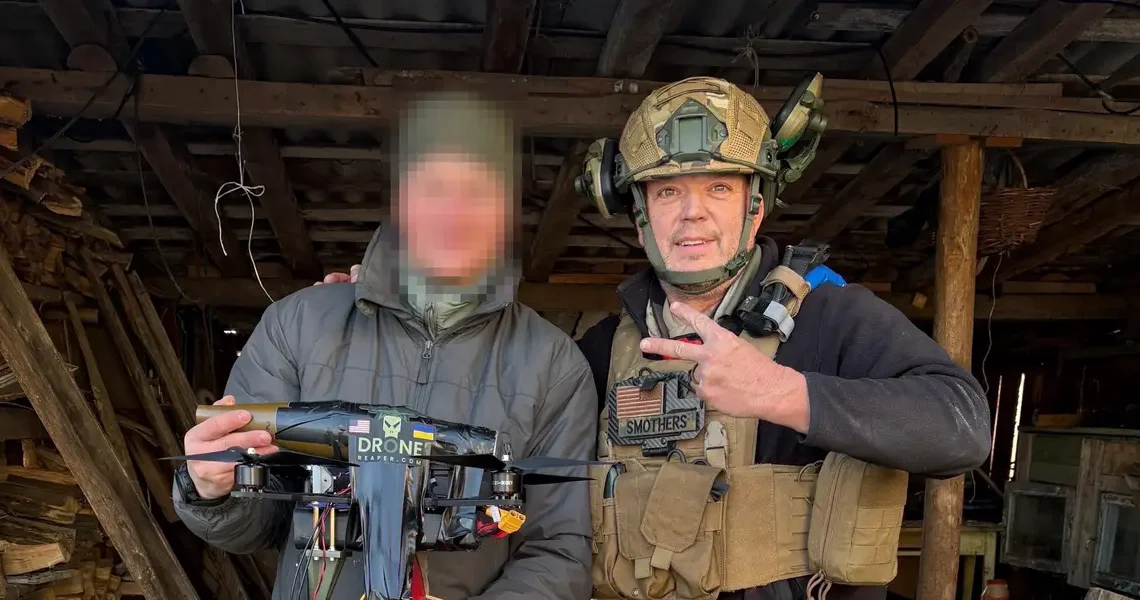
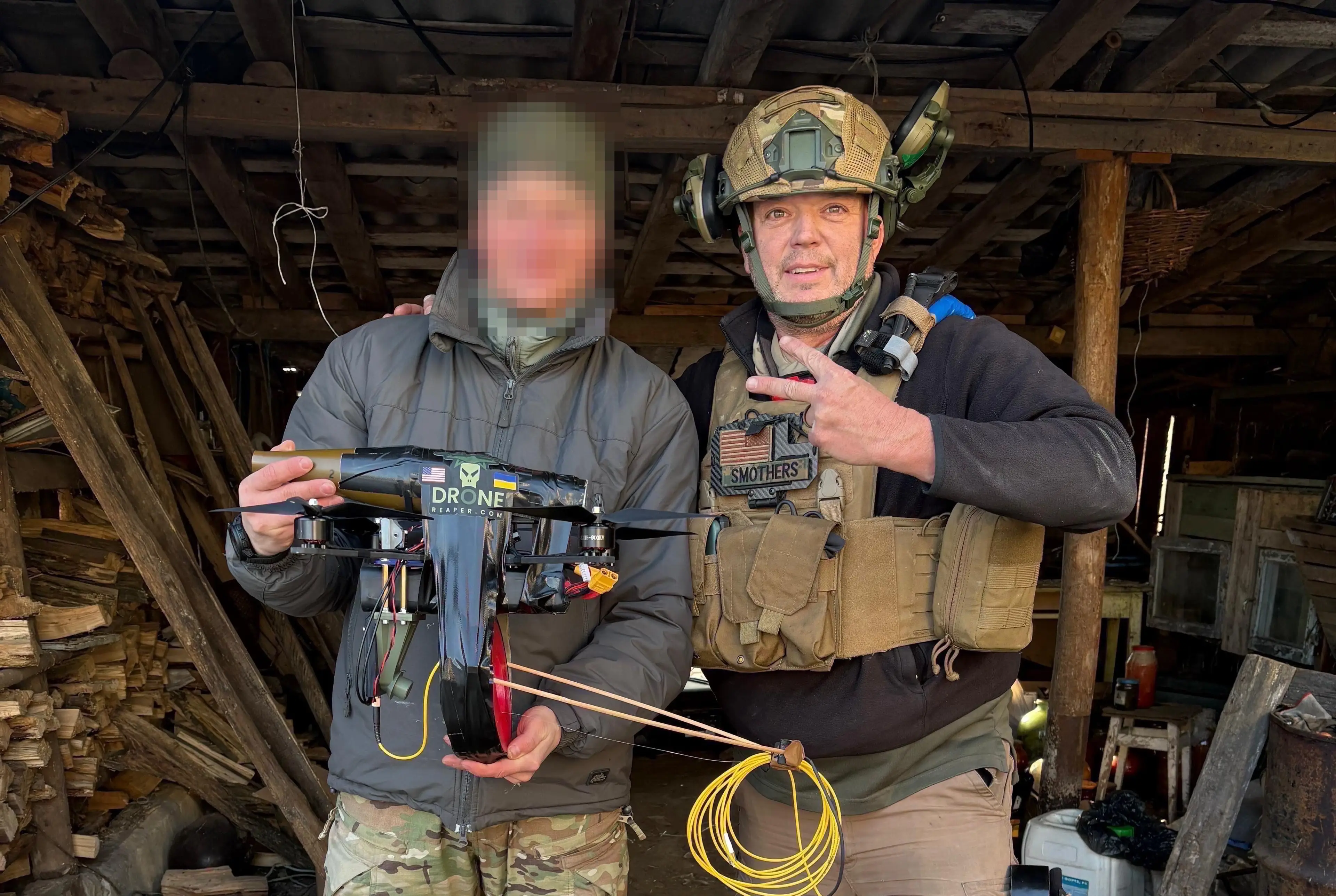
Since the full-scale war started in 2022, I’ve been traveling to Ukraine for months at a time, showing new fiber optic spools to drone manufacturers so they can build and improve unjammable drones. We’re testing out designs that are used on the battlefield today.
You see that same “this is all that we have, so we’ll make it work” determination in Ukraine now. The Ukrainians are getting some great kit from Europe and the US, but it clearly still isn’t enough to win.
Out of necessity, they took toy hobby drones and turned them into cutting-edge military equipment.
We don’t fight that way in the US. If something breaks, we typically order a replacement part or return it.
In Ukraine, they open up the part and repair it. Salaries there are much lower, so their people are more used to repairing electronics or appliances on their own. If a mobile phone breaks, they’ll open it up and start soldering.
Because of this, they had a greater army of people who were electronically knowledgeable, enabling them to bring in an immediate solution in the war.
That isn’t culturally ingrained in the American military or our people. Of course, we would adapt in the same situation, but could we have done it as quickly as the Ukrainians did, transforming toys and parts bought from China’s Alibaba into something that the entire world is now watching today?
Here’s an example of their DIY ingenuity. The Ukrainians have a contraption nicknamed a “mustache” on their first-person-view drones, which is essentially two rigid copper wires protruding in front.
When the drone flies into its target, these wires touch and send a signal to the blasting cap — like turning on a light switch — in the attached explosive to trigger the detonation. The mustache’s safety device is a simple, 3D-printed pin that gets pulled out when you launch the drone.
I’ve bought and used dozens of these while developing fiber-optic drones, and one mustache costs just $12 to $15. In the US, to get a similar piece of equipment, you’d spend $400 to $500, even at scale.
Most of these Ukrainians were just regular people living their lives until they were forced by the invasion to start killing Russians. But if anything, they’ve had an incredible advantage in finding solutions, sometimes because their uncle or friend might have run a repair or electronics business.
We were down there 20 years ago to bring the Ukrainians up to NATO standards. Today, I can see how much they can teach us about innovation. It’s humbling.
Read the original article on Business Insider
The post I’m a US Marine vet who trained with Ukrainians 20 years ago. Here’s the secret to their combat success. appeared first on Business Insider.