President Trump’s “Board of Peace” is billing itself as a new international peacekeeping body — and permanent membership won’t come cheap.
Mr. Trump is inviting countries to join beyond a three-year term, if they’re willing to cough up more than a billion dollars in cash within the board’s first year, according to a draft of the board’s charter reviewed by The New York Times.
And while the board was conceived as part of Mr. Trump’s plan to oversee Gaza, there is no mention of Gaza in the charter. That omission added to speculation that the group may have a broader mandate to cover other conflicts and could even be aimed at creating a U.S.-dominated alternative to the United Nations Security Council.
A Security Council resolution adopted in November 2025 endorsed Mr. Trump’s plan for ending the Israel-Hamas war in Gaza and welcomed the establishment of the board as a transitional administration that would set the framework and coordinate funding for Gaza’s redevelopment.
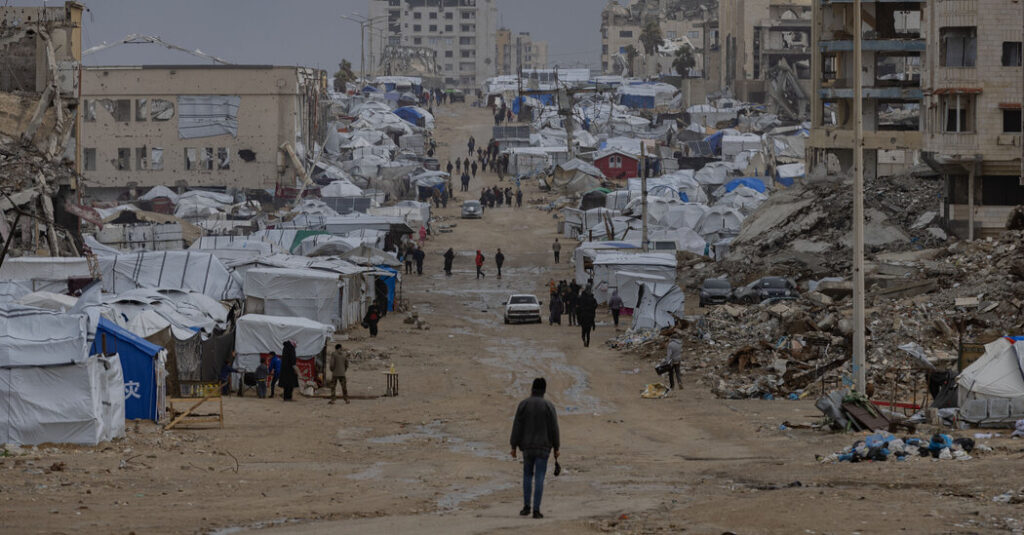
The enclave was devastated during the two years of war. About 80 percent of the buildings in Gaza have been damaged or destroyed, according to the United Nations. Many of the roughly 2 million residents are still living in tents among millions of tons of rubble.
The board’s charter was sent out with invitations to potential members over the weekend. A copy reviewed by The Times was verified by an official on the condition of anonymity because of the delicate diplomacy. News of the $1 billion buy-in was previously reported by Bloomberg.
On Friday, the White House announced the board’s members would include Secretary of State Marco Rubio, Jared Kushner, Mr. Trump’s son-in-law, and Ajay Banga, the head of the World Bank.
Several countries said they had received invitations to join, including Argentina, Canada, Egypt and Turkey. King Abdullah II of Jordan has also been invited, the Jordanian Foreign Ministry announced on Sunday.
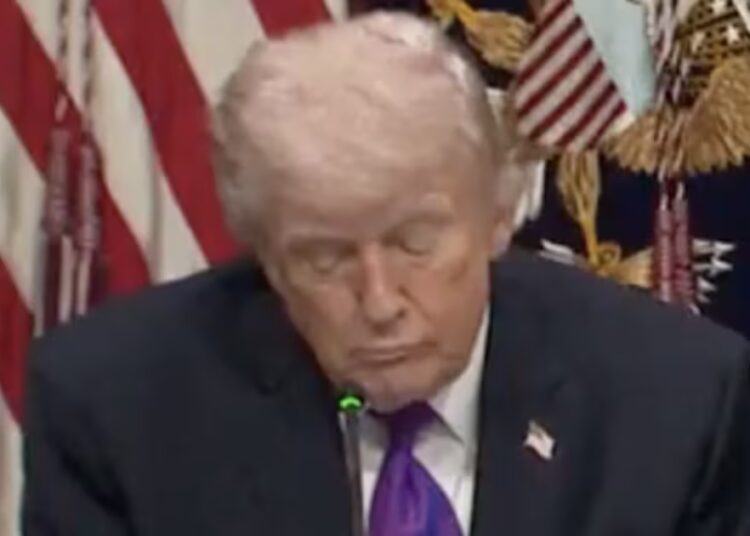
Mr. Trump, who is to chair the board, said in a post on Truth Social last week that it will be “the Greatest and Most Prestigious Board ever assembled at any time, any place,” though much about it remained unclear.
The charter appears to outline a much more ambitious role for the board than the one described in Mr. Trump’s plan for Gaza, published in October 2025, as well as the subsequent Security Council resolution.
The board’s mission, according to the charter, is to seek “to promote stability, restore dependable and lawful governance, and secure enduring peace in areas affected or threatened by conflict” and “to undertake peace-building functions in accordance with international law.”
The preamble emphasizes the need for what it calls “a more nimble and effective international peace-building body” and laments that “too many approaches to peace-building foster perpetual dependency and institutionalize crisis rather than leading people beyond it.”
According to the charter, the board is expected to meet for voting at least annually, and expenses are to be funded through voluntary contributions from member states or other sources. The charter does not elaborate on the peacekeeping efforts.
Along with the “Board of Peace,” the White House on Friday also outlined a “Gaza Executive Board” that would help liaise with a committee of Palestinian technocrats appointed to administer daily life in Gaza. The Gaza executive board includes Ali al-Thawadi, a senior Qatari official, and Hakan Fidan, the Turkish foreign minister, among others.
The composition of the executive board prompted the office of Israel’s prime minister, Benjamin Netanyahu, to issue a rare public protest against the Trump administration, saying it “was not coordinated with Israel and runs contrary to its policy.”
While an Israeli businessman is on the executive board, Israeli government officials have not been named to it.
Miri Regev, an Israeli minister from Mr. Netanyahu’s conservative Likud party, told Israel’s public broadcaster, Kan, on Saturday that Israel objected to participation of Qatar and Turkey, adding, “Prime Minister Netanyahu will do everything to change that decision.”
Relations between Israel and Turkey have oscillated over the decades, but since the war in Gaza, set off by Hamas’s attack against Israel in October 2023, they have deteriorated.
President Recep Tayyip Erdogan of Turkey has downgraded ties with Israel, repeatedly compared Mr. Netanyahu to Adolf Hitler and praised Hamas, while hosting its officials. Israeli officials are anxious about the prospect of Turkey gaining influence over Gaza’s future.
After Israel struck Qatar in September 2025 in a failed attempt to kill Hamas leaders meeting there, Mr. Netanyahu defended the action and lashed out against the country for giving what he called “safe haven” to the militant group, even as Qatar was trying to negotiate a cease-fire.
Qatari officials have said they hosted Hamas officials at the request of the U.S. government to facilitate channels of communication. Mr. Netanyahu has in the past relied on Qatar to send millions of dollars a month to Gaza, a policy that was intended to keep the peace but that also helped prop up Hamas’s rule over the territory.
Israel’s priority is seeing Gaza demilitarized. Hamas so far has not agreed to lay down its arms.
Gabby Sobelman contributed reporting from Rehovot, Israel.
Isabel Kershner, a senior correspondent for The Times in Jerusalem, has been reporting on Israeli and Palestinian affairs since 1990.
The post $1 Billion in Cash Buys a Permanent Seat on Trump’s ‘Board of Peace’ appeared first on New York Times.