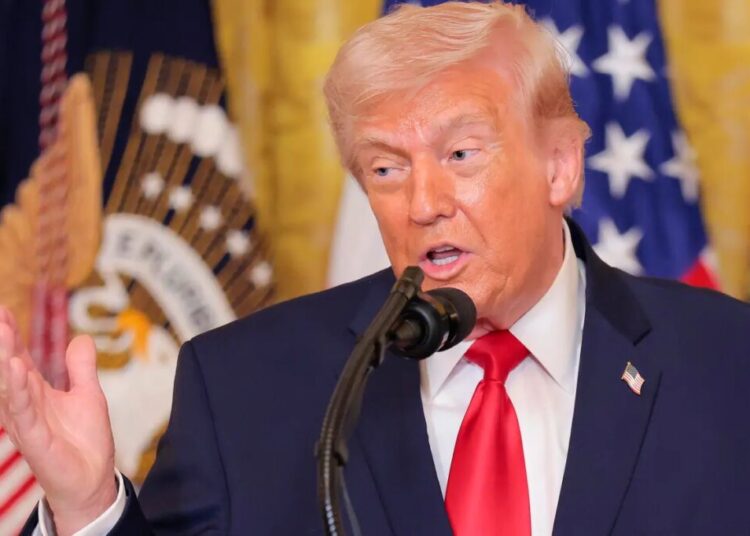
President Trump is apparently serious about wanting Greenland for the United States. What once sounded like an opening gambit in a negotiation increasingly looks like a deeply held conviction, one that Mr. Trump has publicly underlined by refusing to rule out the use of force.
Europeans are serious about this too, however. Assuming that Europe would quietly accept a takeover of Greenland by the United States and then move on would be a mistake. The recent assertion by President Emmanuel Macron of France that his country would stand in solidarity with Denmark against an attack on Greenland’s sovereignty and for the deployment of European troops to the island are only the most recent indications of this growing resolve.
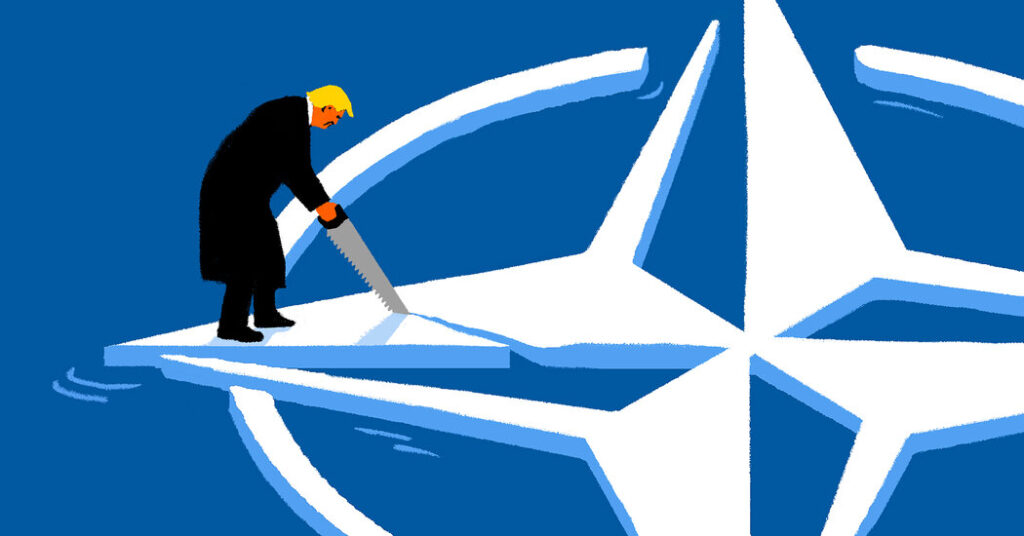
There is no need to speculate about worst-case scenarios from such a possible confrontation: the most likely outcome is bad enough. As Denmark’s prime minister, Mette Frederiksen, has warned, an attack on Greenland would be the end of NATO. That would rob the United States of an unbeatable web of allies, offer rifts for our common enemies to exploit and eradicate the alliance’s collective moral high ground that has helped project American soft power across Europe and the world for decades. In short, it would make America weaker, not safer.
Greenland is not a marginal issue for Europeans. Threats against it cut to the heart of the idea of Europe, of sovereignty, international law and trust. Key European leaders recently stressed they are united in their position that it is up to Denmark and Greenland to decide their own fate — and no one else. The potential for a crisis is real, and what is most confounding is that this would be a crisis that is entirely unnecessary and easily avoidable.
Mr. Trump can credibly point to significant achievements in strengthening NATO. While not everyone may have liked his approach, it proved effective. He succeeded in pushing America’s allies to commit to a new spending target far beyond what anyone had thought possible. After more than a decade of struggling to meet the 2 percent dues benchmark, NATO members have now pledged to spend 5 percent of their gross domestic product on defense by 2035. Major European countries such as Germany have already begun to move quickly toward that target.
A stronger European pillar allows the United States to focus on other strategic challenges, most notably in the Western Hemisphere and the Indo-Pacific. By any fair assessment, NATO is on track to become militarily stronger because of President Trump’s pressure. Yet it is also because of President Trump that NATO’s very survival is now at risk.
Threatening to annex territory belonging to a NATO ally strikes at the very foundation of the alliance. NATO is not merely a military grouping; it is a community of liberal democracies that has endured precisely because its members trust — and do not threaten — one another. They consult, negotiate and resolve disputes peacefully. This shared political culture is not a luxury — it is NATO’s greatest strategic asset. It sets us apart from those that depend on threats and tricks to keep their “friends” together.
If allies begin to doubt that their sovereignty will be respected by their partners, why should adversaries believe that the alliance would defend our sovereignty against external threats? What is at stake here is not Greenland itself, but the future of the trans-Atlantic relationship.
That unique asset is now at risk. President Trump has suggested that he might have to choose between Greenland and NATO. For Europeans, that is a deeply unsettling statement. For Americans who value NATO, it should be equally alarming.
To be clear, there are legitimate concerns behind Trump’s focus on Arctic security. Trans-Atlantic allies have indeed been too slow in responding to growing Russian and Chinese activities in the High North. The region does deserve more attention, especially from NATO. The strategic importance of the Arctic is real, and it is growing.
But those challenges strengthen the case for NATO — not for unilateral action. They call for more allied presence, better coordination and sustained political consultation. America’s allies in the North are a huge asset to the United States; its adversaries don’t have that advantage. And NATO already provides a framework to collectively address Arctic security, pooling resources and legitimacy in a way no single country can match.
What is true in the High North is also true elsewhere in Europe, and around the world. NATO is a force not only for its collective security, but for the individual security of each of its members, including the United States. Remember: The only time Article 5 of the NATO treaty was ever invoked was to help defend America right after the 9/11 attack. From the Atlantic to North Africa and the Indo-Pacific, the United States’ interests are advanced by the power that the NATO alliance achieves.
The current moment demands strong voices of restraint and responsibility, especially in the United States. Americans who understand the strategic value of NATO to the United States — and there are many — should speak up now. They should remind their leaders that America’s strength has always been amplified, not constrained, by strong allies. And if you want allies, you must treat them as allies.
The Greenland issue does not have to become a rupture. Handled wisely, it could instead become another example of NATO’s enduring strengths: consultation, compromise and collective problem-solving. The alliance has survived other crises — precisely because members chose dialogue over confrontation. It is not too late to do so again.
Wolfgang Ischinger assumed the chairmanship of the Munich Security Conference in 2008. A German career diplomat, he was state secretary of the German Foreign Ministry and served as ambassador in Washington and London.
The Times is committed to publishing a diversity of letters to the editor. We’d like to hear what you think about this or any of our articles. Here are some tips. And here’s our email: [email protected].
Follow the New York Times Opinion section on Facebook, Instagram, TikTok, Bluesky, WhatsApp and Threads.
The post Trump’s Greenland Threats Will Boomerang on America appeared first on New York Times.