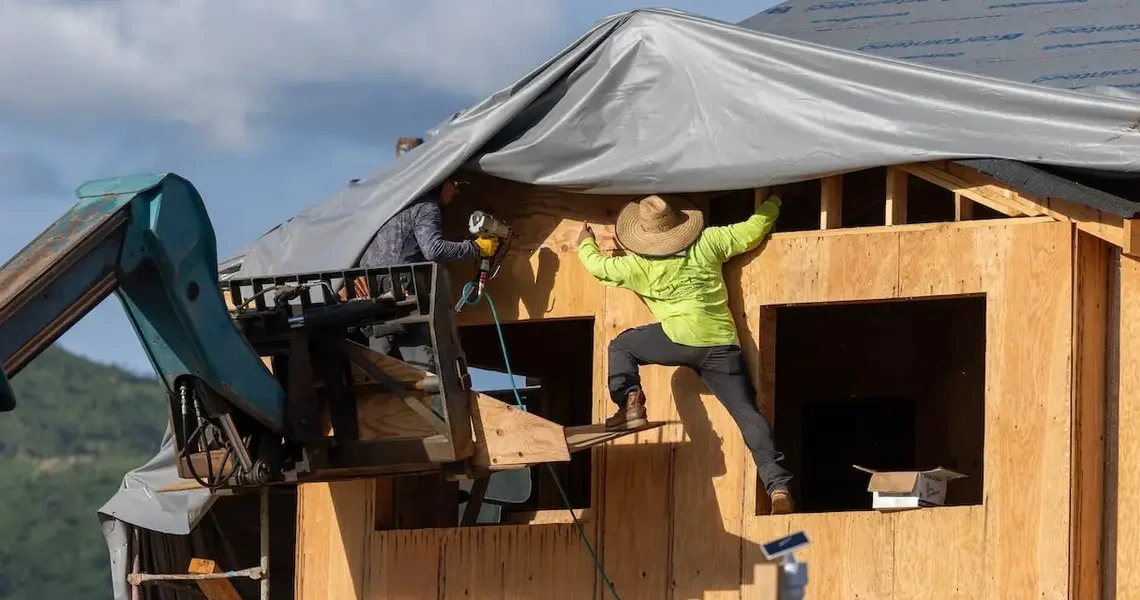
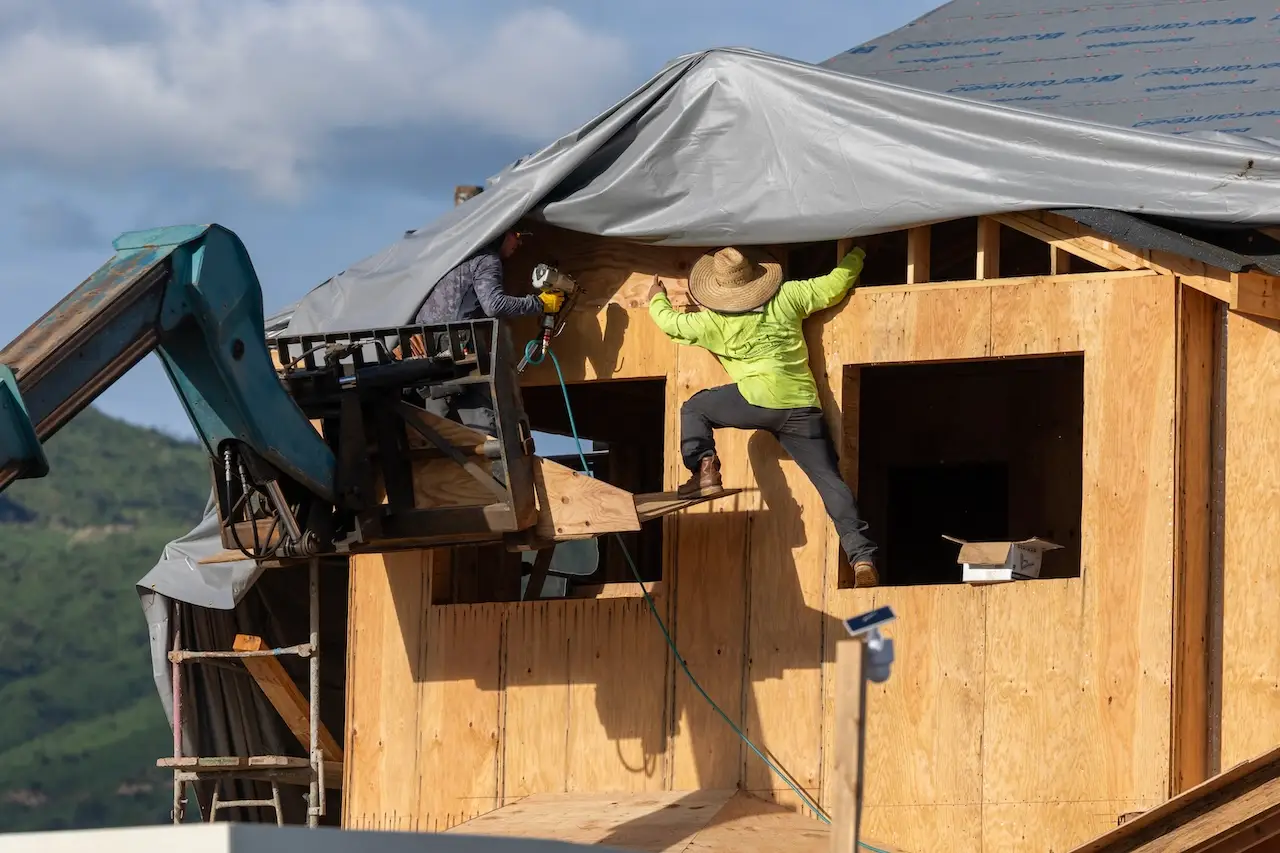
The American homebuilding industry relies heavily on immigrant workers. That’s especially true in the cities that build and remodel the most homes, according to new research from Harvard’s Joint Center for Housing Studies.
In the seven metro areas that issued at least 150,000 residential building permits between 2019 and 2023, an average of 54% of construction trades workers were foreign-born, the Harvard report found. The metros building and remodeling the most homes — from Los Angeles and Washington, DC, to Dallas and Houston — rely on a workforce that’s often more than 60% foreign-born.
The construction industry faces a nationwide worker shortage in the hundreds of thousands. Given its reliance on foreign-born workers, President Donald Trump’s mass deportations and restrictions on immigration threaten to deepen the worker shortfall, said Anirban Basu, the chief economist at Associated Builders and Contractors, a trade group that endorsed Trump in 2024.
As a result, economists and housing researchers expect the most dynamic US housing markets will be hit the hardest by rising construction costs — driven by higher labor costs and delays, in part due to the worker shortage.
“These places that are most reliant on immigrant labor are going to feel those effects most acutely, and may then have a hampered ability to respond to housing supply and demand needs,” said Riordan Frost, a senior research analyst at the Harvard Center and the author of the report.
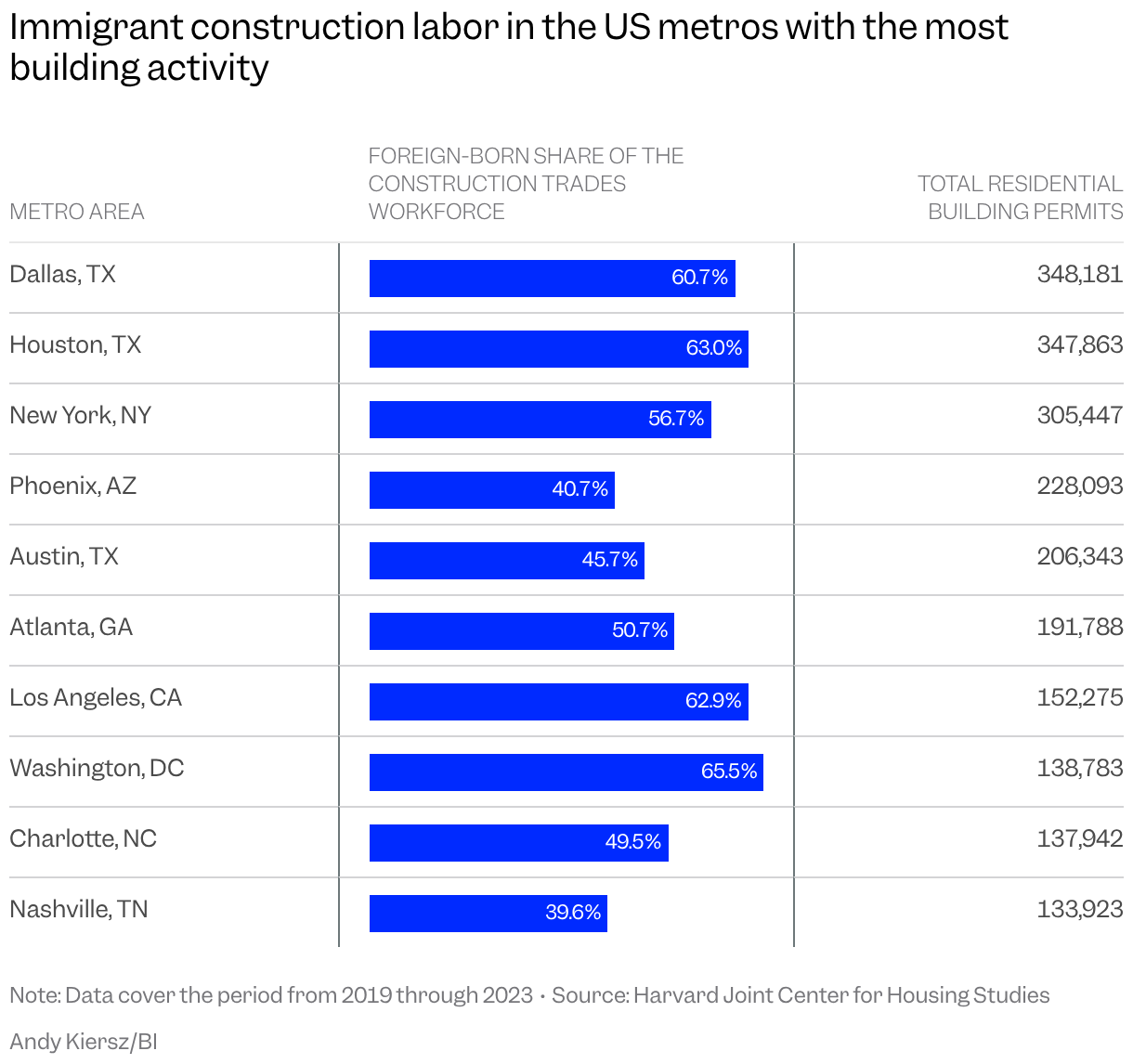
Metros that build fewer homes tend to have far fewer immigrants as a share of their construction workforce. In metros that granted between 75,000 and 149,999 permits, an average of 40% of the workers were foreign-born. And in metros that permitted less than 75,000 homes, 22% of the workforce was foreign-born. Still, immigrants made up a disproportionate share of the construction workforce in those places, too.
Are you a contractor or worker in the construction trades affected by worker shortages or immigration enforcement? Reach out to share your experience with this reporter at [email protected].
The Dallas-Fort Worth-Arlington metro area led the country in issuing new building permits between 2019 and 2023. During that period, 61% of the area’s construction workers were immigrants. In that same period, nearly three-quarters of construction workers in the Miami-Fort Lauderdale-Pompano Beach area were foreign-born.
“There’s demand for labor in these places because there’s so much homebuilding activity, and that is what creates the economic opportunity for immigrants to come in and fill these positions, especially if they’re positions that native born people aren’t as likely to work in,” Frost said.
A recent survey by the Associated General Contractors of America found that 28% of construction firms say they’ve been affected, either directly or indirectly, by immigration enforcement. More than 90% of all firms that were hiring said they were having trouble filling open roles, and 45% of all firms said they experienced project delays because of a shortage of workers.
“There’s no question in my mind the stepped-up immigration enforcement is serving to drive up construction delivery costs,” Basu said. “If all of a sudden these communities are no longer able to supply as much new housing, then their economic growth will tend to stagnate.”
At the same time as the administration is cracking down on legal and illegal immigration, it’s not doing enough to boost domestic construction training, AGC said.
The Trump administration says it’s working with employers to streamline visa applications for temporary workers and boost vocational training.
“There is no shortage of American minds and hands to grow our labor force, and President Trump’s agenda to create jobs for American workers represents this Administration’s commitment to capitalizing on that untapped potential while delivering on our mandate to enforce our immigration laws,” White House spokeswoman Abigail Jackson said in a statement.
Immigrants have long made up a disproportionate share of the country’s construction tradespeople, particularly in homebuilding. And, as of 2024, an estimated 15 to 23% of the total construction workforce was living in the country illegally. In recent years, the number of native-born construction workers has shrunk significantly.
In the long term, improvements in construction productivity — including the growth of modular, factory-built housing — and a growing number of women and young people entering the industry could ease the worker shortage.
But for the next several years, at least, the worker shortage is set to worsen, helping drive up building costs and home prices.
“The construction workforce is set to become more expensive going forward,” Basu said. “And then when you layer on top of that, of course, increases in healthcare costs, electricity rates, those kinds of things, there’s even more pressure on these households going forward.”
Read the original article on Business Insider
The post America’s homebuilding is powered by immigrant workers. Here are the places that rely on them the most. appeared first on Business Insider.