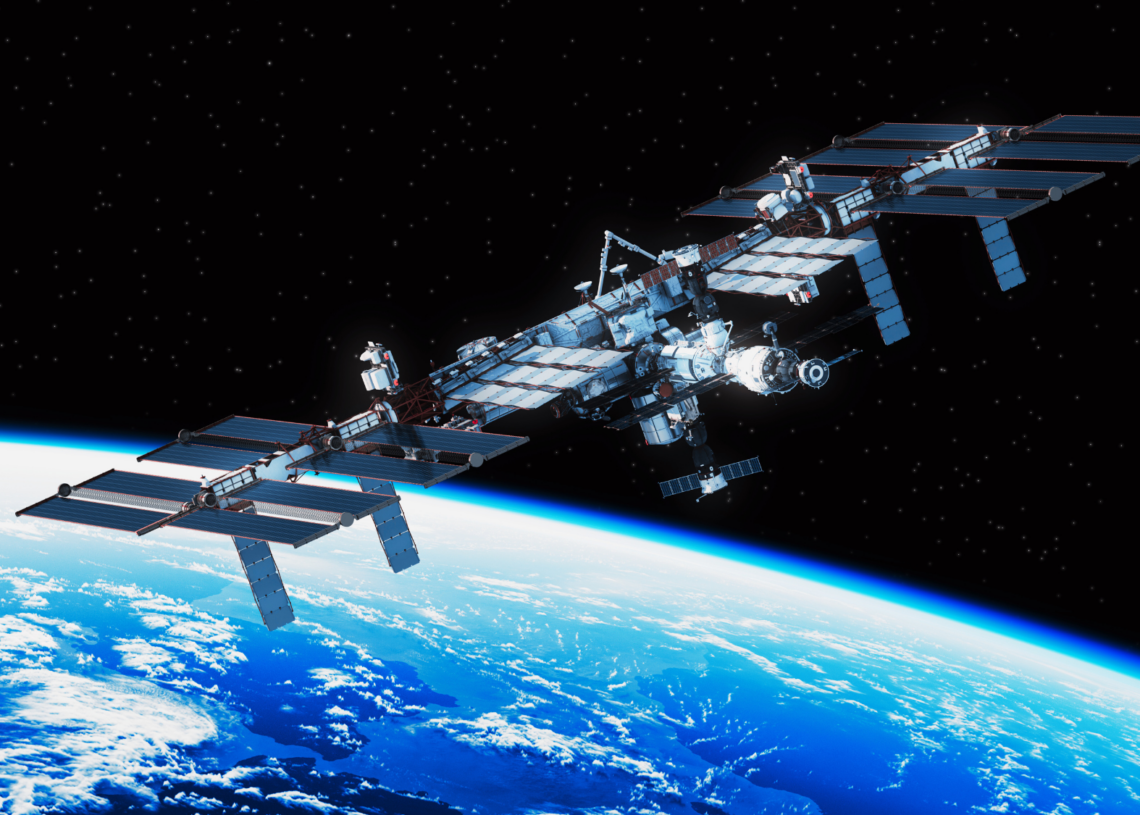
The International Space Station is more than a symbolic setting aside of our nationalistic differences as we band together, as a single species, to explore what lies beyond our earthly reach. It’s also a place where cool science stuff happens. Space is an entirely new environment for human life, relatively speaking, so we have to figure out how various parts of Earth’s life can be modified for space life if you ever plan to establish permanent settlements beyond the Earth’s atmosphere.
Things behave differently in space, and new research shows that this is just as true for viruses and bacteria as it is for, say, astronauts‘ bones and muscles.
In a study published in PLOS Biology, scientists observed how bacteriophages, aka viruses that infect bacteria, interacted with E. coli aboard the ISS. They compared these space-grown microbes to identical populations kept on Earth.
At first, the phages in orbit were slower to infect bacteria. That makes sense, since in microgravity, fluids don’t swirl and mix the way they do on Earth, so viruses and bacteria don’t bump into each other as often. But once infection did happen, things got weird. Both the bacteria and the viruses adapted in ways that looked nothing like their Earthly counterparts.
The bacteria evolved stronger defenses and traits that helped them survive in space. The phages evolved new ways to break through those defenses and infect their hosts more efficiently. Some of the genetic mutations seen in the space-grown phages showed up in genes that scientists don’t fully understand, and that rarely change in standard lab experiments on Earth.
According to lead researcher Vatsan Raman, microgravity delays infection and actively reshapes how microbes evolve together. Space, it turns out, isn’t neutral. It’s a kind of biological pressure cooker that forces everything we know about life on Earth into new, unpredictable directions.
The implications here would directly affect long-term space travel to another planet or an extremely distant galaxy. Microbes aboard spacecraft wouldn’t be frozen in time. They would evolve, potentially in ways that could affect astronaut health or the onboard environment. Seems ominous, potentially dangerous, but there is a cheerier bright side. On Earth, some mutations seen in space-made phages made them better at attacking antibiotic-resistant E. coli, including strains linked to UTIs.
More study of space-based phage therapy could open up a whole new field that can help scientists design better treatments here on solid earthly ground without needing to send everything into orbit.
The post Bacteria-Killing Viruses Appear to Get Stronger in Space appeared first on VICE.