Three months after President Donald Trump declared “the historic dawn of a new Middle East,” the White House said this week that his 20-point Gaza peace plan has entered its second phase. Despite some meaningful progress, unresolved disputes will become increasingly difficult to ignore.
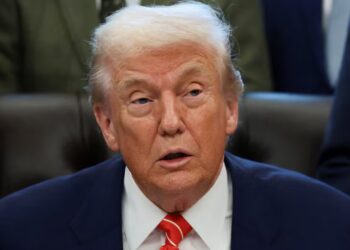
After several weeks of postponements, Trump announced on Thursday the formation of the “Board of Peace,” which he will head. This group is tasked with overseeing Gaza’s affairs until the enclave can transition to Palestinian self-rule, and its main job will be to provide oversight to a group of Palestinian technocrats.
Its members include former British prime minister Tony Blair, the Turkish foreign minister, the director of Egypt’s intelligence agency, a Qatari diplomat, a United Arab Emirates minister, the head of the World Bank, an Israeli billionaire and the CEO of Apollo Global Management. With characteristic understatement, Trump called this “the Greatest and Most Prestigious Board ever assembled.”
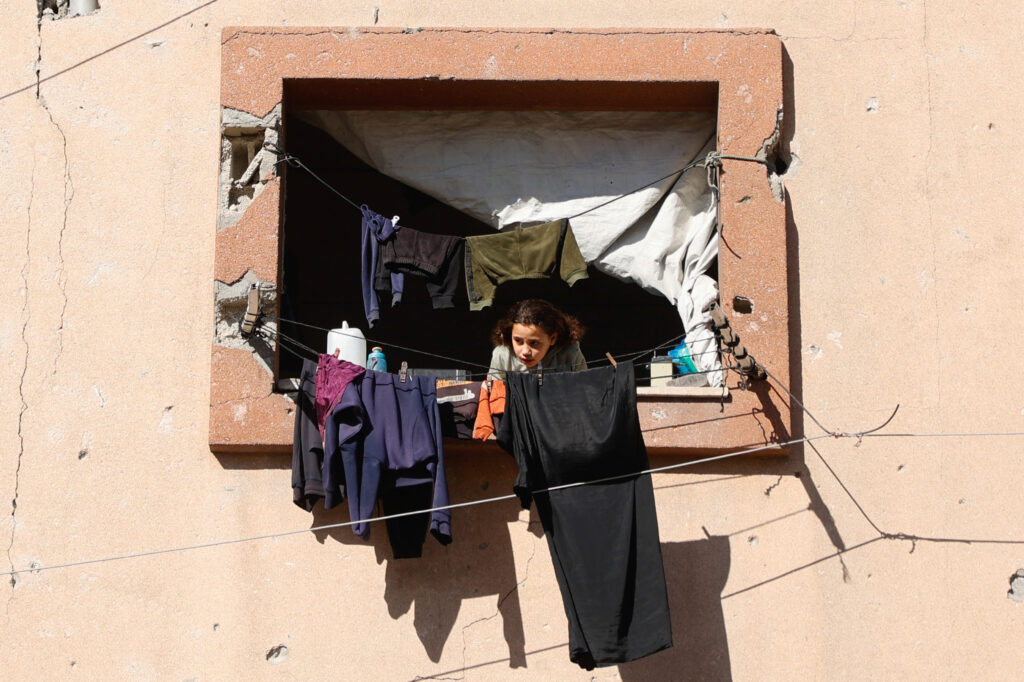
On paper, this is good progress. On the ground in Gaza, the situation remains fraught.
A fragile truce has largely held, but Israel and Hamas have repeatedly accused each other of violating the terms of the ceasefire. The Israeli Defense Forces, occupying roughly half of Gaza as a buffer zone, have carried out targeted airstrikes that the Palestinian health ministry claims have killed at least 450 people.
Israel has yet to make good on its promise to reopen the Rafah crossing between Gaza and Egypt, as Prime Minister Benjamin Netanyahu committed during his meeting with Trump at Mar-a-Lago last month. Reopening that link could allow safe passage for Palestinian civilians and aid stockpiled on the Egyptian side of the border. For its part, Hamas has yet to provide the remains of an Israeli soldier, Ran Gvili, who is believed to have died and whose return home has become a cause celebre in Israel.
The biggest obstacle is Hamas’s refusal to lay down its arms, which means Israel refuses to commit to fully withdrawing from Gaza. And why should they? What happened on Oct. 7, 2023, can never be allowed to happen again.
In the three months since the ceasefire took effect, Hamas has emerged from its tunnels weakened but still able to assert dominance in Gaza due to the absence of any alternative security force. Hamas has pledged to dissolve its governing structure to make way for the technocratic committee, but the terrorists’ refusal to disarm has prevented the creation of an international force to provide security.
No country is willing to commit ground troops if it means battling Hamas. Privately, they’d all prefer Israel do that dirty work.
One proposal being floated by Hamas is to decommission or “freeze” some weapons in depots overseen by Arab countries. Another is offering a “buy back” program to pay militants to voluntarily surrender their light firearms. Neither would amount to real disarmament.
This second phase of the Gaza plan is supposed to focus on what Trump special envoy Steve Witkoff calls the “full demilitarization and reconstruction of Gaza.” Rebuilding the war-shattered enclave is expected to take decades and cost $70 billion. Just removing all the debris will take an estimated three years. But that work cannot start until Hamas no longer poses a threat.
The post The Gaza peace deal risks being buried in the sands of mistrust appeared first on Washington Post.