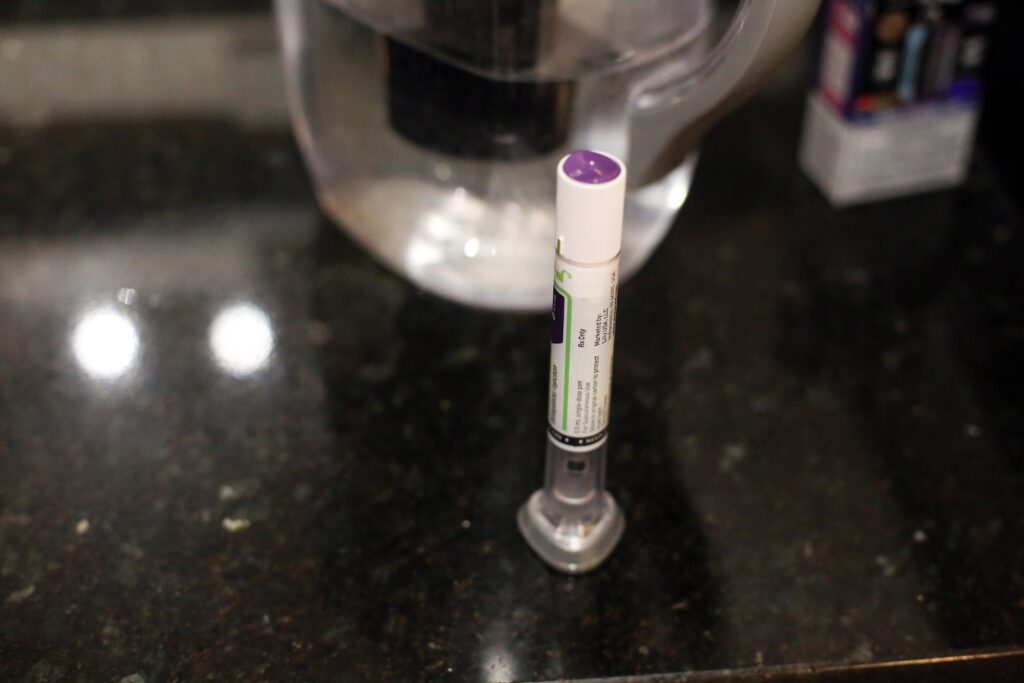
As more continues to be understood about the health benefits associated with GLP-1 drugs, a growing body of science is aiming to answer whether the popular weight-loss medication can help with one of the world’s leading causes of death: cancer.
Research into the effects of GLP-1 drugs on the risks of developing and surviving cancer is early, and results so far have been somewhat of a mixed bag. While some studies suggest the medication could be linked to a lower chance of developing certain cancers and better outcomes after being diagnosed, researchers have also found little to no effect on other types. In some cases the drugs have been tied to a slight increase in risk. Experts also noted that the medication’s potential long-term effects are not yet well understood.
“We don’t know all the good effects, but we don’t know all the bad effects either,” said Sherry Shen, a medical oncologist specializing in breast cancer at Memorial Sloan Kettering Cancer Center.
What the latest research says
A large study of more than 1.6 million people with Type 2 diabetes found that people who took GLP-1s had “significant risk reduction” in 10 out of 13 obesity-associated cancers compared with those taking insulin, according to peer-reviewed results published in 2024 in JAMA Network Open.
Another large-scale study published in August 2025 looked at adults with obesity and found that people taking the weight loss medication were “significantly associated with a reduced risk of overall cancer.” The researchers observed that the lowered risk was particularly notable for endometrial, meningioma (which affects the brain) and ovarian cancers. But they also observed a “nonsignificant increased risk” of kidney cancer in people who were taking the drugs.
“Overall, it has a somewhat protective effect,” said Jiang Bian, chief research information officer at the Indiana University Melvin and Bren Simon Comprehensive Cancer Center, who led the research team that studied adults with obesity. “But if you look at individual types of a cancer or different populations, the protective or adverse effects are different.”
A reviewof 48 randomized controlled trials found that GLP-1s “may have little or no effect on risk for obesity-related cancers,” the researchers wrote in a December study published in the Annals of Internal Medicine. The study focused on thyroid, pancreatic, colorectal, gastric, esophageal, liver, gallbladder, breast, ovarian, endometrial and kidney cancer as well as multiple myeloma and meningioma.
But other recent studies suggest that GLP-1s can also improve survival among some people diagnosed with cancer.
Among older adults with cancer and Type 2 diabetes, taking the medication was associated with lower death rates, according to findings published in July 2025 in JAMA Network Open.
“That’s sort of opened a new avenue for us to explore the GLP-1 use in that special population,” said Serena Guo, a professor at the College of Pharmacy at Purdue University, who was a co-author of the study.
The drugs could also be helpful for patients with colon cancer. A study of more than 6,800 people found that those who were using GLP-1s had less than half the five-year mortality rate compared with non-users, according to results published in November in the peer-reviewed journal Cancer Investigation.
The findings were consistent when researchers adjusted for demographics, other illnesses and the severity of the patient’s colon cancer diagnosis, said Raphael Cuomo, a professor and cancer researcher at the UC San Diego School of Medicine and the study’s author. He noted that people who were obese and taking GLP-1s appeared to benefit “quite a lot more” with regard to lowered death rates compared with patients who were within normal weight ranges.
“In this case, we’re seeing that these drugs are having a potentially pretty powerful effect,” he said. “Now, this does need to be validated in randomized trials so we can be certain about whether or not these are having anticancer effects or there are other mechanisms at play. But this is very promising evidence that these drugs can be very beneficial for patients with colon cancer.”
How GLP-1s could help with cancer
The ability of GLP-1s, which were developed to treat Type 2 diabetes, to help people lose weight is one way that the drugs could have benefits for cancer, experts said. Obesity is a major risk factor for many types of cancers.
“There’s a myriad of ways in which obesity in general contributes to cancer risk,” Shen said. If you’re able to modify your amount of body fat, also known as adipose tissue, “then theoretically you should be modifying cancer risk.”
GLP-1s could also be helping by decreasing diabetes risk and reducing inflammation, which can contribute to the development of cancers, she said.
Research is ongoing to better understand what GLP-1 drugs might be doing in people with cancer.
Scientists at Dana-Farber Cancer Institute in Boston, for instance, are studying the medication’s effect on liposarcoma, a type of cancer that starts in fat cells.
“This rare cancer, liposarcoma, gives us a unique opportunity to study what GLP-1 drugs do to cancer cells themselves,” said Erica Pimenta, a physician-scientist who is leading research into whether the weight-loss medications could be a pathway for treating liposarcoma.
Early studies showed that when GLP-1 drugs were administered to the tumor cells, researchers saw hints that the cells were “turning on or reprogramming themselves to behave more like a normal fat cell,” Pimenta said. There is interest, she added, in seeing if this work in liposarcoma can be applicable to other cancers.
In the meantime, experts urged people not to rush to start taking GLP-1 medications without consulting with health care providers.
“The decision to start one of these is not something that should be taken lightly,” Cuomo said. “These are long-term regimens, they’re expensive, and they can have side effects.”
It’s also important to keep in mind that using the medicine should be paired with healthy lifestyle habits, such as eating well and staying active.
“These GLP-1s aren’t Band-Aids as fixes for everything,” Shen said.
The post What science says about how weight-loss drugs affect cancer risk appeared first on Washington Post.