
It’s difficult to know exactly what is happening in Iran since the government shut down the internet on January 8, plunging a nation of more than 90 million people into digital darkness.
Crackdowns against anti-government protesters have led to at least 2,600 deaths, although some estimates put the death toll at upward of 20,000. According to the US-based Human Rights Activists News Agency, more than 18,000 protesters have been arrested.
The protests began in late December in response to dire economic conditions and took on a broader anti-government character as people demanded the end of Ali Khamenei’s rule. The Iranian rial is now the least valuable currency in the world. The country has an inflation rate of about 40 percent, making necessities unaffordable for most people. Iran is struggling through a long-lasting economic crisis, driven by sanctions, government austerity measures, and last year’s war with Israel. Many parts of the country, including the capital of Tehran, face severe and unrelenting drought, as I reported in November.
The government also cut phone lines on January 8. While the government eased some of these restrictions on Tuesday, allowing some Iranians to make international calls out of the country this week, many reasonably fear government surveillance. People outside the country remain unable to call Iranians. Several people in Tehran called the Associated Press on Tuesday, saying that text messaging services remain down and that internet users could connect to local government-approved websites but not to international ones.
So Elon Musk’s Starlink — which provides high-speed internet access in difficult-to-reach places via satellites that receive radio signals from user terminals on the ground — has become a lifeline for Iranians trying to share what is happening on the ground. SpaceX has made Starlink free for its tens of thousands of Iranian users, but since the Iranian government criminalized the use of satellite internet services like Starlink last year, they face substantial risk in accessing it illegally.
And yet many Iranians are using it anyway.
If satellites are in jeopardy, so is the truth itself.
According to Iranian internet rights group Filter.Watch, the government has attempted to jam signals from Starlink satellites and is actively hunting down people they believe to be using the service.
New updates to the Starlink terminals thwarted some of the government’s efforts to jam the signal. Since Starlink launched in 2022, activists have smuggled terminals into the country, and there are now about 50,000 hidden in the country. Developers have created tools to share Starlink connections beyond a single terminal.
“A big problem with Starlink is that ultimately it represents a single point of failure for communications,” Steve Feldstein, a political scientist and senior fellow at the Carnegie Endowment for International Peace, told me over email. Despite this, Starlink is the best option Iranians have. “No other tool provides as much scalability and affordability to Iranian citizens,” Feldstein said.
At a time when disinformation and intentional obfuscation can downplay the scale of death or hide that atrocities are occurring at all, satellites — and not just Starlink’s — are proving their place in uncovering humanitarian crises. Without them, the world will be left in the dark.
Satellites are a human rights issue
Satellites are effectively the only way to follow humanitarian crises during information blackouts or when no one can get in or out. In November, my colleague Sara Herschander reported on the Sudanese civil war, in which the violence is so severe the bloodshed is visible from space. Only satellite imagery and geolocated social media posts provided evidence of the atrocities due to a communication blackout.
Around 15,000 satellites currently orbit the Earth; the number has rocketed up in recent years as companies launch large satellite networks called megaconstellations to provide broadband internet access. Most of them are in low Earth orbit, up to 1,200 miles above the Earth’s surface. More than two-thirds of active satellites in low Earth orbit belong to the Starlink megaconstellation.
Bear with me for a second, but if you care about what’s happening on Earth, there’s one thing we have to worry about: space traffic.
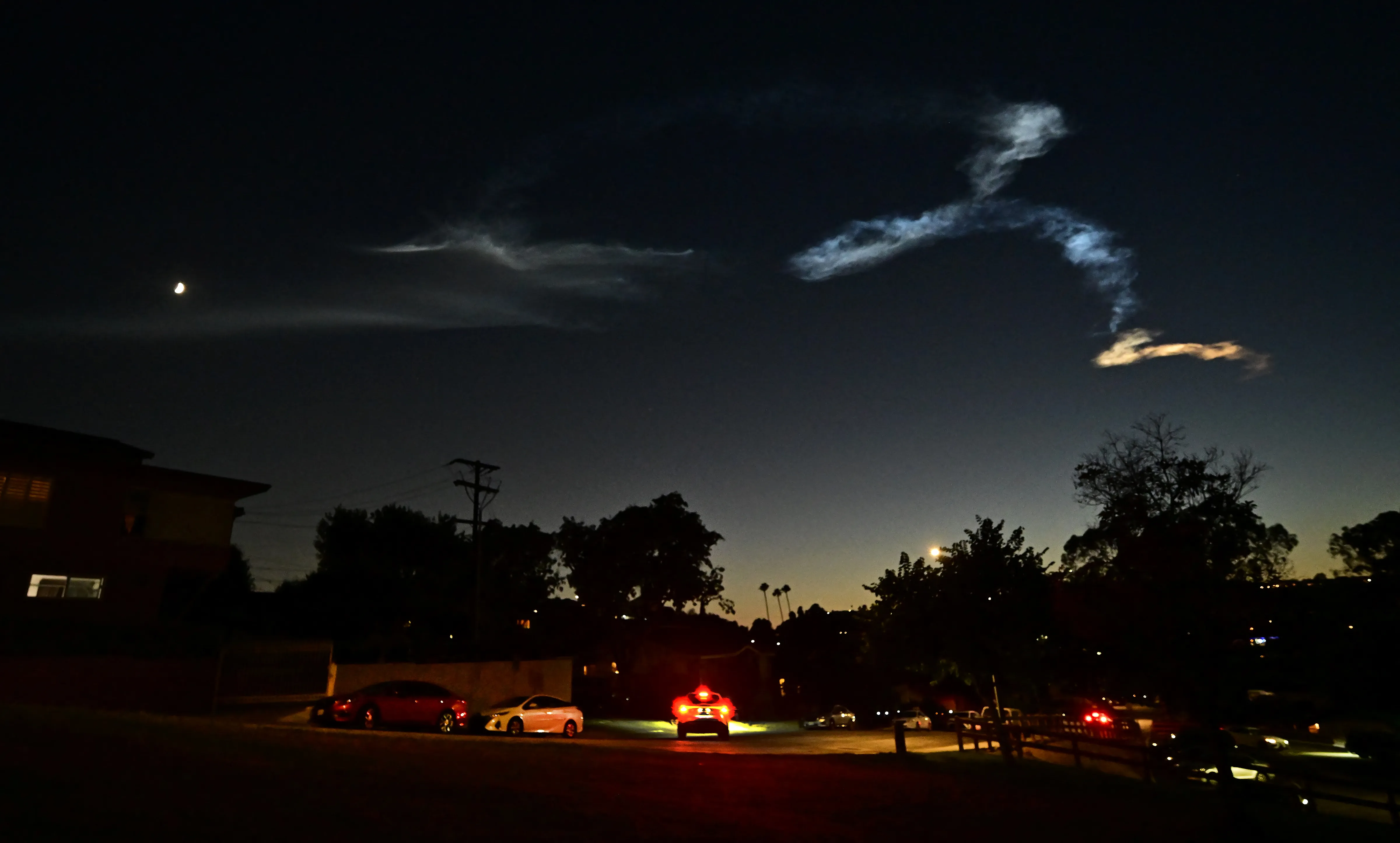
By 2040, there will be more than 560,000 satellites in orbit. The more satellites we send up, the greater the risk that they will collide into one another or bits of space junk. This could lead to massive service disruptions, or in the worst case, lead to a phenomenon known as Kessler syndrome. That’s when a cascade of new collisions happens in a chain reaction, potentially rendering low Earth orbit unusable — meaning no more satellite launches, an end to our space exploration ambitions, and the severe disruption of technologies like GPS, weather alerts, and satellite internet.
But that’s a worst-case scenario, and SpaceX is aware of it. The company announced on January 1 that it plans to lower 4,400 of their satellites from 342 to 298 miles above the Earth’s surface over the course of the year to reduce collision risks.
In 2023, the United Nations’ International Telecommunications Union estimated that 2.6 billion people — a third of humanity — lack internet connectivity. The UN considers internet access to be a human right. An underappreciated consequence of low Earth orbit becoming increasingly unusable is losing satellite internet access and imagery that allows us to see past rhetoric.
Satellite imagery is how we know what is happening in conflict zones like Ukraine and Sudan. If satellites are in jeopardy, so is the truth itself.
The post 50,000 clandestine Starlink terminals are keeping Iranians in touch with the rest of the world appeared first on Vox.