Federal prosecutors said they couldn’t press charges against Homeland Security agents who shot into cars in D.C. in two incidents last year because the bullets didn’t hit anyone.
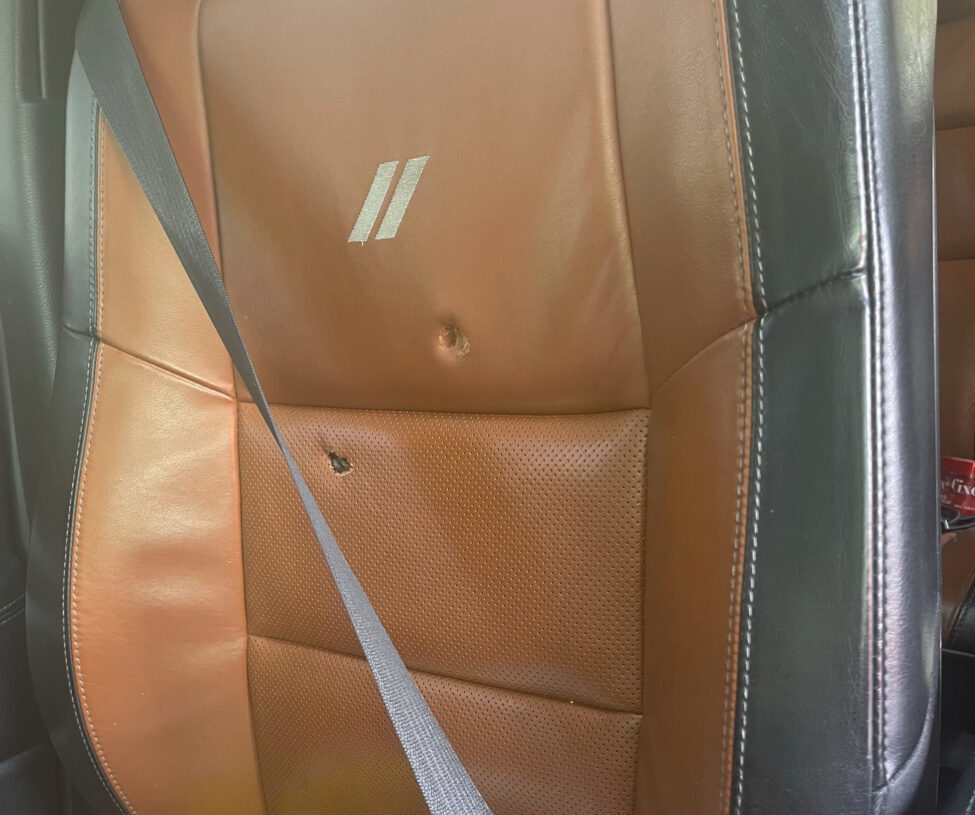
In October, a federal agent patrolling with D.C. police shot at an unarmed man during a traffic stop. The bullets narrowly missed Phillip Brown, according to his lawyers, who provided photos of bullet holes in the car’s driver’s side window and passenger seat, as well as a bullet hole in the collar of the jacket he had been wearing. Less than a month later, another federal agent working alongside D.C. police officers shot at a car during a chase. No one was injured.
Both incidents occurred within blocks of each other on Benning Road in Southeast Washington. In both instances, Homeland Security officials said the driver tried to use the car to injure law enforcement. It’s the same reason Homeland Security Secretary Kristi L. Noem and President Donald Trump have used to justify an Immigration and Customs Enforcement officer fatally shooting a 37-year-old woman in Minneapolis earlier this month, though a Washington Post analysis of video footage found the woman was veering her car past the ICE officer when he shot her.
The D.C. police department’s internal affairs bureau investigated both cases and presented their findings to the D.C. U.S. attorney’s office. Timothy Lauer, a spokesperson for U.S. Attorney Jeanine Pirro, said in a statement Friday that the agents could not be prosecuted because no one was struck by the shots. D.C. police have referred their findings to Homeland Security’s Office of Professional Responsibility. The Department of Homeland Security on Friday directed questions to the Justice Department.
“Being shot at by law enforcement is a serious, traumatic event,” said Quo Mieko Judkins, Brown’s defense attorney. “The fact that Mr. Brown was not hit by a bullet does not minimize the danger he was placed in or the harm he experienced. When law enforcement uses deadly force under the circumstances in Mr. Brown’s case and no one is held accountable, it raises serious questions about fairness, transparency and whose lives are valued in the justice system.”
After the agent opened fire in October, Brown’s lawyers accused city police of misconduct because a D.C. police officer told a judge he was advised by a “unit team lead” not to document the shooting in a court record, according to a transcript of court proceedings. The shooting also was not mentioned in a police public incident report, and another officer checked “no” in the “shots fired” section of that document. Then-D.C. Police Chief Pamela A. Smith forcefully denied the cover-up allegations.
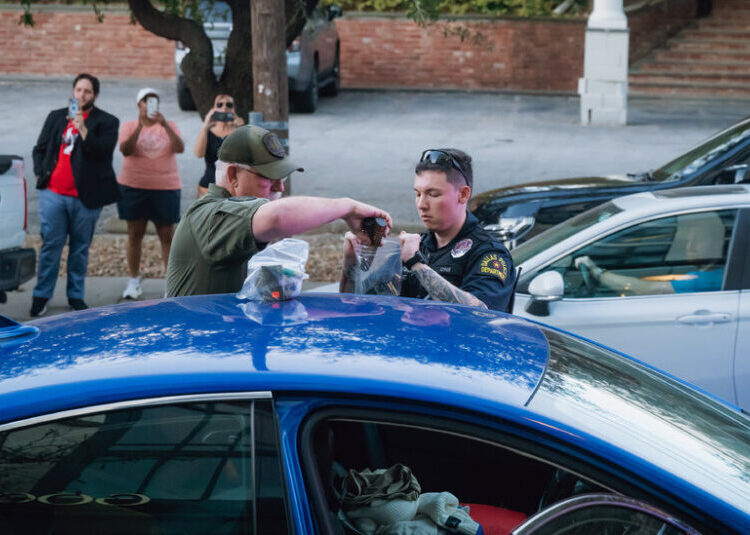
Both incidents occurred as federal agents patrolled with city police as part of a federal law enforcement surge first ordered by Trump, then extended by D.C. Mayor Muriel E. Bowser. On Oct. 17, D.C. police were driving a marked cruiser when they spotted a Dodge SUV with dark tinted windows and missing a front tag, according to court records. They were patrolling with officers from five federal agencies, including the FBI and Customs and Border Protection, court records show. The officers caught up with the Dodge and, according to court records, believe the driver was trying to flee. A Homeland Security Investigations agent shot into the car at Phillip Brown, 33.
In a statement to The Washington Post, Homeland Security spokesperson Tricia McLaughlin said that the special agent fired at Brown “in fear for his life” after Brown drove at officers “in a deliberate attempt to run them down.” But D.C. police officer Jason Sterling told a judge that none of the law enforcement officers were standing at Brown’s car. Brown bumped into a civilian vehicle stopped in front of him and his criminal attorney, Judkins, pointed out to the judge that the bullets entered the car from the side, not the front.
Sterling testified that officers thought Brown planned to flee because the Dodge engine revved. Brown was arrested and charged with fleeing from a law enforcement officer, but a judge dismissed the charges over a lack of evidence.
Just under a month later on Nov. 13, D.C. police and federal officers were again patrolling together when they saw a car run a red light at the intersection of Pennsylvania and Minnesota Avenues SE just before 5 p.m., D.C. police reports and court records show. They turned on their emergency lights and sirens and tried to stop the silver Nissan Altima, according to a police report, but the driver fled.
The federal agents initiated a car chase, as D.C. police are barred from chasing cars unless they suspect the driver of committing a violent crime or putting other lives in danger. When heavy traffic forced the Nissan Altima to stop, according to the report, law enforcement exited their cars to approach. The driver of the Nissan Altima reversed, the report said, striking a marked D.C. police cruiser as officers stood nearby. The Homeland Security Investigations agent shot at the car “at some point in this interaction,” D.C. Superior Court records show.
The Nissan Altima then sped off again. During the chase, an unmarked federal car struck a public bus and the Nissan Altima collided with a car uninvolved in the pursuit. The chase came to an end when the Nissan Altima was “disabled” and no one was injured, according to a police report.
McLaughlin said the agent from “ICE Homeland Security Investigations” fired “in fear for her life” after the driver “intentionally drove his vehicle into a Metro Police vehicle and attempted to runover officers and a special agent from Homeland Security Investigations.” The driver of the Nissan Altima, Justin Nelson, faces charges of felony assault on a police officer, fleeing law enforcement, reckless driving, leaving after colliding and driving on a suspended license.
Olivia George contributed to this report.
The post Prosecutors will not file charges against feds who shot into cars in D.C. appeared first on Washington Post.