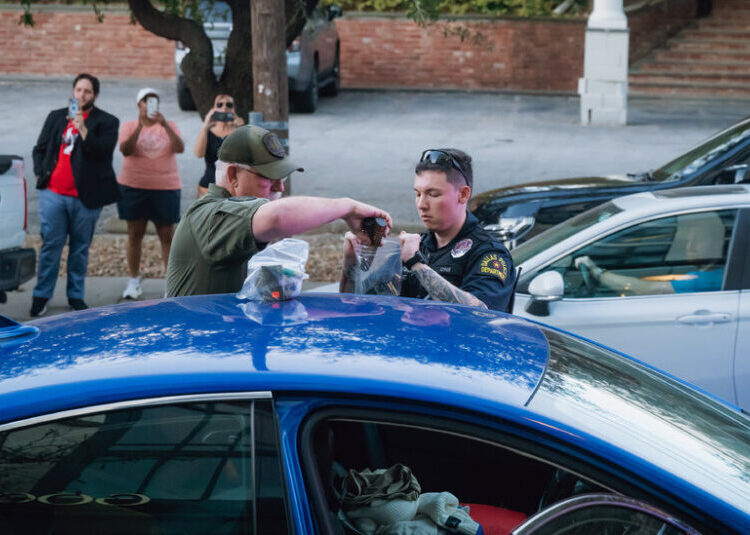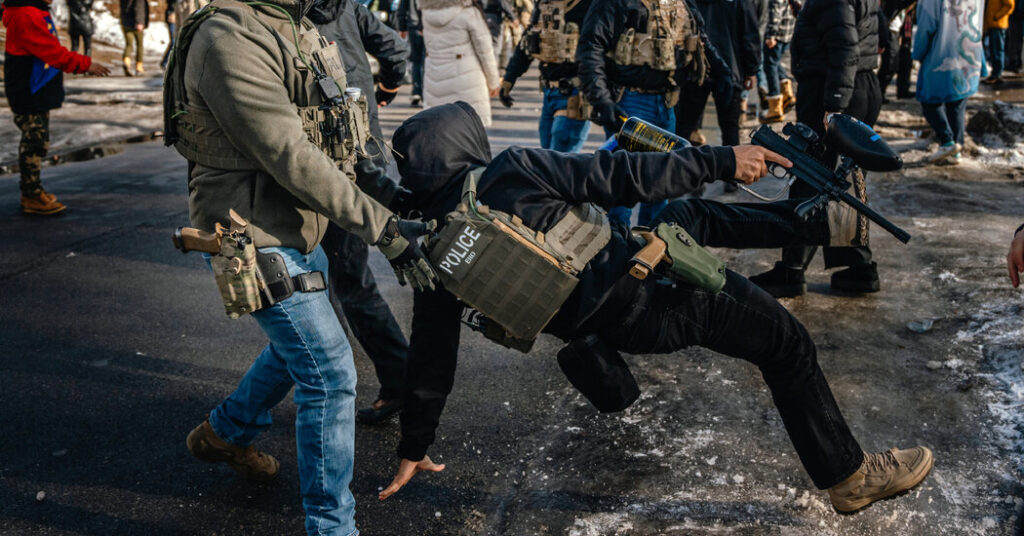
Federal agents flopping on ice and tripping over snowbanks. Snowballs arcing toward ranks of men armored in tactical gear. Protesters gleefully dumping water to make streets even more hazardous.
If there is a third character in the story of immigration agents versus protesters in Minnesota, it is the January weather.
This weekend, temperatures in Minneapolis are expected to plunge even lower, to around zero degrees, an Arctic blast that could hinder the Trump administration’s continuing immigration crackdown and the angry demonstrations over the death of Renee Good, 37.
Local and state officials in Minnesota are anxiously watching the forecast. In daily meetings this week, they have shared information on planned protests and gatherings, news conferences, arrests and unrest. Without exception, the weather is on the list, and though officials are reluctant to say it publicly, they are quietly hoping for a few days of brutal cold.
That could calm residents in a city whose nerves are collectively frayed, city and state leaders reason, and make it harder for Immigration and Customs Enforcement agents to make arrests and disrupt life in Minneapolis any further.
But bundled-up residents who have been protesting for days said that a seriously cold stretch would play only to their advantage.
“I want it to get cold,” said Chris Foreman, a military veteran who has joined protesters outside the Bishop Henry Whipple Federal Building, just outside Minneapolis, for six days in a row. “People know that a lot of these ICE guys are from the South. They’re coming into a different environment and they’re not used to it.”
On Thursday, Mr. Foreman saw a man in his 60s toss a bucket of water onto the road in front of the Whipple building, where ICE vehicles zip in and out all day.
“What’s the prank you do to your friends in the winter in Minnesota? You throw a bucket of water on their stoop,” Mr. Foreman said. “We’re playing off of the joke.”
Minneapolis is unusually icy — literally — at the moment. Walking on sidewalks is treacherous, as an immigration agent in a viral video learned this week. Patches of black ice on residential streets are sending cars skidding.
Some of the ice is created by protesters: At a demonstration this week, protesters slowly drove a car outside the Whipple building with its hatch wide open, revealing several open jugs rigged to stream water into the street. A spokeswoman for the Department of Homeland Security said the act could “potentially kill” federal agents by causing them to crash their vehicles.
On Friday afternoon, snow began to fall sideways, pelting pedestrians and bicyclists with big, icy, wet flakes.
Protesters who are originally from Minnesota say that they are ready with the proper winter gear. Standing outside at demonstrations, they wear woolen socks, double layers of long sleeves and tights, and sometimes ski goggles for a little extra warmth or insulated bibs from Carhartt that might look more fitting in an ice fishing shanty.
To avoid taking a nasty fall on an icy sidewalk, many Minnesotans have been wearing crampons or microspikes that strap onto the soles of their boots. At Nicollet Hardware in Minneapolis, protesters have been snapping them up from a display in the front of the store.
There is also the experience factor, a lifetime of acclimation.
“Our bodies are just ready for it,” said Jason Chavez, a City Council member who was born and raised in Minneapolis. “People here in Minnesota are strong and resilient and they know how to take on the weather. They are able to be outside for a long time.”
But Mr. Chavez said he was not rooting for a blizzard or a cold snap. If a snow emergency is declared, city rules require residents to move their cars to allow snowplows to get through, an inconvenience that would force people outside — and perhaps into the clutches of federal agents.
“At the beginning of this, I was like, ‘I hope it snows a lot,’” he said of the ICE crackdown. But now, he added, “I’m not sure if the weather hurts us or helps us.”
Outside the Whipple building on Friday, Jalyn Strain, wearing sturdy boots and a plaid scarf wrapped around her face, walked around with a jug of Dunkin’ coffee, offering it to protesters who needed to warm up. Most people politely declined.
“It’s not that cold yet,” she said, as the snow began to fall and the temperature hovered around 25 degrees. “People are used to being outside, going out and skiing. We’d be outside anyway.”
Jeremy Kalin, a former state representative and lawyer from Minneapolis who used to work outside in the cold, said it takes more than just experience to know how to endure Minnesota in January.
“You have to live through these winters to build the kind of resilience it takes to know how to stomach the cold — and how many layers of clothing go where,” he said, adding that if temperatures plunge further, the early mornings could be especially tough for ICE agents unaccustomed to the cold.
“I doubt they know what’s coming at them,” he said.
Julie Bosman is the Chicago bureau chief for The Times, writing and reporting stories from around the Midwest.
The post ICE vs. Ice: Protesters in Minneapolis Find an Ally in Winter appeared first on New York Times.