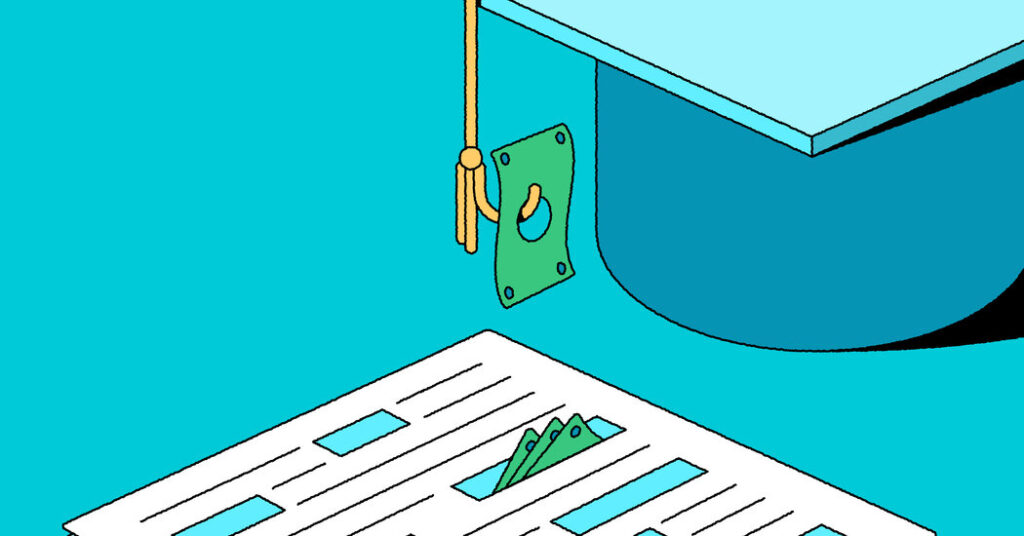
Millions of people who have defaulted on their federal student loans face the prospect of having their income tax refunds seized this year.
That’s because the federal government has resumed efforts to collect on defaulted loans, including “offsetting,” or seizing, income tax refunds. The income tax filing season opens on Jan. 26.
Borrowers can call a special Treasury Department phone number to see if they are on the offset list. “Dial before you file,” said Persis Yu, deputy executive director at the advocacy group Protect Borrowers.
Even if borrowers are on the list and expect a tax refund, they can take steps before filing their return to get out of default and protect their refunds.
Here’s what to know.
Why is the government taking my refund?
The Education Department can ask the Treasury Department, which oversees the Internal Revenue Service, to intercept, or offset, tax refunds to help repay student loans that are in default. (Federal loans are generally considered in default after nine months of missed payments, although it can take longer for collections to begin.) There is no time limit on the government’s authority to collect defaulted loans.
Why is this happening now?
Federal student loan collections restarted May 5, after a yearslong pause that began in March 2020 because of the Covid-19 pandemic.
Because collections resumed late in last year’s income tax filing season, relatively few borrowers had their refunds seized in 2025, Ms. Yu said. But with almost 10 million borrowers in default, many more are expected to face seizures this tax season.
Neither the Education Department nor the Treasury Department responded to requests for comment.
Can the government take money from other payments, like paychecks and Social Security checks?
Yes. Part of your wages can be “garnished,” or seized. The government said in December that it would begin notifying affected borrowers of paycheck deductions this month. While up to 15 percent of a Social Security benefit check can also be taken, the Trump administration has so far held off on taking some of those payments.
Will I be notified if my tax refund is going to be taken?
The Federal Student Aid website says the government sends a notice to your last known address to inform you that a seizure is scheduled to begin in 65 days. You can take action within that period to resume payments and get out of default.
But many borrowers may have been notified years ago, before the Covid relief pause. If you forgot about the notice or misplaced it, you probably won’t receive another one, borrower advocates said. (It’s always a good idea to update your contact information with your loan servicer, said Adam Minsky, a lawyer specializing in student loans.)
Borrowers with older defaults may be the most likely to see the government intercept their tax refunds this year, said Robyn Smith, a senior attorney with the Legal Aid Foundation in Los Angeles who works with student borrowers. “It’s important for them to contact the Treasury number,” she said.
But more recent loan defaults are gradually being shifted to the federal collections system, she said. “The department can at any time send letters to new defaulters.”
How do I find out if I’m on the list?
If you know you are in default, or if you haven’t made loan payments in some time, call the Treasury Offset Program hotline at 800-304-3107. The system will ask you to enter your Social Security number to check if your name is on the list and, if so, what department referred you for collections. If the Education Department referred your debt, you probably have student loans in default, according to the National Consumer Law Center.
Some borrowers who are current on their payments, Ms. Smith said, have reported seeing an incorrect “default” notation when they log onto their student loan dashboard. If that happens, she said, contact your loan servicer.
What if I’m on the list?
If you are expecting a tax refund and are on the list for seizing your refund, you should try to take action before you file your return, said Kyra Taylor, a staff attorney at the National Consumer Law Center who focuses on student loans.
Consider filing for an automatic extension, she said. That gives you until Oct. 15 to file, allowing time to make arrangements to get your loans out of default and avoid a seizure. To get an extension, submit Form 4868 by this year’s April 15 federal tax deadline. Even if you miss the extended filing deadline, there’s usually no penalty if you don’t owe tax. But if you owe tax and don’t pay it by April 15 — even if you file for an extension — you could be subject to penalties and interest on the amount owed.
If you check now and you’re not on the offset list, check again right before you file in case it has been updated.
How do I get off the list?
The most straightforward way is to get your loans out of default and into active repayment status. (You can also repay the loan in full, if you are able, but few people can afford to do that.)
The main options are rehabilitation, which involves making nine on-time monthly payments, or consolidation, in which you take out a new loan to pay off the old debt. Each has pros and cons.
Consolidation is quicker — you can apply online, and it generally takes four to six weeks. But the default remains on your credit report. And if you are working toward loan forgiveness through an income-driven repayment plan, there is a major downside, Ms. Smith said: You’ll probably lose time earned toward cancellation on payments made before consolidating.
Ms. Smith said defaulted loans might need to be manually entered into the consolidation application rather than being included automatically. Double check, she said, to make sure all your loans are included.
“People have barriers even when they want to do the right thing,” she said.
Rehabilitation takes longer, but the default is erased from your credit history (although the record of late payments remains). You usually must call to apply, Ms. Smith said, and borrowers may face lengthy hold times. The contact for defaulted federal loans is usually the Education Department’s Default Resolution Group, operated by Maximus Federal Services (800-621-3115 or visit MyEdDebt.ed.gov).
Because rehabilitation takes months, your loan may not be out of default by the Oct. 15 extended tax filing deadline, if you start making payments after January. The Federal Student Aid website, however, says you still may be able to stop the government from seizing your tax refund by making the first five of the nine required payments.
With either consolidation or rehabilitation, you can apply for an income-driven repayment plan that can make your monthly bill more affordable. There are nuances to each option, and eligibility varies. Try using the government’s online loan simulator to help you choose.
Are there other ways to avoid having my tax refund taken?
You may object to a government seizure by filing a request for review for specific reasons, including that you aren’t, in fact, behind on payments; you are in bankruptcy; or you are “totally and permanently” disabled. Details are available on StudentAid.gov.
How much of my refund can the government take?
The government may take all, or just part, of your refund, including any refundable tax credits. It can continue to do so each year until your debt is paid. For all taxpayers, the average refund is about $3,000.
What if my spouse is in default but I’m not?
Couples who file joint tax returns can file Form 8379, known as an “injured spouse” form, along with their return (or after it’s processed), said Scott Klein, senior manager of tax policy and advocacy with the American Institute of Certified Public Accountants. It allows the spouse who isn’t in default to receive his or her share of a refund.
The post How to Protect Your Tax Refund if You’ve Defaulted on Your Student Loans appeared first on New York Times.