“Inflation is defeated,” President Donald Trump declared at the Detroit Economic Club. His Tuesday remarks came hours after the Bureau of Labor Statistics announced that annualized inflation remained 2.7 percent in December, 35 percent higher than the Federal Reserve’s target.
Two things can be true at once: the pressures that took the inflation rate to a staggering 8 percent in 2022 have largely subsided. This is presumably what the president is trying to tout. But prices are still rising, particularly in areas that consumers really feel, such as food and drink costs.
Consecutive administrations have adopted this bad habit of talking about “falling” prices, when they really mean increases are slowing.
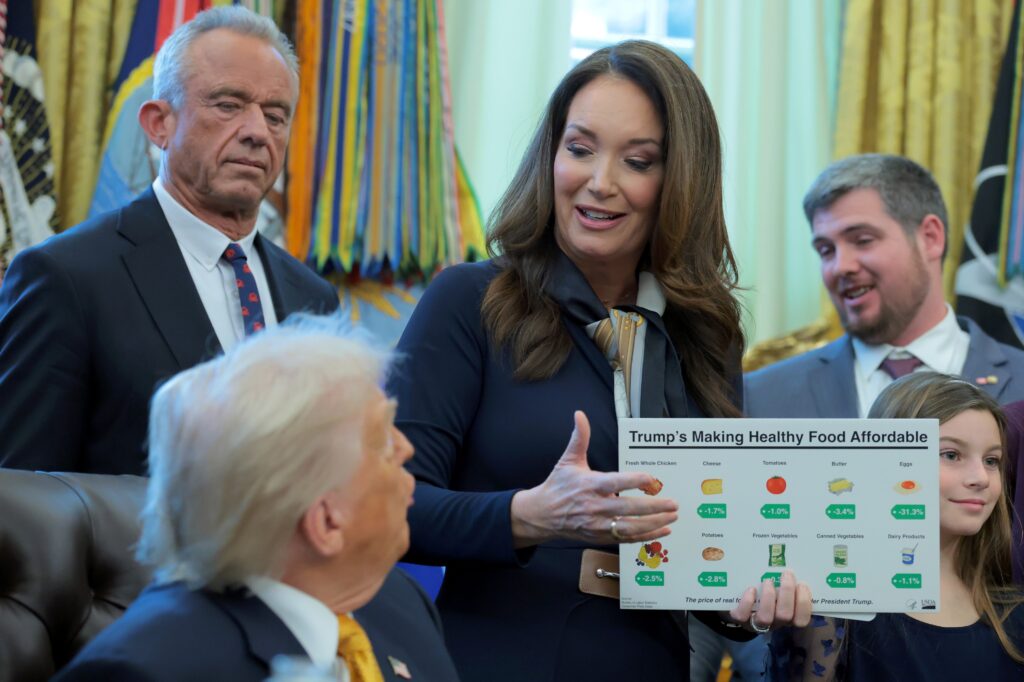
Agriculture Secretary Brooke Rollins said Wednesday on News Nation that the administration’s new dietary guidelines don’t require spending more on food. Her team ran “1,000 simulations,” she explained, and they found “it can cost around $3 a meal for a piece of chicken, a piece of broccoli, corn tortilla and one other thing.” Not only does that sound unappetizing, it comes across as out of touch.
A report from Congress’s Joint Economic Committee this week found that the average American family paid an additional $310 for groceries last year.
The president is right that gasoline prices have fallen. The average cost of a gallon fell $0.21 in 2025. But food prices rose 0.7 percent in December alone, the biggest spike since 2022. Part of this is attributable to tariffs, a reality the administration has quietly accepted by rolling back dozens of import taxes on common household goods like bananas, coffee and pasta.
Part of the problem is expectations management. Americans became used to the inflation rate falling below the Fed’s target during the 2010s. After the Great Recession, the headline inflation rate hovered closerto 1.5 percent than 2 percent. Consumers adapted. Now they’re adjusting to the reality that consumer staples are not going to be cheaper than they were before the pandemic.
The goal of monetary policy is not to reduce the inflation rate to zero. The Fed’s remit is set to ensure prices are rising at a steady and manageable pace. Trump’s efforts to push the central bank to slash rates harder and faster, which is what’s behind the campaign to harass Fed Chair Jerome H. Powell, would lead to a fresh surge of inflation.
The post Inflation is not ‘defeated’ appeared first on Washington Post.