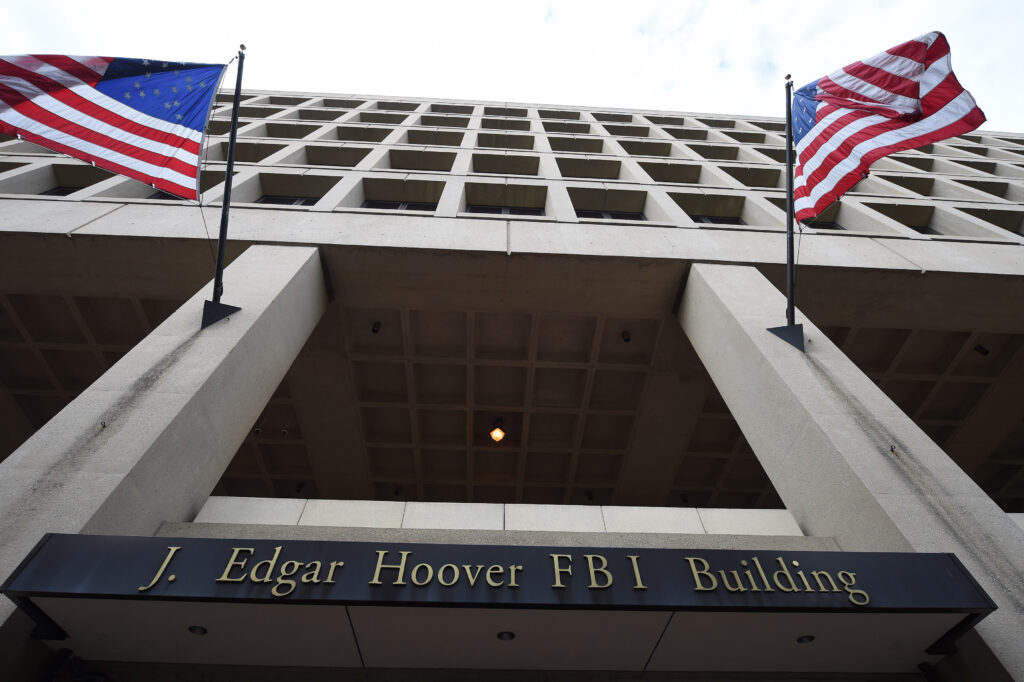
After the FBI searched a Washington Post reporter’s home Wednesday morning, reporters from multiple outlets said they moved swiftly to secure their phones and laptops, reassure confidential sources and consult newsroom leaders as they worried about the federal government’s seizure of devices containing sensitive information.
Many journalists said they saw the FBI raid as a jarring new step aimed at limiting news organizations’ ability to gather information that the government does not want to be made public.
“It’s incredibly intimidating to be targeted by the government,” said Ted Bridis, a former Washington investigations editor for the Associated Press. His phone records, along with those of his employees, were secretly obtained by the Department of Justice in 2012, during the AP’s reporting into the NYPD’s clandestine surveillance of Muslims in New York City.
After his team won the Pulitzer Prize and news of the Justice Department’s actions became public, “people who used to meet us for coffee refused,” said Bridis, who now teaches journalism, including on the topic of source protection, at the University of Florida. “Our sources were scared to talk to us.”
Under previous administrations, reporters have been subpoenaed for information, and such actions are usually challenged in court. But raiding a reporter’s home early in the morning — a more intrusive step that limits the ability for a court challenge — is exceedingly unusual if not unprecedented, according to Gabe Rottman, an attorney and vice president of policy for the Reporters Committee for Freedom of the Press, who said he could think of no comparable examples.
The raid on Post reporter Hannah Natanson’s home — which involved taking possession of her phone, two laptops and a Garmin watch — prompted reporters from a range of outlets, who spoke on the condition of anonymity to discuss sensitive sourcing and security matters, to reevaluate how they keep their sources and devices safe.
One reporter who covers national security issues said he turned off facial recognition software on his phone so that he had to use a password to log into it, an action that at least half a dozen reporters said Wednesday they had taken in light of the search of Natanson’s home.
He said he made the change because he believed law enforcement agents easily could use his face to help them access his phone but would have a tougher time compelling him to provide his password. He has also contemplated using burner phones, he said.
One White House reporter said that their first thought, after the initial shock of the raid, was to review how they manage information from sources and go back through internal legal guidance. In the New York Times’s Washington bureau on Wednesday, a regularly scheduled meeting started with an update on security and legal protocols, according to a person who attended. A reporter who covers the Pentagon said one positive outcome of the FBI search was that it snapped journalists into action to protect themselves and their sources.
In a note to The Post’s staff Wednesday, Executive Editor Matt Murray said the publication was informed that neither Natanson nor The Post is the target of the FBI investigation, which was aimed at a government contractor accused of illegally retaining classified government materials. “Nonetheless, this extraordinary, aggressive action is deeply concerning,” Murray wrote.
He followed up later in the day to say “we are continuing to vigorously defend our journalists and our work.” He added that the publication is working to schedule refresher sessions to reinforce proper source and reporting practices.
“The reports of F.B.I. agents raiding the home of a journalist and seizing her electronic devices are deeply concerning and portray a stark threat to free press rights in this country,” said David McCraw, senior vice president and deputy general counsel for the New York Times. “Actions like this inevitably impede reporters’ ability to gather news in the public interest and as a result make the government less accountable.
“When you’re talking about reporting on the military or the intelligence agencies or foreign affairs or federal law enforcement, it’s often necessary for reporters to rely on assurances of confidentiality to sources in order to get information in the public interest out.”
One veteran reporter who handles sensitive stories has frequently worried about the prospect of an FBI raid. “I have been concerned for a long time — years actually — about exactly this, FBI agents knocking on my door or that of other reporters and seizing our devices,” the reporter said, adding that several of their sources “already were in contact this morning to register their worry about being discovered in a similar way.”
Natanson has spent the past year covering the Trump administration’s effort to fire federal workers and wrote a first-person piece late last year about her experience.
The Post also received a subpoena Wednesday morning seeking information related to the classified materials case.
The FBI declined to answer questions about the search and referred to a statement that Director Kash Patel posted on social media accusing the reporter of “obtaining and reporting classified, sensitive military information from a government contractor — endangering our warfighters and compromising America’s national security. The alleged leaker was arrested this week and is in custody.”
Other reporters and editors who had faced government surveillance and legal action said the case represented a new level of intimidation.
The raid on Natanson’s home “goes way beyond anything that is expected or required under any normal and traditional guidelines covering the way the government deals with the press,” said James Risen, a former investigative reporter for the New York Times, who has described undergoing years of FBI surveillance starting in 2008 as he fought to avoid testifying in a national security leak investigation involving his reporting.
Laura Poitras, the documentary filmmaker who helped Edward Snowden go public with his revelations about government surveillance, called the raid an “outrageous escalation” and a reminder to reporters that they need to take extra precautions when dealing with sensitive subjects and sources. She said she took extreme digital security measures to protect Snowden in 2013 when he disclosed details of secret government surveillance efforts.
“This administration is salivating for an opportunity to incarcerate journalists,” said Martin Baron, a former executive editor of The Post, noting that Trump talked openly about the possibility at rallies in 2022. Baron said the administration’s open disdain for the press indicated that “things are going to get far worse.”
When the Justice Department labeled a Fox News reporter a criminal in 2013 to seize his emails in a leak investigation, the backlash was swift and bipartisan.
Attorney General Eric Holder, accused by Republican lawmakers of misleading Congress, responded by barring prosecutors from falsely portraying reporters as criminals to obtain search warrants — unless they genuinely planned to bring charges.
In 2021, after revelations that Trump’s Justice Department had secretly seized records from reporters at The Post, the New York Times and CNN, Attorney General Merrick Garland went further: He banned using search warrants and subpoenas to obtain journalists’ materials or compel testimony about their sources.
Last year, Attorney General Pam Bondi reversed course, restoring investigators’ ability to target reporters’ information. She reinstated much of Holder’s framework but made one critical change: She eliminated the ban on misrepresenting reporters as criminals to circumvent a decades-old law protecting journalists.
While many journalists have adopted heightened security measures to protect their sources in recent years, including encrypted communications technology, the government has immense power to surveil.
The search warrant serves as a reminder to journalists of the difficult work of protecting sources, said Alex Papachristou, director of the Cyrus R. Vance Center for International Justice, which provides free legal services to small news organizations around the country. He predicted the warrant would have a “cryogenic effect” on the willingness of sources to disclose information to the press.
“We’re in a time,” he said, “when looking over your shoulder is just about the only way to look.”
Liam Scott contributed to this report.
The post Journalists confront new reality in reporting after FBI raid appeared first on Washington Post.