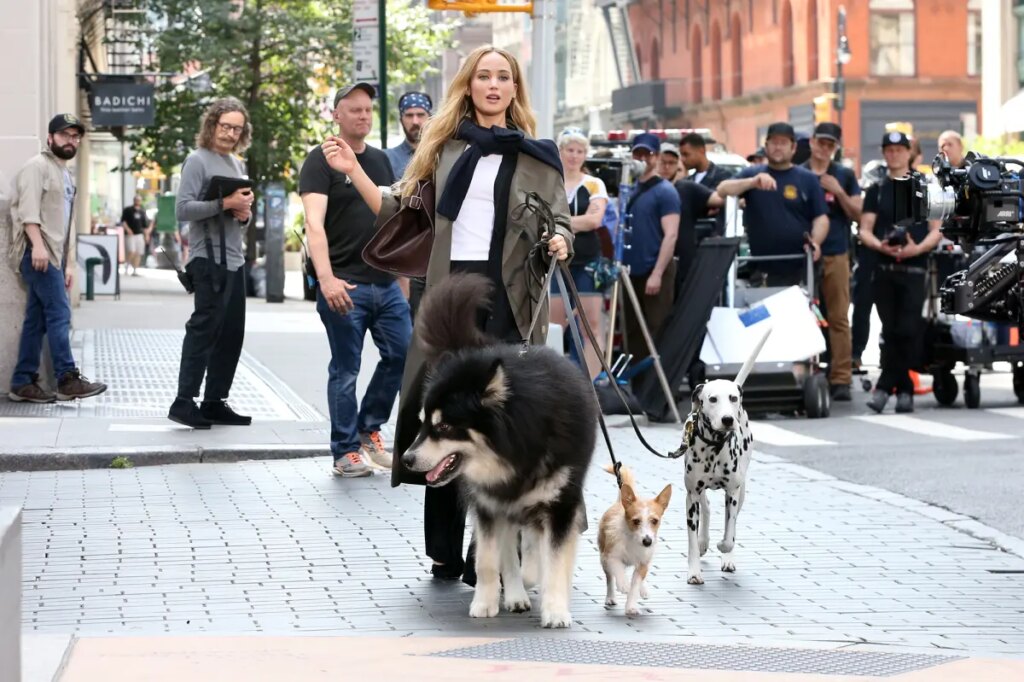

Jennifer Lawrence is being pilloried for doing the one thing parents are morally obligated to do: protect their child.
The actress’ dog bit her young son, and she rehomed the pet with her parents.
End of story.
Or it should have been.
Instead, the internet erupted with outrage, as if choosing a child over a pet is some kind of moral failure.
“She should never own any dogs or pets if she thinks like that,” sniffed one Instagrammer.
“YIKES,” wrote a former fan.
“I hope people don’t think this is normal behavior.”
“I would rehome the kids,” another declared.
Let’s be clear about what actually happened: The dog bit a child.
At that point, the debate is over.
Parenting doesn’t allow for vibes-based decision-making.
What makes the backlash even more absurd is that the dog got off lucky: Often, a dog that bites a child is euthanized immediately.
Lawrence chose the most humane outcome available — and she’s still being treated like a villain.
This fury exposes how warped our culture’s thinking about animals has become.
Dogs are increasingly treated as moral equals to children — sometimes even as more deserving of protection.
Emotion is confused for compassion, and anyone who refuses to play along is cast as cruel.
I’ve seen this up close. When I was a child, I was attacked by a neighbor’s German shepherd.
I was the third kid it bit on our block.
One of the children before me needed surgery on his hand; I walked away with permanent nerve damage.
Their pet was sweet and loving, the owners insisted (don’t they always?) — just “reactive” sometimes.
My mom offered our neighbors a deal: She wouldn’t sue if they put the animal down.
Her ultimatum made block parties considerably more awkward, but it protected every other kid on the street.
Dog owners shouldn’t be rolling the dice with any child’s safety to preserve the fantasy that love fixes everything.
This kind of denial is on full display in America’s shelters, which are overflowing with dogs carrying documented bite histories and serious aggression issues.
These animals are endlessly recycled, rebranded as different breeds (it’s not a pit bull, it’s a lab mix with a curiously box-shaped head!) and pushed onto families under intense moral pressure.
Anyone who hesitates is accused of breed bigotry or heartlessness.
When something goes wrong, the script flips: The dog is the victim.
The child must have provoked it.
The parents are blamed for not managing the child or their animal better.
That moral pressure is turbocharged by the “adopt, don’t shop” movement, which has transformed what should be a private family decision into a public test of virtue.
Parents are told, explicitly and relentlessly, that choosing a breeder is selfish, buying a dog is signing a death warrant for one in a shelter and any concern about breed, size or temperament reflects a moral failing rather than common sense.
The shame is the point, meant to override instinct and silence hesitation.
We refused to play along.
When we brought a dog into our home, we went to a responsible breeder with years of experience breeding kid-friendly poodle mixes.
We were honest about our family, about our small children, about what we needed in a pet.
That shouldn’t be something parents feel compelled to justify in hushed tones.
Shelters rarely offer that kind of transparency: You often don’t know a dog’s full history, how it reacts under stress, or how it behaves around children — until it’s already living in your house.
Yet parents are pressured to take that leap anyway, told that love will compensate for risk and that caution is cruelty.
No wonder dog-bite fatalities hit an all-time high in 2024, when the CDC logged 127 of them nationwide — a 165% increase since 2019.
When something goes wrong, as it did for Lawrence, the shame is paired with blame.
Wanting a dog that fits your life, your household and your children isn’t heartless — it’s responsible.
And refusing to sign your kids up for an animal-rescue experiment isn’t a failure of compassion, it’s responsible parenting.
Many of Lawrence’s loudest critics have never been parents.
They’ve never felt the cold panic of realizing your adult decision failed to protect a child.
Parenting strips away the luxury of idealism: When the safety and security of your child is in your hands, risk becomes real — and you don’t get to pretend it away.
Dogs are animals.
Calling them “fur babies” doesn’t change that, and it doesn’t make kids safer, either.
It just ensures more injuries everyone insists were unforeseeable.
Jennifer Lawrence made the call every good parent hopes they never have to make, protecting her childand sparing the dog’s life.
If that offends people, the problem isn’t parents choosing kids over pets.
It’s a culture that’s forgotten why that choice should be obvious.
Bethany Mandel writes and podcasts at The Mom Wars.
The post Fury over Jennifer Lawrence’s dog reveals a culture that puts kids last appeared first on New York Post.