Despite an almost total communications blackout, a small number of Iranians have managed to send messages out of the country. They describe mounting civilian deaths and streets awash with blood—and say many protesters are pinning their hopes on President Donald Trump following through on his threats against Iran’s rulers.
“That’s the only thing they’re thinking about,” said a resident of Tehran’s Marzdaran neighborhood.
[time-brightcove not-tgx=”true”]
Another resident, from the capital’s affluent Niavaran district, said protesters see outside intervention as their only remaining option. “People know they won’t be able to beat them without help,” they said.
Read more: What’s Happening in Iran Right Now, Explained
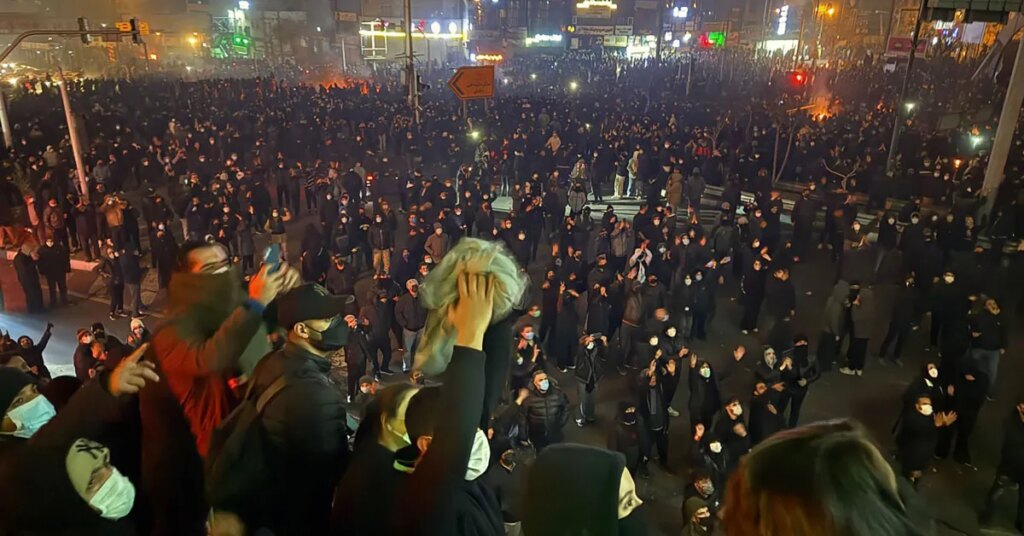
Only days ago, city streets were crowded with demonstrators chanting for the downfall of the government. Now, according to residents and phone footage that has circulated online, those same streets are patrolled by trucks mounted with heavy machine guns.
“If Uncle doesn’t do something it’s over. They will just go on killing people until no one’s left,” the Niavaran district resident said, referring to Trump as “Uncle” out of fear that Iranian intelligence might somehow be monitoring Starlink, the satellite internet system that circumvents the state’s blackout.
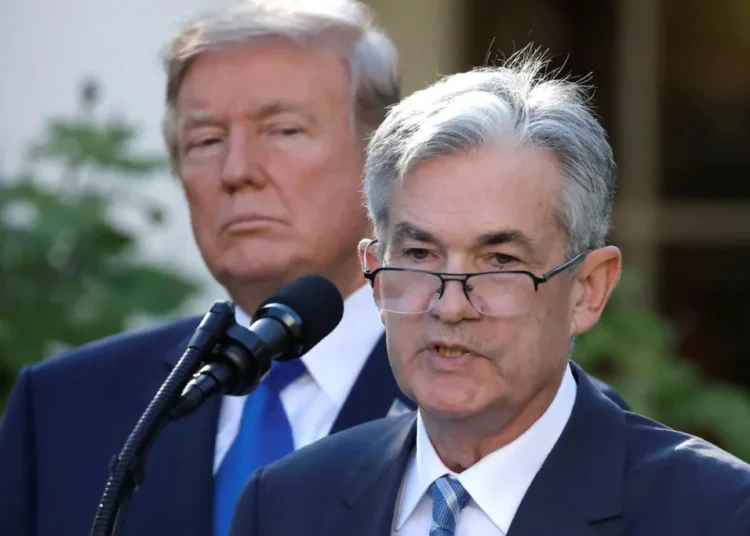
Trump, meanwhile, continues to raise hopes. “Help is on its way,” the President wrote on Truth Social on Tuesday, in the most explicit promise of intervention since Jan. 2., when he first warned Iran’s authorities against attacking Iranians. “Keep protesting – take over your institutions,” he said, adding that those responsible would “pay a big price.”
The post was reported on Persian-language satellite news channels, which have remained available despite the internet blackout. “Literally 9 or 10 people called, and said, ‘Good news—Trump said help is on the way,” said a man who had traveled out of Iran on Wednesday.
“Everyone is waiting for an attack, an attack that will weaken the suppression system,” he said. “If that happens the whole country will go back on the streets.”
He described a capital where consumer goods had grown scarce—it took two hours to find eggs—and residents had been instructed to be indoors by 4 p.m. “The city looks frightening. After 3 or 4 pm, it’s deserted.”
Read more: Will the U.S. Strike Iran? The Factors Shaping Trump’s Decision
Iranians say the massive loss of life—which estimates suggest is more than 10,000 killed—has kept many indoors.
“Fear is back,” said a resident of Yasuj, a city in southwestern Iran. “On Thursday night they started shooting into the crowds. I saw someone shot right in front of me.” A resident of Tehran’s Yusefabad district said Monday that the streets were more empty now. “Most people are afraid to go out any more.”
The crackdown, they say, is being carried out primarily by the Islamic Revolutionary Guard Corps and its Basij militia—forces that have crushed protests for decades. “They’re standing at every junction,” said one woman from the capital’s Yusefabad district. “It’s martial law. They’re shooting in the air just to remind everyone they’re in control of the streets.”
The Guards and the Basij began replacing the regular police and its specialised anti-riot units from Jan. 8. It is not clear if the replacement was due to the inability of the police to suppress the protests, or reports of defections. In one instance a video emerged from the western city of Abdanan, where the local police were no longer on the streets, but rather standing on the roof of their station and waving at the massive crowds of protestors.
In Yasuj, the resident said police units vanished from the streets after reports of defections. “But they were all arrested, the police have practically withdrawn from the streets,” he said. There have been no eyewitness accounts of police patrols in Iranian cities in recent days.
“Everyone is so restless, so hopeless,” said the man in Marzdaran, a neighborhood in northwest Tehran. The bodies in the street are not strangers, he added. “Many people have lost a relative, or a close friend. They are just killing, killing, killing.”
The accounts are supported by footage of security forces shooting assault rifles into crowds, bursts from truck-mounted heavy machine guns in residential streets, and bodies lined up by the hundreds at a morgue. “In Nourabad and Dehdasht… they are still killing”, the resident of Yasuj said, naming nearby smaller cities.
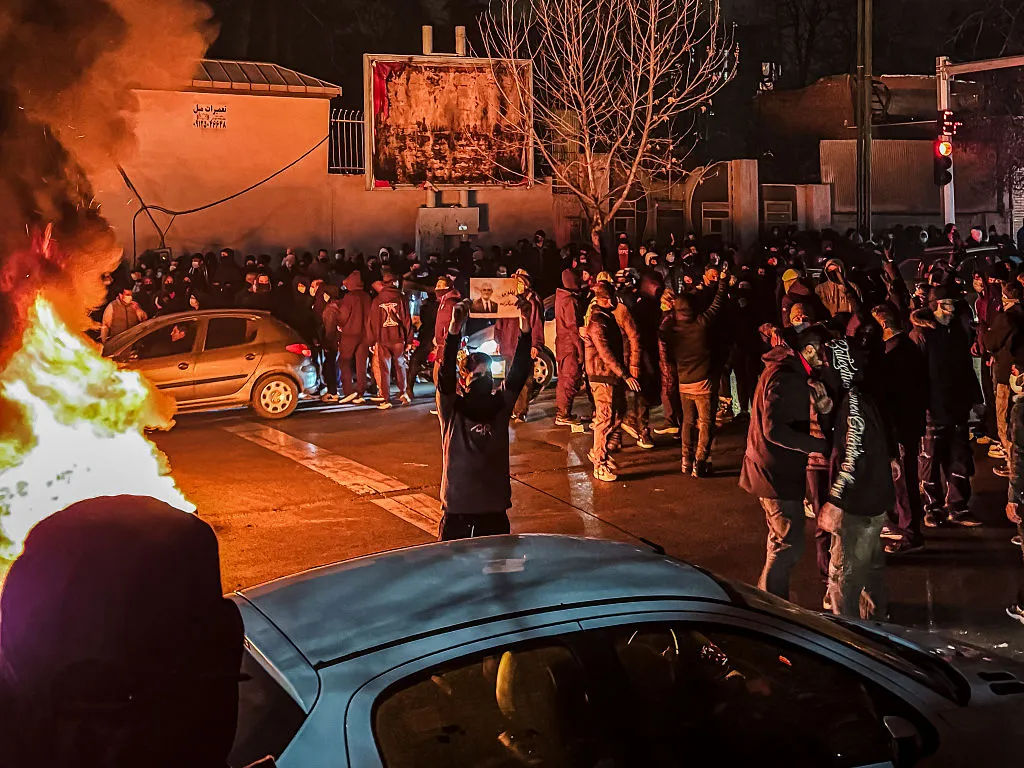
The communications blackout has deepened the sense of isolation. Iranian authorities have shut down the internet during past protests, but this time they also cut off cell phone networks, SMS messaging, and landlines—severing Iranians not only from the outside world, but from one another.
“If people in different cities could hear what others are doing, they might be able to get heart from each other,” said the Yasuj resident. “But now they just feel they are all alone.”
Starlink remains the sole breach in the internet blackout. Though illegal in Iran, the satellite dishes were smuggled in during the last major protests. Today, tens of thousands are operating across the country, often extending Wi-Fi signals across entire buildings or neighborhoods while concealing the origin of the signal. Several activists confirmed Tuesday that Starlink, owned by Elon Musk, has suspended subscription fees and updated its software to evade jamming.
Those managing to send messages abroad may not represent all Iranians. Before the recent violence, polls suggested the regime could rely on the support of only about 20 percent of the population. Yet Iran is also deeply nationalistic, and even among the remaining 80 percent, support for foreign military intervention has historically been uncertain. That hesitation was visible last June, during Israel’s so-called 12-day war with Iran—while the strikes targeted military and nuclear sites, they also killed hundreds of civilians, triggering backlash and unease.
“It’s different this time,” the resident of Yasuj maintained. “It’s a one-sided war against a bloodthirsty regime. Many have set their hopes on Trump. And it’s understandable. If something, somehow doesn’t happen… it’ll be a catastrophe.”
The post Inside Iran, Protesters Urge Trump to Act: ‘If Nothing Happens, It’s a Catastrophe’ appeared first on TIME.