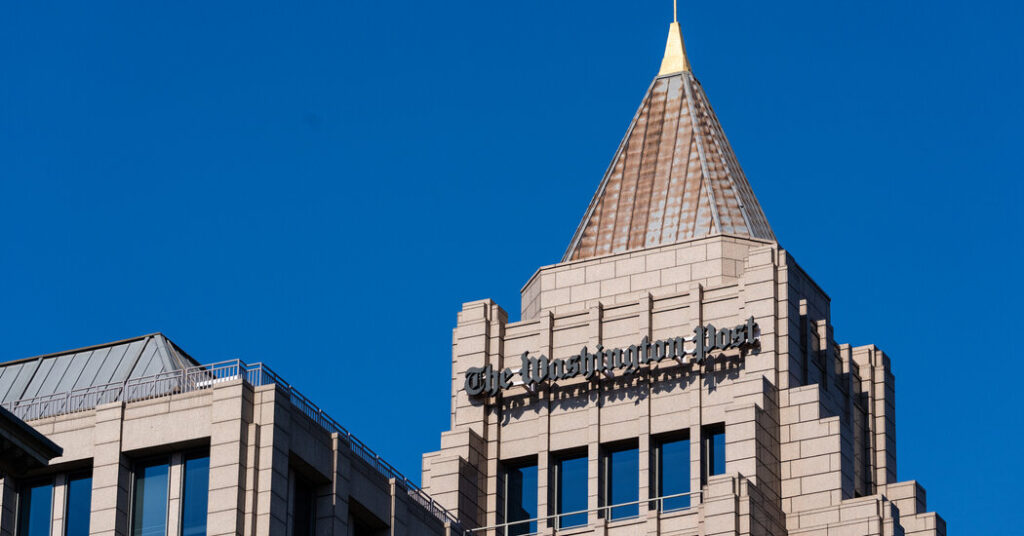
F.B.I. agents conducted a search at the home of a Washington Post reporter on Wednesday, as part of what officials said was an investigation into the possible sharing of government secrets, according to people familiar with the matter.
It is exceedingly rare, even in investigations of classified disclosures, for federal agents to conduct searches at a reporter’s home. Typically, such investigations are done by examining a reporter’s phone records or email data.
The reporter, Hannah Natanson, has spent the past year covering the Trump administration’s effort to fire federal workers and redirect much of the work force to enforcing his agenda. Many of those employees shared with her their anger, frustration and fear with the administration’s changes.
A spokesperson for The Washington Post said on Wednesday that the publication was reviewing and monitoring the situation.
The paper reported that the search warrant and related F.B.I. affidavit indicated that law enforcement was investigating Aurelio Perez-Lugones, a system administrator in Maryland who has a top-secret security clearance and has been accused of gaining access to and taking home classified intelligence reports that were found in his lunchbox and his basement.
Jameel Jaffer, the director of the Knight First Amendment Institute at Columbia University, described news of the search as “intensely concerning,” in part because of the chilling effect it could have “on legitimate journalistic activity.”
“There are important limits on the government’s authority to carry out searches that implicate First Amendment activity,” Mr. Jaffer said.
In a first-person account of her experience talking to federal employees, Ms. Natanson quoted some of the messages she received from them.
“I understand the risks,” one Defense Department worker told her. “But getting the truth and facts out is so much more important.”
A staff member at the Justice Department wrote, “I’d never thought I’d be leaking info like this.”
Last year, the Trump administration ended a Biden-era policy that sharply limited the department’s authority to search or subpoena a reporter’s data in the pursuit of leak investigations. The reversal suggested that the Justice Department would once again pursue journalists’ data in an effort to identify and prosecute people who leak national security information.
In a memo announcing the move, Attorney General Pam Bondi wrote that the change was necessary to safeguard “classified, privileged and other sensitive information.”
The Justice Department, Ms. Bondi wrote, “will not tolerate unauthorized disclosures that undermine President Trump’s policies, victimize government agencies and cause harm to the American people.”
From his first days in the White House in 2017, the president has complained bitterly about leaks of all kinds. Mr. Trump himself faced criminal indictment on charges of mishandling classified information after he left the White House. The case was ultimately dismissed.
In the waning days of Mr. Trump’s first term, the Justice Department sought the phone and email records of reporters at The Washington Post, The New York Times and CNN as part of leak investigations. None of those cases involved searching journalists’ homes or seizing their devices.
In typical leak investigations, a reporter is not a target for prosecution but can be viewed as an avenue for obtaining evidence against the person suspected of leaking information.
Benjamin Mullin reports for The Times on the major companies behind news and entertainment. Contact him securely on Signal at +1 530-961-3223 or at [email protected].
The post F.B.I. Searches Home of Washington Post Journalist for Classified Material appeared first on New York Times.