Iran was expected to execute a protester on Wednesday for the first time during the current wave of antigovernment unrest, according to human rights groups and family members of the protester. President Trump has threatened “strong action” if Iran carries out any such death sentences.
Rights groups and relatives identified the protester as Erfan Soltani, 26, from an area west of the capital, Tehran. He was arrested on Jan. 8 and has been denied access to a lawyer or other means to mount a defense, according to the Norway-based Hengaw Organization for Human Rights.
A statement by the rights group said his family was also kept unaware of the judicial proceedings and was allowed only a brief, final visit before the scheduled execution, on Wednesday. On Tuesday, his family said he had never used violence and only sought basic freedoms for Iranians.
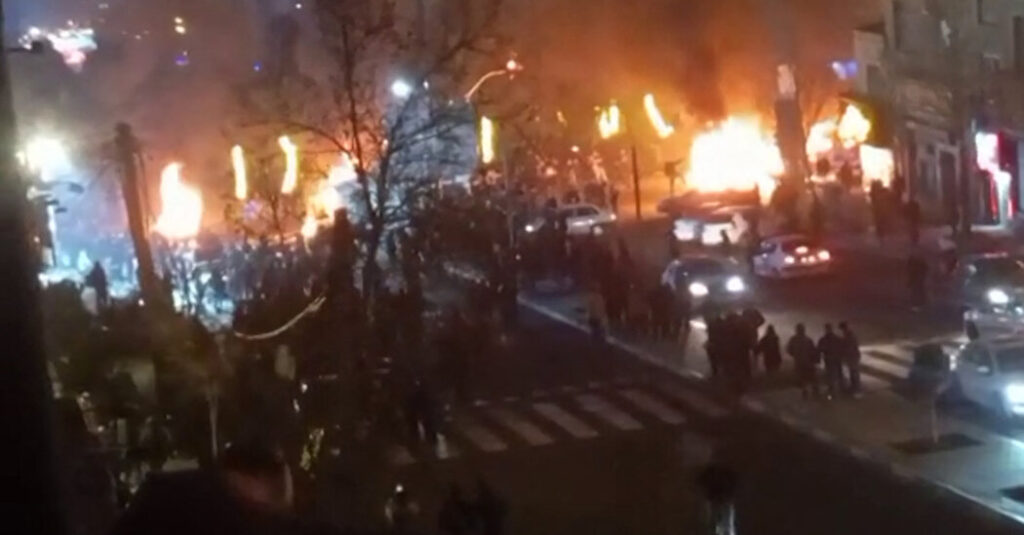
Since Dec. 28, Iran has been rocked by the largest protests in years against its authoritarian rulers, prompting Mr. Trump to say he would respond strongly.
Mr. Trump has made a series of comments pledging support for the protesters and threatening strikes on Iran if its forces kill protesters. Late on Tuesday, as reports spread of an imminent execution of an Iranian protester, Mr. Trump warned of consequences if it went ahead.
“We will take very strong action if they do such a thing,” he said in an interview with CBS Evening News. Earlier on Tuesday, Mr. Trump urged Iranians to keep protesting.
The U.S. military is also evacuating an unspecified number of nonessential personnel from Al Udeid Air Base in Qatar as a precautionary measure, according to two U.S. military officials who spoke on condition of anonymity to discuss operational matters.
The movement was initially fueled by anger over the economy, which has been battered by years of corruption, government mismanagement and Western sanctions. It quickly evolved into a broader antigovernment uprising against the clerical establishment that has ruled since the 1979 Islamic Revolution.
As many as 3,000 people — mostly protesters — have been killed in the unrest, according to a senior Iranian health official, and witnesses have described government forces firing on unarmed protesters. The toll also includes members of the security forces, he said.
The flow of information about the protests has been severely restricted by an internet blackout that has lasted nearly a week, most likely obscuring the true scale and toll of the unrest.
After the protests began last month, Iranian officials initially struck a conciliatory tone, saying they were open to dialogue with demonstrators. But as the protests spread, they hardened their stance, shut down the internet and cracked down with lethal force.
Officials labeled protesters “saboteurs” and vandals who were aiming to appease Mr. Trump. They warned that those involved in clashes would face severe punishments, including death by hanging.
Iran has a history of executing protesters, including during demonstrations in 2022. The practice has drawn condemnation from the public and human rights organizations.
According to the Washington group Human Rights Activists in Iran, close to 100 forced confessions have been broadcast on state television since the protests began. The footage, often accompanied by dramatic music, shows detainees with their faces blurred, interspersed with clips purporting to show protesters attacking security forces.
“Those elements who beheaded people in the streets or burned people alive must be tried and punished as quickly as possible,” Iran’s chief justice, Gholam-Hossein Mohseni-Ejei, said on Wednesday in a video recording shared by the semiofficial news agency Tasnim.
Abdi Latif Dahir is a Middle East correspondent for The Times, covering Lebanon and Syria. He is based in Beirut.
The post Iran Prepares to Execute a Protester as Trump Threatens ‘Strong Action’ appeared first on New York Times.