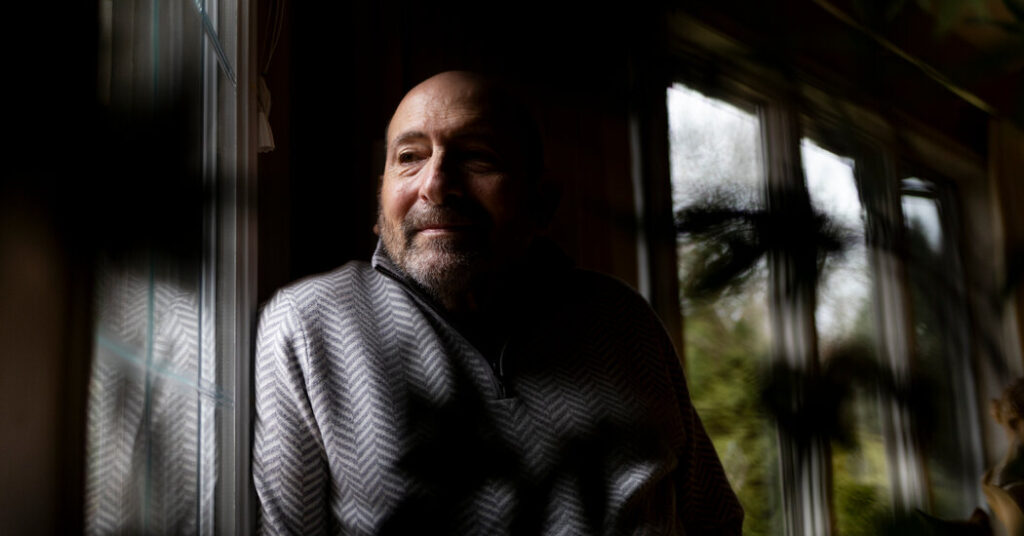
When Jim Pantelas was diagnosed with lung cancer at 52, he felt that he had brought this disease upon himself.
Having started smoking at age 12, Mr. Pantelas, a Navy veteran, was consumed by shame — certain that cancer was his punishment.
He didn’t even want treatment at first, thinking that he deserved to die. But with his wife six months pregnant, Mr. Pantelas relented, fighting to meet his unborn daughter, Stella. “All my motivation to try and stay alive became external,” he said.
Lung cancer kills more people in the United States than any other cancer, but experts say that many of these deaths are preventable. When it’s caught early and treated, four in five patients can be cured.
But only 18 percent of eligible Americans get screened for lung cancer, compared with the 70 to 80 percent who get mammograms, colonoscopies and Pap smears. And once diagnosed, 20 percent of lung cancer patients receive no treatment versus 5 percent for breast, colon and cervical cancer patients.
No single factor explains this gap, but experts say that a cloud of judgment hangs over lung cancer and pushes people away from care.
“Stigma is killing people before the cancer actually has a chance to,” said Jill Feldman, a lung cancer survivor and longtime advocate.
The lonely cancer
While most cancer patients are greeted with sympathy, those with lung cancer are often met with accusations, said Lisa Carter-Bawa, director of the Cancer Prevention Precision Control Institute at Hackensack Meridian Health in New Jersey. “The first question that anybody asks is, ‘Did you smoke?’” she said.
About 80 to 90 percent of lung cancers are tied to cigarette smoking, but when that question dominates the conversation, it can reduce a life-threatening disease to a moral failure. It also reflects broader attitudes: In a 2018 survey, over half of Americans blamed lung cancer patients for their illness, at least in part.
And some loved ones step back, as judgment crowds out empathy. After April Cottrill, 50, was diagnosed with lung cancer, one of her brothers fixated on the cigarettes, saying, “Well, you smoked, and you knew what they would do.” Ms. Cottrill recalled her sister being even harsher, saying that this cancer was God’s punishment for her nicotine addiction.
“When you’re diagnosed, you’re reaching and grabbing and wanting to pull at something positive,” Ms. Cottrill said. “It was soul crushing.”
Perpetually anticipating stigma, many lung cancer patients learn to hide their diagnosis or even lie about it, said Dr. Narjust Florez, a thoracic oncologist at Dana-Farber Brigham Cancer Center in Boston. One European survey found that about a third of patients said they preferred to keep their cancer secret. But when the same survey asked caregivers, almost half said patients hid their diagnoses.
Dr. Florez said that she’s treated patients who wished they had a brain tumor instead of lung cancer or who arrived in her waiting room dressed in pink, having told their families they had breast cancer. One patient hid her diagnosis so well that her obituary claimed she had died of breast cancer, with the family donating to a breast cancer charity in her memory, Dr. Florez said.
This secrecy can become its own burden, said Jamie Studts, director of behavioral oncology at the University of Colorado Anschutz, as some patients downplay their symptoms with family and friends and constantly weigh the risks of disclosure against the chance of support.
Diagnosed with lung cancer in 2020, Amanda Padua-Reyes, 56, has watched her relationships thin out — friends, colleagues, even extended family — one disclosure at a time. “When they withdraw immediately, I’m already expecting that, so it’s not as painful,” Ms. Padua-Reyes said.
But constantly bracing for rejection has also worn her down, making silence feel like the safer choice.
“It’s very stressful. I need help, and I can’t ask the people that are closest to me,” Ms. Padua-Reyes added.
The care patients don’t seek
Shame can shape how early patients get diagnosed, and how aggressively they pursue treatment, if at all. In a 2014 study, Dr. Carter-Bawa found that lung cancer stigma was tied to patients waiting longer to seek care, regardless of smoking status or health care distrust.
“The lung cancer diagnosis itself carries so much weight that anyone facing it can feel judged,” Dr. Carter-Bawa said.
Such delays can be deadly: Lung cancer’s five-year survival rate drops to 9 percent from 60 percent, depending on how early it’s found.
About a third of patients are still smoking when they’re diagnosed with lung cancer, and for these patients, the shame can be even stronger. Although quitting within the first few months can improve patients’ survival, many aren’t offered cessation support, said Jamie Ostroff, director of the tobacco treatment program at Memorial Sloan Kettering Cancer Center. And the stigma is actually linked to heavier cigarette use, possibly to cope with the added stress. Ultimately, this can make quitting even harder.
Dr. Carter-Bawa remembered one patient who had a terrible cough but waited eight months to seek care. When her doctor asked why, she replied, “‘I knew what you’d think — that I did this to myself, that I deserve whatever happens. And I couldn’t face that,’” according to Dr. Carter-Bawa. The patient had Stage 4 lung cancer. She died six months later.
Even when patients do promptly seek help, shame can curdle into resignation. Although not every cancer patient is well enough to tolerate surgery, chemotherapy or radiation, those with lung cancer disproportionately count themselves out, Dr. Studts said. “‘I don’t deserve treatment, I don’t deserve palliative care, I deserve to suffer,’” he recalled patients saying. Among the 10 most common cancers in the United States, lung cancer carries the highest risk of suicide.
And patients can even encounter stigma from their health care professionals. In a small study, about half of lung cancer patients described feeling shamed by a medical provider. Other studies have suggested that health care providers hold negative attitudes about lung cancer similar to those of the general public, and that primary care physicians were more likely to refer patients with advanced breast cancer to an oncologist than those with advanced lung cancer.
During Mr. Pantelas’s treatment, some nurses and technicians would focus on his past cigarette use, punctuating visits with comments like, “‘Well, you know, you smoked a long time.’” The reminder left him feeling small and ashamed, guilty all over again.
His original prognosis was just three to six months — long enough to see his wife give birth but not long enough to watch his daughter grow up. Today, Stella is 20 years old, and Mr. Pantelas has two other daughters, Leda, 16, and Grace, 17. He doesn’t take those years for granted but also remembers how close he was to giving up, nearly overcome by stigma.
“It affects how hard you’re willing to fight,” he said.
Simar Bajaj covers health and wellness.
The post For Lung Cancer Patients, Shame Is a Deadly Side Effect appeared first on New York Times.