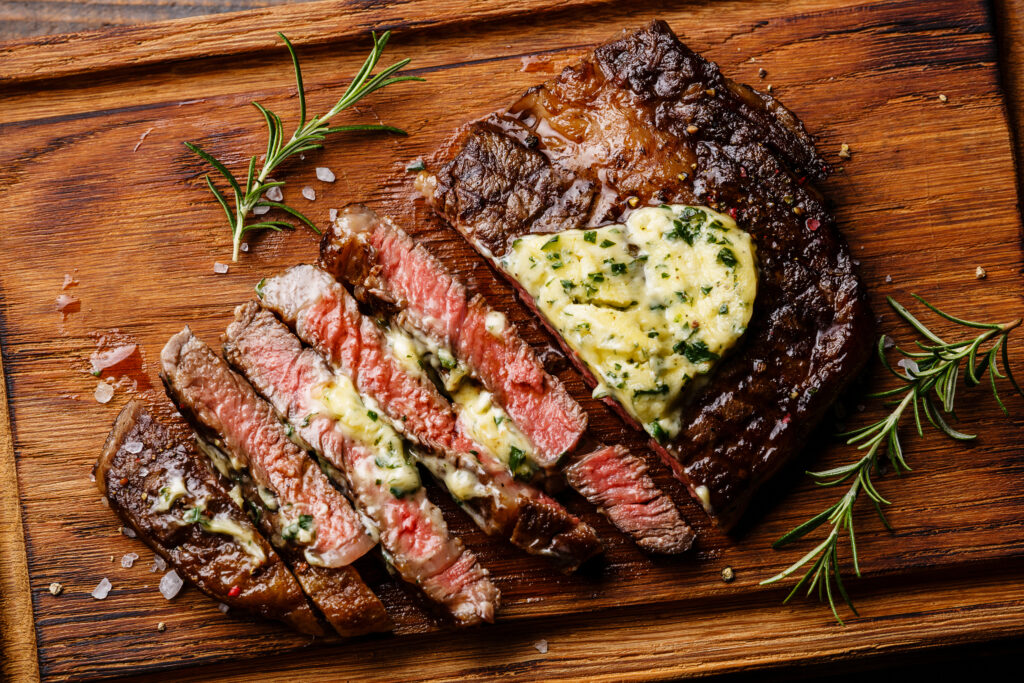
How much red meat should you eat?
Health authorities have long encouraged Americans to limit consumption of red meat, warning that eating more than three to four servings a week can be detrimental to your health. It contains high levels of saturated fat, which increases LDL cholesterol, the kind associated with heart disease. Health authorities have also raised concerns about animal welfare and the significant effect meat production has on the environment.
But the long-standing advice to cut back on red meat was turned on its head when the Department of Health and Human Services and the Agriculture Department issued new dietary guidelines last week. The guidelines advised people to eat a variety of protein-rich plant and animal foods, including red meat. They also included other foods high in saturated fat, such as full-fat dairy products, butter and beef tallow — a sharp deviation from decades of previous recommendations.
We wanted to know how much red meat, butter and other types of full-fat dairy are okay to include in your diet. So we asked three top nutrition experts for their advice.
They said that you should focus on eating an overall healthy diet, with an emphasis on things such as fresh fruits and vegetables, beans, lentils, nuts, seeds, whole grains, seafood and olive oil. They applauded the new dietary guidelines for stating explicitly for the first time that Americans should eat “real food,” and avoid “highly processed” packaged foods and beverages laden with sugar, sodium, artificial sweeteners and other additives.
And if you’re eating a healthy diet, the experts said, then it’s generally fine to have an occasional serving of red meat or full-fat dairy, or to use a little butter or beef tallow from time to time. But if you include full-fat dairy in your diet, you should prioritize plain yogurt, which is a fermented food that contains health-promoting bacteria called probiotics.
Here’s what else they told us.
Eat ‘moderate’ amounts of red meat and dairy
The advice to cut back on ultra-processed foods is a big step forward for the guidelines and well-supported by research, said Marion Nestle, emerita professor of food studies and public health at New York University. Nestle recently published a book called “What to Eat Now: The Indispensable Guide to Good Food, How to Find It and Why It Matters.”
But she cautioned that the guidelines’ endorsement of red meat and butter shows disregard for the environment and for public health. “It takes me back to the 1950s,” she said. “Do they really think that diets like that have nothing to do with heart disease?”
She said that the guidelines contain contradictory advice because they promote foods high in saturated fat while also telling Americans to limit their intake of saturated fat to no more than 10 percent of daily calories. “How is that going to work,” she said.
Nestle said her advice is that eating “moderate” amounts of red meat and dairy are “just fine” if you’re consuming a wide variety of foods and not overeating calories. “The guidelines should not be interpreted as a license to gorge on red meat, beef tallow and butter, delicious as they may be,” she said. “Everything in moderation.”
Avoid processed meats
The most significant change to the dietary guidelines is the recommendation that Americans avoid potato chips, candy, sweetened beverages, breakfast cereals and other highly processed foods made with refined grains, added sugars, artificial sweeteners and other additives, said Dariush Mozaffarian, a cardiologist and director of Tufts University’s Food Is Medicine Institute. “No guidelines have ever said ‘avoid highly processed foods’ before,” he said.
Mozaffarian pointed out that previous guidelines have recommended meat and dairy. But they specifically encouraged people to eat “lean meat” and fat-free or low-fat dairy, rather than red meat and full-fat dairy. So the new changes are subtle. But he also noted that the guidelines mention red meat as just one of many different types of protein people should eat, along with eggs, poultry, seafood, beans, peas, lentils, legumes, nuts, seeds and soy. “I don’t think there’s a major focus on red meat,” he said.
The problem with red meat isn’t that it contains a lot of saturated fat, Mozaffarian said, but that it has other carcinogenic and pro-inflammatory compounds that may increase your likelihood of developing cancer and Type 2 diabetes. He recommended that people eat no more than one serving a week of steak, veal, lamb, pork, ground beef or other red meats. And he said that processed meats such as bacon, hot dogs, sausages, salami and deli meats should either be avoided altogether or viewed as an occasional treat.
As for full-fat dairy, it’s fine to have up to three servings a day, but ideally you should prioritize fermented dairy foods such as plain yogurt, kefir and some cheeses, Mozaffarian said. “As a cardiologist who entered the field studying dietary fats, I can tell you that dairy fats are not harmful,” he added. “There’s plenty of evidence for the health benefits of dairy.”
Try plant protein sources such as nuts and soy foods
“The guidance about red meat and dairy fat is simply wrong and dangerous to the health of Americans,” said Walter Willett, a professor of medicine at Harvard Medical School and professor of epidemiology and nutrition at the Harvard T.H. Chan School of Public Health.
But like the other experts, Willett had some good things to say about the new guidelines, especially the advice to eat less sugar and refined grains.
Willett said that people should follow the advice of a federal advisory committee that published a report in late 2024 encouraging Americans to eat less meat and more beans, peas, lentils, nuts and other plants, as well as seafood and nonfat dairy foods.
Willett said that when discussing foods, comparison is critical, “and there are layers of evidence showing that plant protein sources such as nuts and soy foods will lead to better health outcomes,” compared with eating meat. He said that meat and full-fat dairy are not only high in saturated fat but also “extremely” low in essential fatty acids that are good for both cardiovascular health and overall health.
“In randomized trials, red meat increases LDL cholesterol,” he added. “In long-term epidemiologic studies, red meat is associated with increases in coronary heart disease, especially when compared with plant protein sources.”
As for dairy foods, he said that they’re not essential and that there’s no good evidence that people need to eat three servings a day. He also highlighted the effect that dairy and meat production have on the environment.
“We can’t have a healthy population without a healthy planet, and cattle have an extremely large impact on greenhouse gas emissions, pollution and deforestation,” he said. “For the sake of future generations, it is critical that we reduce the current consumption of animal-sourced foods, not increase consumption, along with dramatically reducing the use of fossil fuels.”
Willett said that eating a diet that’s good for your health and good for the planet doesn’t mean that you have to give up all meat and dairy. But it does mean that you should limit yourself to one weekly serving of red meat and perhaps one daily serving of milk, cheese or yogurt.
In 2024, Willett was a co-author on a large study that looked at the effects of what is known as the Planetary Health Diet. It examined data on more than 200,000 Americans who were followed closely for over three decades.
The study found that people who ate mostly minimally processed plant foods such as nuts, beans, fruits, vegetables, whole grains and olive oil, along with modest amounts of meat, fish, eggs and dairy, had lower rates of premature death from heart disease, cancer and other chronic diseases. At the same time, their diets had a smaller environmental footprint because they consisted of foods that were grown using relatively less land and water, and that were produced with fewer greenhouse gas emissions.
Ultimately, eating for better personal health and planetary health, Willett said, means shifting the balance of your diet to include more plant sources of protein.
Do you have a question about healthy eating? Email [email protected] and we may answer your question in a future column.
The post How much red meat should you eat? We asked 3 top nutrition experts. appeared first on Washington Post.