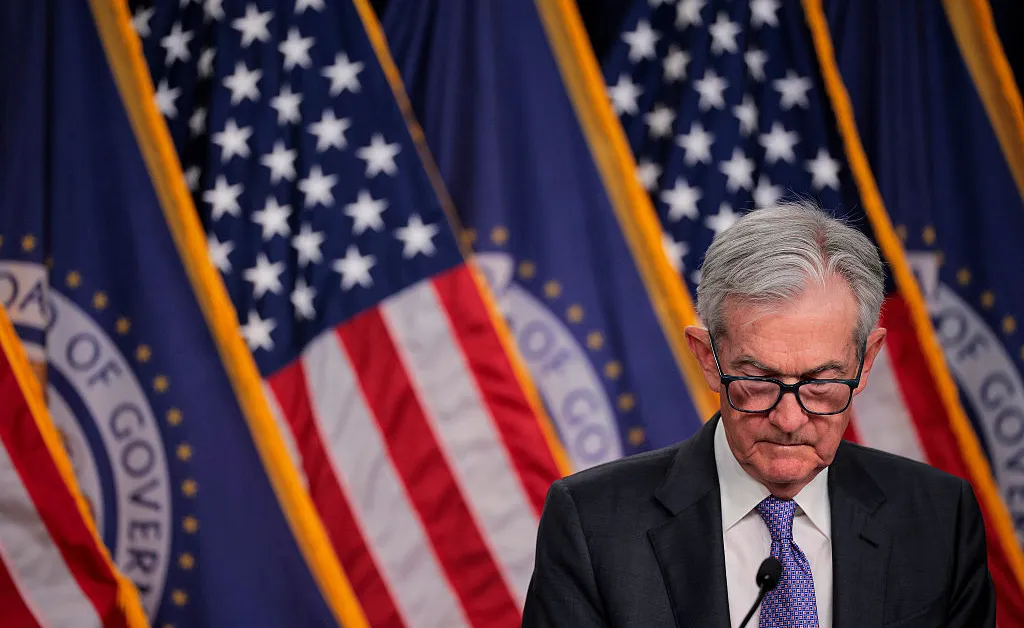
The unprecedented decision by the Department of Justice (DOJ) to open a criminal investigation into Federal Reserve Chair Jerome Powell has sent shockwaves across global markets and Washington, D.C.
It follows months of pressure from President Donald Trump on Powell to cut interest rates. He has publicly attacked Powell, called him “incompetent,” and floated the idea of firing him.
[time-brightcove not-tgx=”true”]
Trump claimed he did not “know anything” about the investigation in an interview with NBC News. Several former heads of the central bank have come out against the move, characterizing it as an attempt to undermine the independence of the Federal Reserve, which is authorized by Congress to set monetary policy independent of the President’s wishes.
Read more: What to Know About the Investigation Into Jerome Powell
The investigation, first reported by the New York Times, centers on a claim that Powell mismanaged and lied to Congress about the central bank’s $2.5 billion renovation of its headquarters.
In a statement, Powell said the move is not about his testimony nor Congressional oversight rule, but rather a “consequence of the Federal Reserve setting interest rates based on our best assessment of what will serve the public, rather than following the preferences of the President.”
Jason Furman, an economist and professor at Harvard University, worked at both the Council of Economic Advisers and the National Economic Council during the Clinton administration, and served as President Barack Obama’s chief economist and a member of the cabinet.
He shared his thoughts on the investigation into Powell, his response, and the potential lasting impact on the Federal Reserve.
Is there a historical precedent for the prosecution of the Federal Reserve Chair in the United States?
JF: I am not aware of any precedent for prosecuting a Federal Reserve Chair in the United States. President Trump previously mused in public about firing Chair Powell, but he has always backed off, and last year the Supreme Court went out of its way to say that the President likely could not fire Federal Reserve Governors (including the Chair) without cause.
The closest precedent to the criminal investigation of Jay Powell is President Trump’s attempt to fire Governor Lisa Cook based on claims about mortgage fraud—although that emerged from what was apparently a selective investigation and document leak from the Federal Housing Finance Agency (FHFA), not a criminal prosecution by the Justice Department.
Jerome Powell has so far resisted immense pressure from Trump, but what are the potential implications of a Federal Reserve that is not independent?
JF: There are decades of economic research and experience on what happens in economies in countries without independent central banks. On average, they have higher inflation, higher interest rates, and can also have more economic instability.
Independent central banks are a critical solution to the problem of how to have all the benefits of fiat currency, money that you print and declare is money, which can really help stabilize the economy when used wisely, without any of the temptations that come from printing too much of it, devaluing the currency, and correspondingly increasing inflation.
What did you make of Powell’s video statement?
JF: I was stunned. I have never seen anything like this from a central banker. But I was even more stunned by the reason he did it. I’ve known Jay Powell for over a decade and he is a man of enormous integrity who takes his responsibilities very seriously. That he felt he needed to do this showed to me just how perilous the situation had become.
Could there still be a lasting impact on the Federal Reserve even if this prosecution is squashed?
JF: So far, it looks like the Federal Reserve’s independence and integrity may be strengthened by this experience. I have been heartened by the widespread support it has received from across the political spectrum and from everyone ranging from former economic officials to business leaders. There is a good reason there is a broad agreement on the independence of the Federal Reserve, which is that it works pretty well. Not that the Fed is omniscient or omnipotent, but that it is better than the alternatives in part because it is good about learning and correcting its own mistakes. To me, it seems like the Congress, the business community, and the courts all have the Fed’s back—and the Fed is showing through its integrity that it deserves that trust.
Are there examples—historical or otherwise— from other countries where Central Bank leaders were prosecuted or jailed, and what followed economically and politically?
JF: There are an ugly set of precedents for political prosecutions of central bankers around the world, including countries like Argentina, Indonesia, Turkey, and Zimbabwe. The details of any given case are complicated and sometimes nuanced; in many cases, the central banks had already lost part of their independence, but using prosecutions or the threat of prosecutions as punishment or coercion for monetary policy decisions is an unfortunate part of the toolkit in more authoritarian countries. Fortunately, for reasons I just gave, I think the United States is different from these other countries, so it won’t work here.
What is the source of Trump’s frustrations with Jerome Powell? Does he have any justification for those frustrations?
JF: It is common for Presidents to be frustrated with Fed Chairs. I worked for President Clinton and it was clear that he wanted the Fed to lower interest rates, but he also kept his mouth shut and respected the administration’s policy of not commenting on the Fed. In general, lower rates are good for people who want mortgages to buy a home or businesses that want to invest. The Fed would like interest rates to be as low as possible, but also needs to ensure there is not too much activity that will end up fueling inflation rather than durable economic and job growth.
At any given meeting, you can have a good-faith discussion about whether interest rates should be a little lower or a little higher. That discussion is particularly difficult now with so much contradictory economic data. But Trump is, unfortunately, well outside the bounds of that good-faith discussion with calls for dramatically slashing interest rates that are supported by virtually no one in the economic or business community.
The post What Happens When You Investigate a Central Bank Chief? An Economist Explains appeared first on TIME.